
The complete guide
Window Catios, A Practical Buyer's Guide for Indoor Cats
The problem with a cat who only watches
Indoor cats live longer. That is the usual argument, and it holds up. What it skips over is the cost. A cat that spends twelve years looking at the world through glass is missing almost everything that makes a cat a cat. Wind in the fur. The smell of wet grass. A beetle to stare at for twenty minutes. Birds that are not just pixels behind a pane.
Most owners feel this. You see it when your cat sits on the sill making that strange chattering noise at a magpie, tail twitching, completely locked in. You want to let them out. You also know what is out there, roads, dogs, other cats, ticks, and the simple fact that a cat with a hunting instinct is not good news for local wildlife.
A window catio is the middle path. It puts your cat outside, in real air and real light, inside a boundary they cannot cross. Nothing gets in, nothing gets out, and everyone sleeps better.
How a multi-tier enclosure actually works
The thing to understand about cats is that they measure space going up, not across. A room that is big on the floor but flat and featureless bores them. A smaller space with shelves, perches and different heights keeps them busy all day. That is why a multi tier cat cage beats a wide low pen of the same volume.
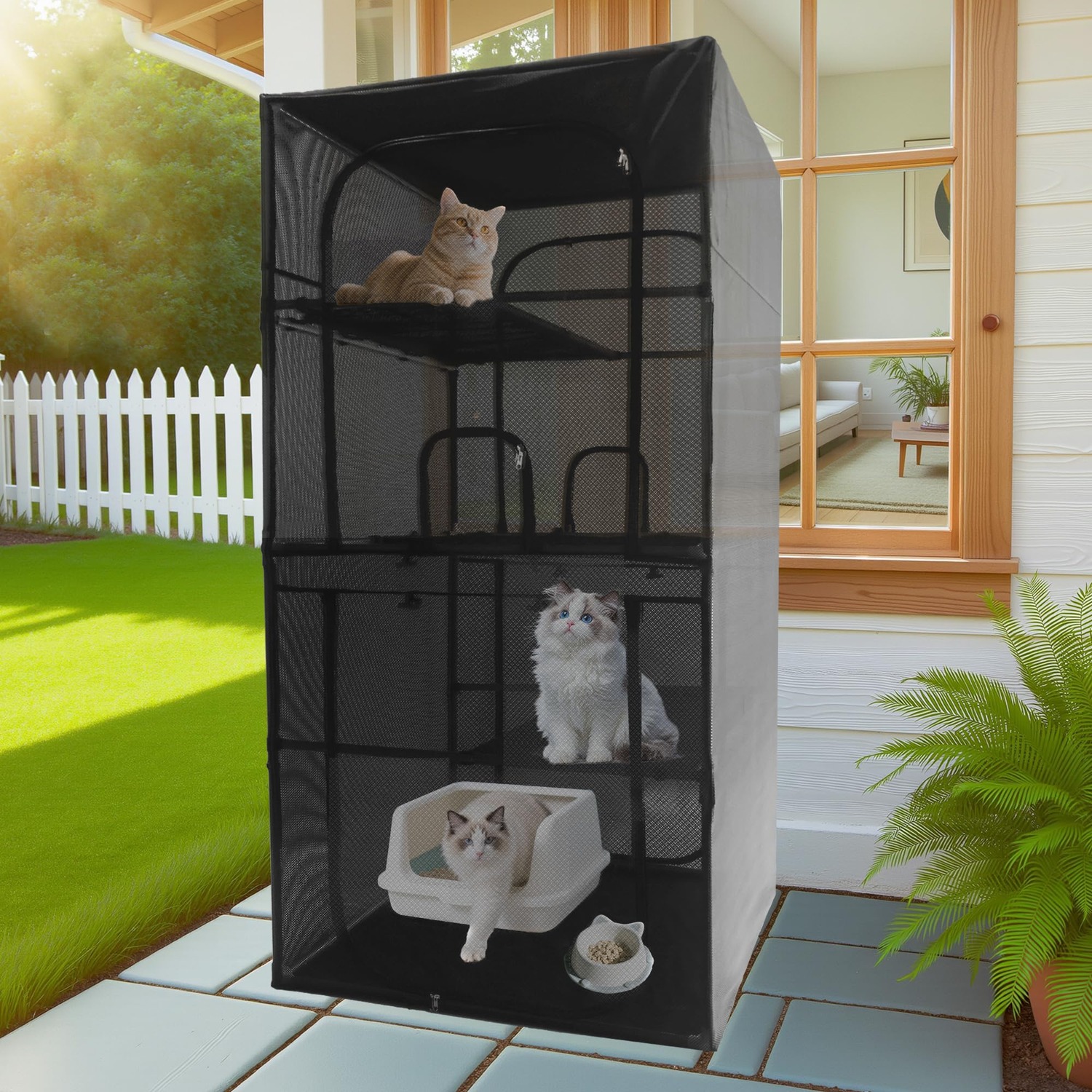
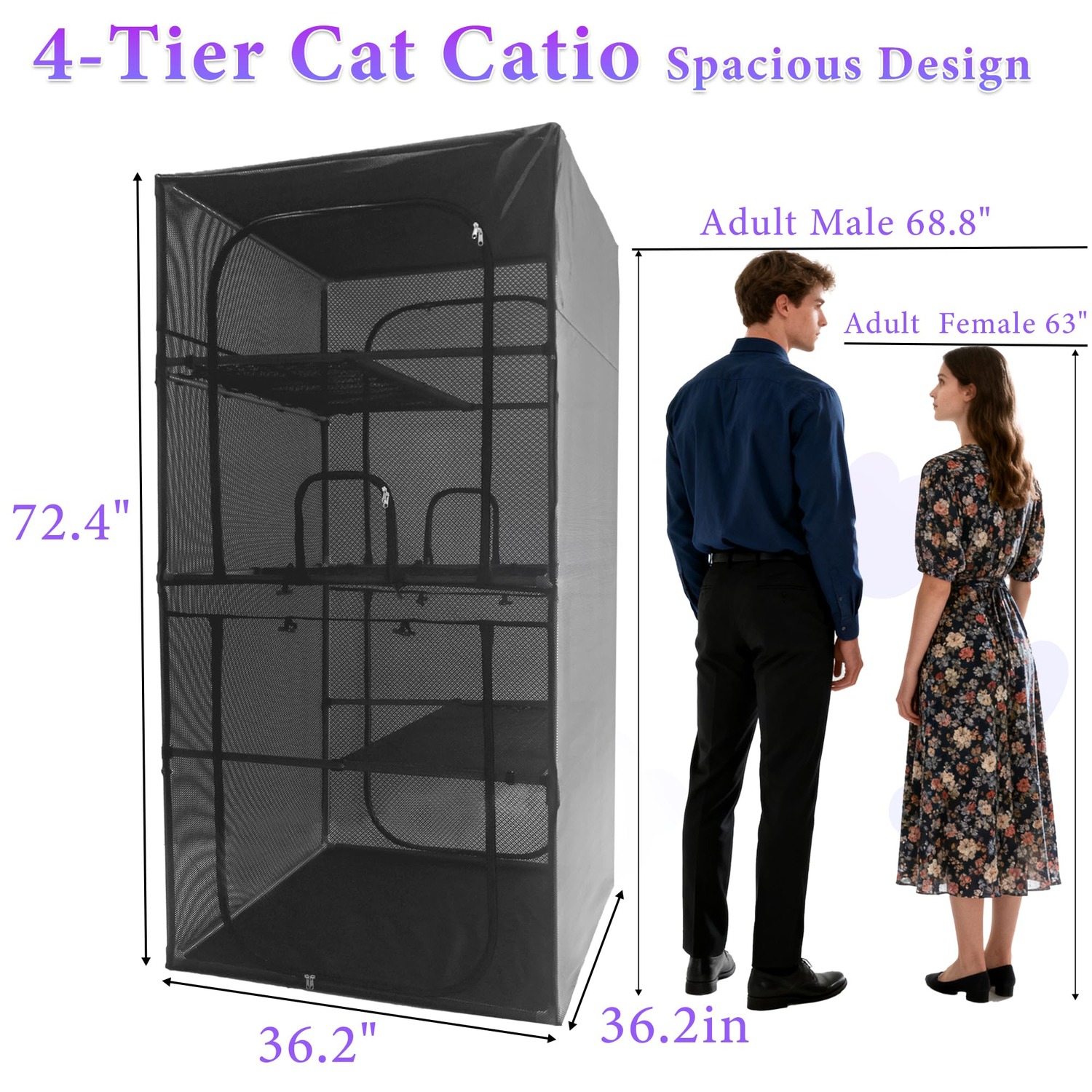
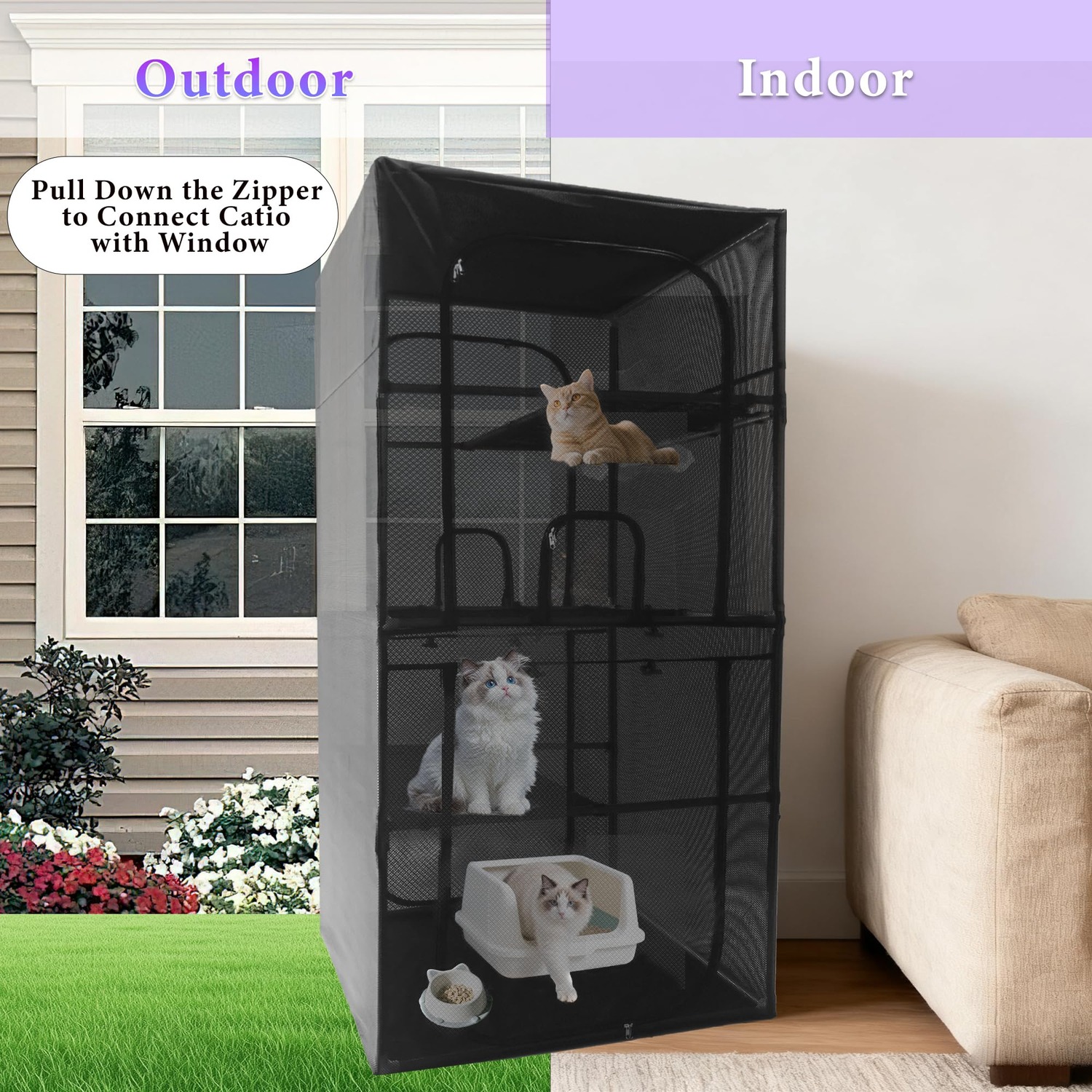
This Deblue enclosure has a footprint of 91.9 by 91.9 cm. On paper that is less than a square metre, which does not sound like much. But it stands 183.9 cm tall and divides that height into four levels. Suddenly you have four separate places to be, each with its own view and its own feel. The ground level is shaded and private. The top is sunny and high, which is where confident cats want to sit. The middle levels are the in-between spots where a cat naps.
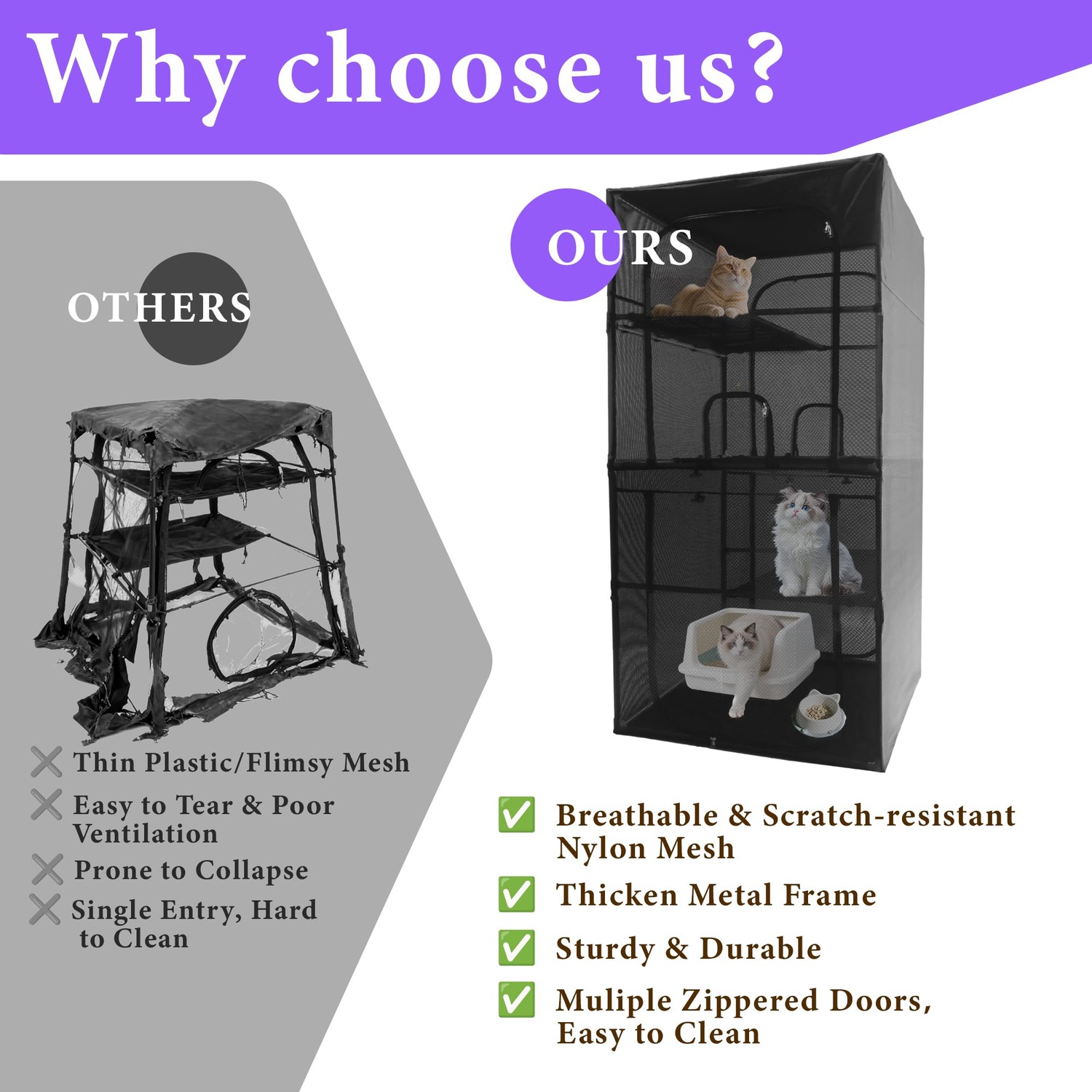
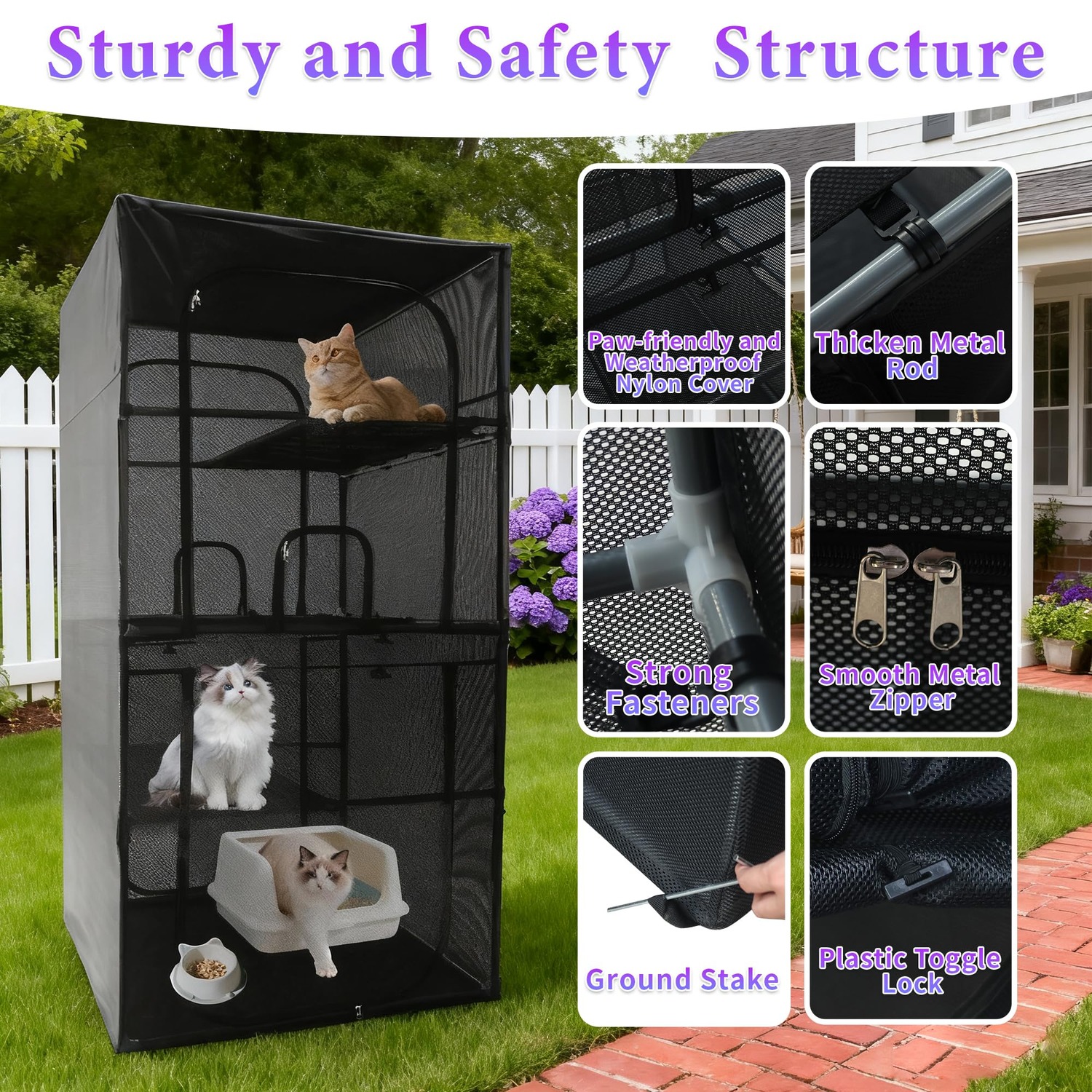
The construction is metal rods with nylon mesh stretched over them. The mesh does two jobs. It contains the cat, and it stays transparent enough that you can check on them from the kitchen without going outside. Airflow passes straight through, so the enclosure does not become a hotbox in summer the way a solid-walled box would. The black colour keeps glare down and makes it easier to see through from the inside.
Access runs through five zip doors. Three large, two small. The large ones matter more than you would guess. An outdoor cat cage with only small hatches is a nightmare to clean, because every spill and every litter tray change becomes an awkward arm-length reach. Being able to open a door and climb in changes the whole maintenance picture.
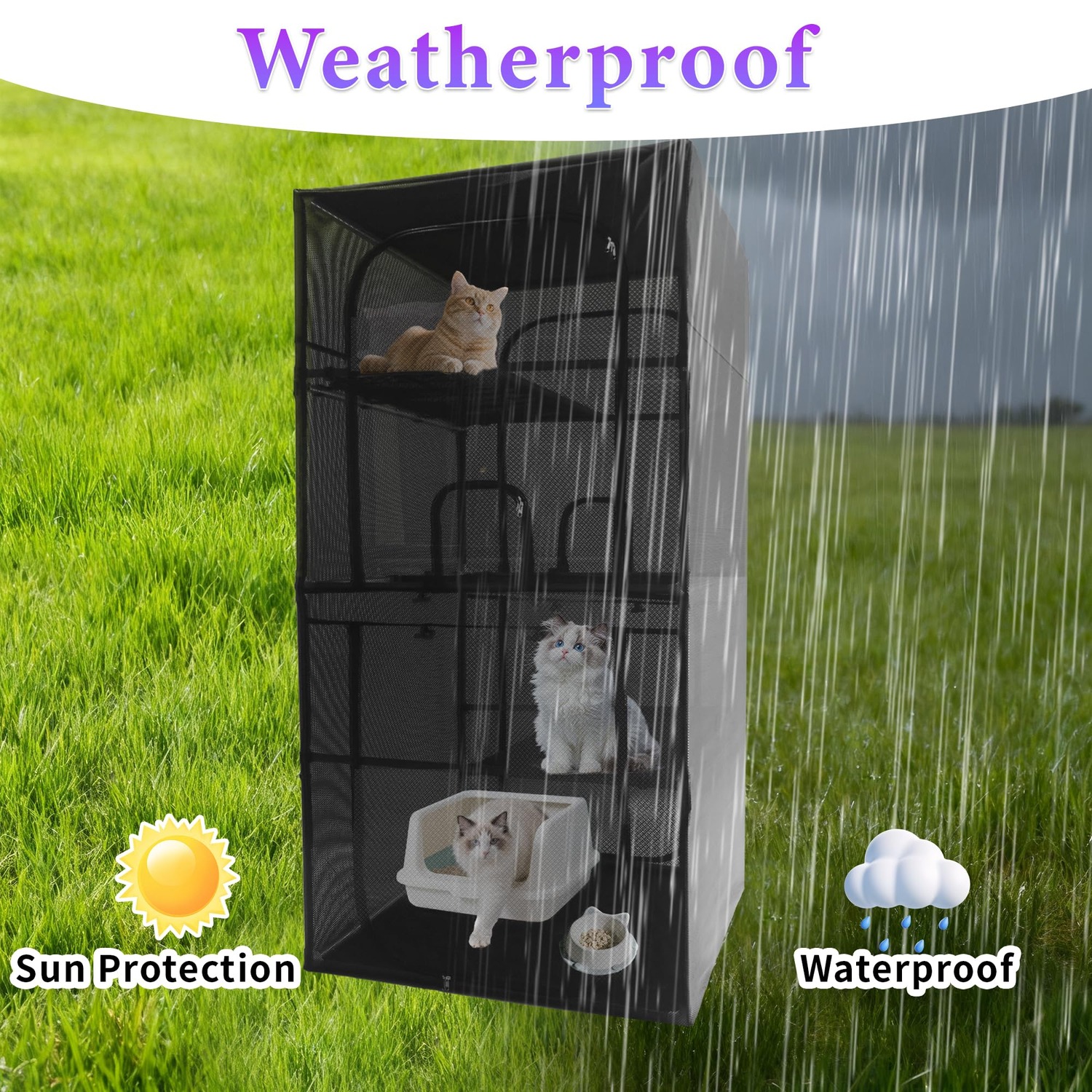
A cover comes with it. It sits over the roof, giving shade on the top level and shedding light rain. That is what makes outdoor time less weather-dependent. A sudden shower does not mean a soaked cat and a soaked structure, it just means slightly shorter outdoor time while the drizzle passes.
Who this suits
This is for people with indoor cats and some outdoor space they control. A balcony. A courtyard. A patch of lawn beside the back door. A sunroom. If you live in a flat with a balcony and have been looking at a balcony cat cage, the square footprint here is a reasonable fit for most balconies while still giving real height.
It also suits households with more than one cat. Four levels means cats can share the space without being forced into each other's company. Cats tolerate proximity much better when they can choose their own elevation.
It works for nervous cats too, which surprises people. A cat that panics in open gardens often does fine in an enclosure, because the boundaries are visible and the cover overhead takes away the exposed feeling. Start them on the lower levels and let them work up.
It is less suited to anyone wanting a permanent fixed structure bolted to the house. This is a free-standing enclosure you position where you want it, not a built-in unit. If you need something screwed into brickwork and left there for a decade, this is a different category of product.
Choosing the right size and spot
Measure first. Always. The footprint is roughly a metre square, and you need walking room around at least one side so you can reach a door. Height is the one people forget. At 183.9 cm, it is taller than most adults, so check for awnings, clotheslines, low eaves and pergola beams before you commit to a spot.
Think about sun. A spot that gets morning light and afternoon shade is close to ideal in most climates. Full sun all day is too much even with the roof cover on, and full shade means your cat never gets the warm patch they are actually looking for. If you only have one option, the cover helps, but you may still want to limit midday sessions in summer.
Ground matters as well. On soil or lawn you can use stakes to anchor the base properly, and that is the most secure setup. On a hard balcony surface you cannot stake, so position the enclosure against a wall or solid railing and add weight to the base. A tall light structure and a gusty day are not friends.
Lastly, think about your window. The appeal of a catio for window placement is that your cat can come and go on their own terms, from sill to enclosure and back. Siting it directly under or beside an accessible window makes the whole thing more useful day to day, rather than something you only set up on weekends.
Living with it, and keeping it going
Setup needs no tools. Lay the parts out, build from the base, and work upward. Two people makes the upper panels much easier. Take a photo of the assembled frame the first time, because it saves a lot of guessing if you pack it away for winter and rebuild it in spring.
Cleaning is simple but should be regular. Wipe the mesh and metal with a damp cloth and mild soap. Skip bleach and anything solvent-based, since those attack nylon over time. Let everything dry before your cat goes back in. If you have a litter tray on the base level, treat it exactly as you would indoors, scoop daily and change it fully on your normal schedule.
Check the hardware every few weeks. Zips are the part that wears first on any mesh enclosure, so run them slowly, keep grit out of the teeth and never force a stuck slider. Reseat any stakes that have worked loose after rain. Look over the mesh for snags, especially at cat-height corners where claws land.
If you use it seasonally, make sure the fabric is bone dry before storage. Damp nylon in a shed for three months comes out smelling terrible and sometimes spotted. Bundle the rods together, keep the panels flat, and store it somewhere out of direct sun.
Introduce your cat slowly. Doors open, familiar blanket inside, no pressure. Ten minutes the first day, longer the next. Most cats figure out the top level within a week and then you will struggle to get them back inside.
The short version
A window catio solves a specific problem, the indoor cat who wants outside and cannot safely have it. This one takes a square metre of ground and turns it into four levels of climbing, sunning and bird-watching space, built from metal rods and breathable nylon mesh with a weather cover on top.
Five zip doors, three of them large enough to climb through, make it genuinely easy to live with. Tool-free assembly and full disassembly mean you are not committing to a permanent structure. Measure your space, pick a spot with morning sun, anchor it properly, and let your cat work out the rest.