
The complete guide
How To Choose A Modular Catio That Actually Suits Your Cat
The problem with letting a cat outside
Cats are curious by design. Leave a door open and they will test it. The trouble is that the outside world has traffic, neighbouring dogs, snail bait, territorial fights and plenty of small animals that cats are very good at catching. Plenty of owners end up making a hard choice. Keep the cat indoors and watch it sit at the window all day, or let it out and worry every time it is late home.
A modular catio sits in the middle. It gives your cat real outdoor time, real smells, real sun, real birdsong, but inside a boundary you control. It also keeps local wildlife safe, which matters more in some neighbourhoods than others. And for renters or anyone who might move, a mesh enclosure is far easier to justify than building a permanent structure against a wall you do not own.
How this one works
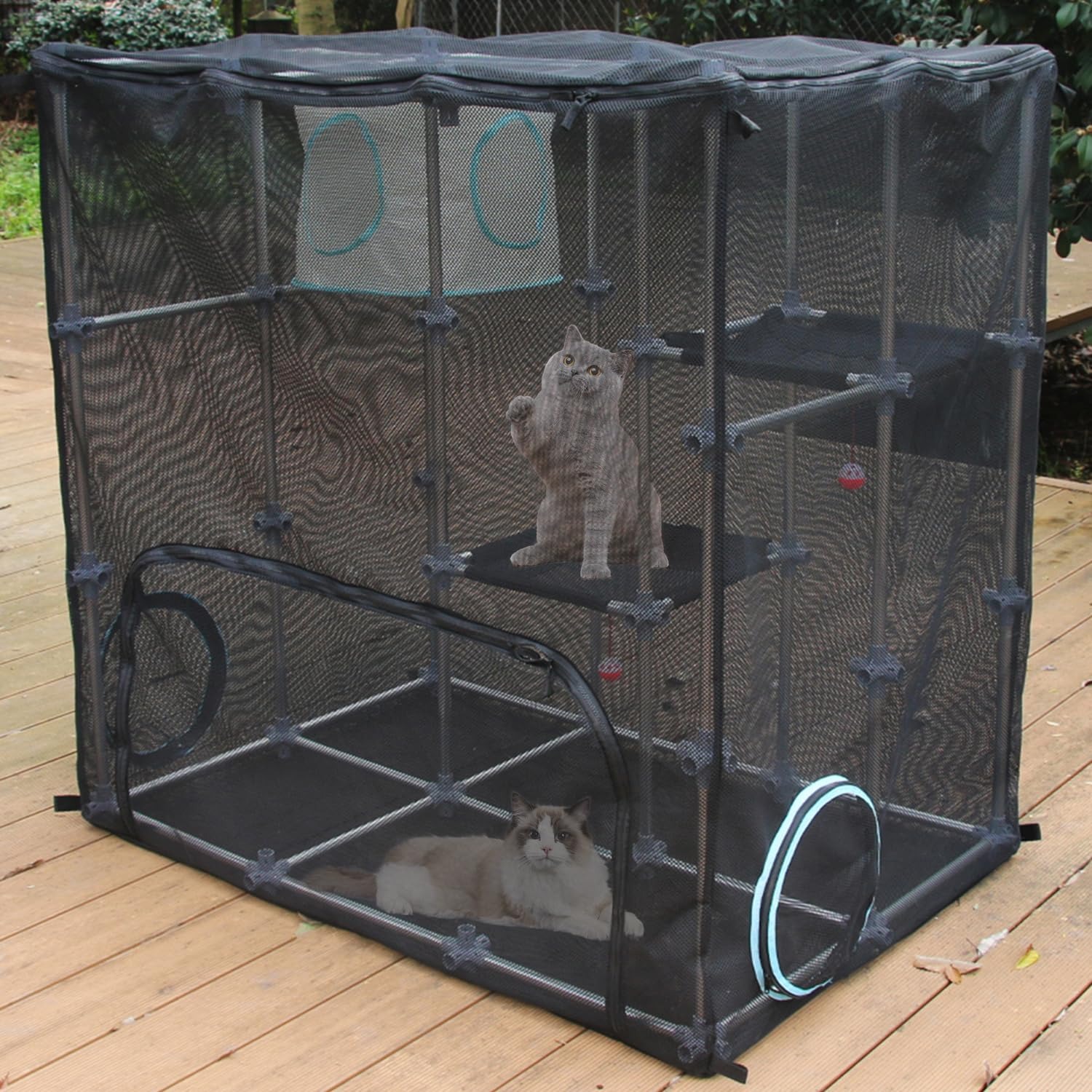
The structure is simple. Aluminium bars form a rectangular frame, nylon mesh forms the walls, and zips hold everything closed. Built up, it measures 119.4 by 119.4 centimetres on the floor and stands 78.7 centimetres tall. That is roughly a 1.2 metre square, a reasonable footprint for a patio corner or a stretch of lawn.
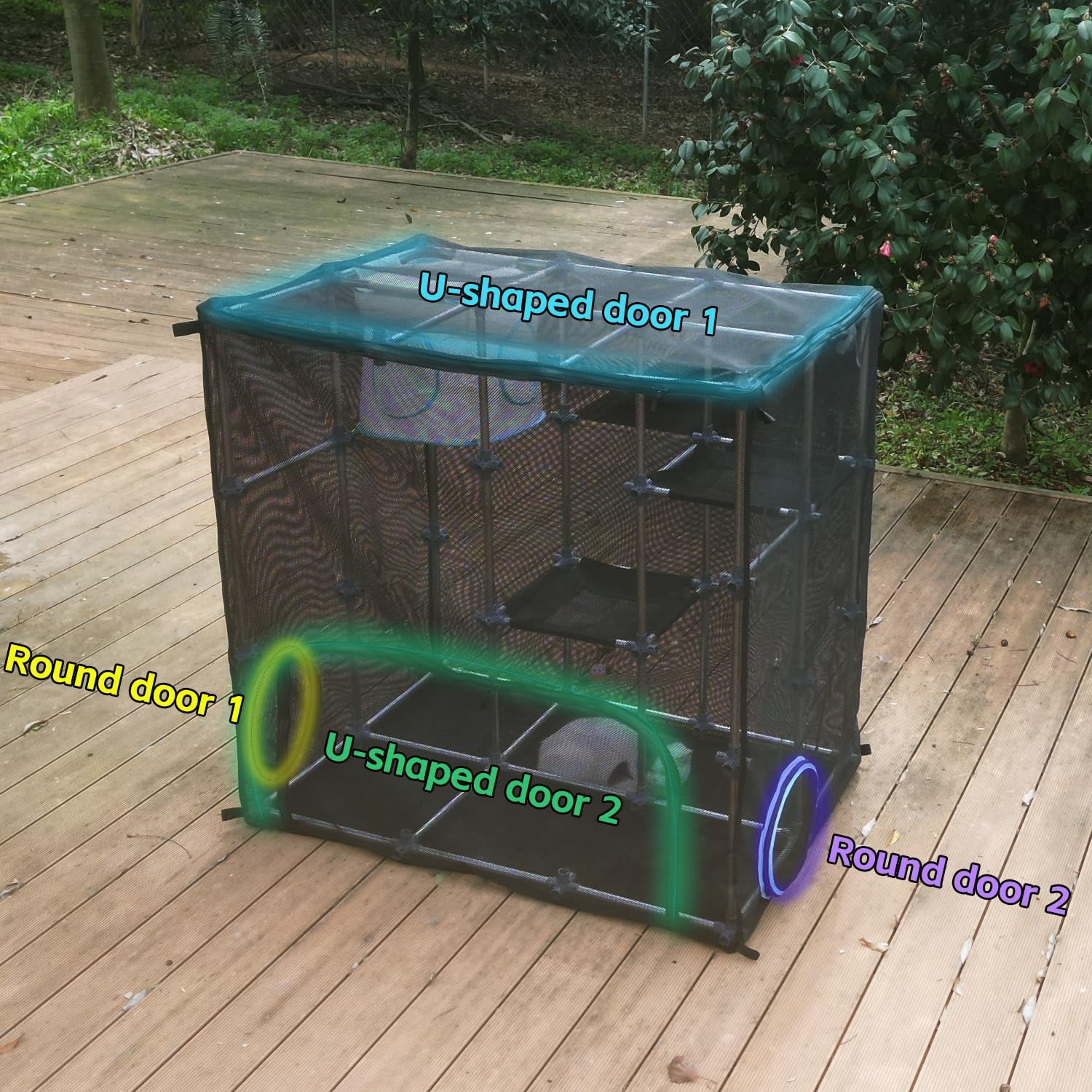
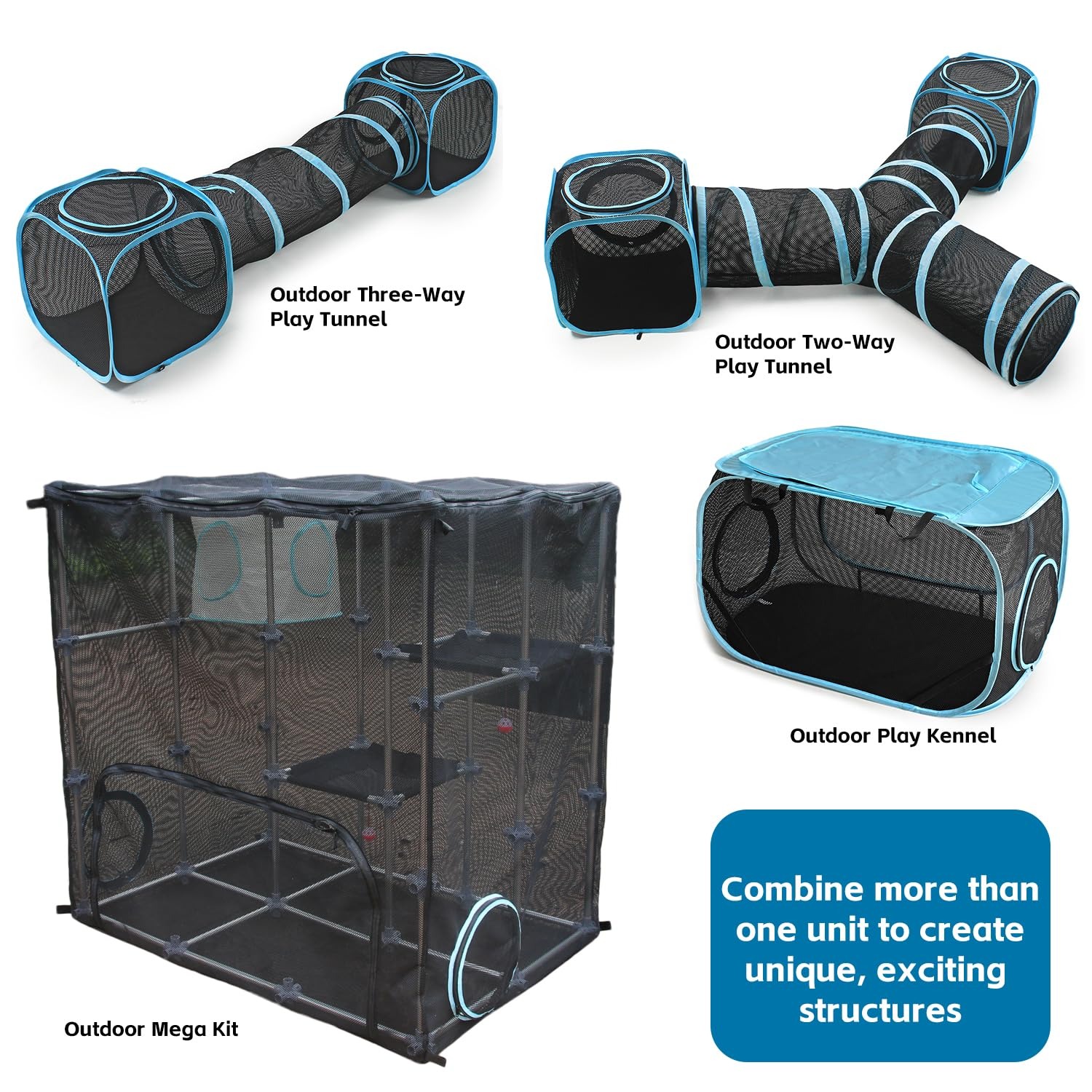
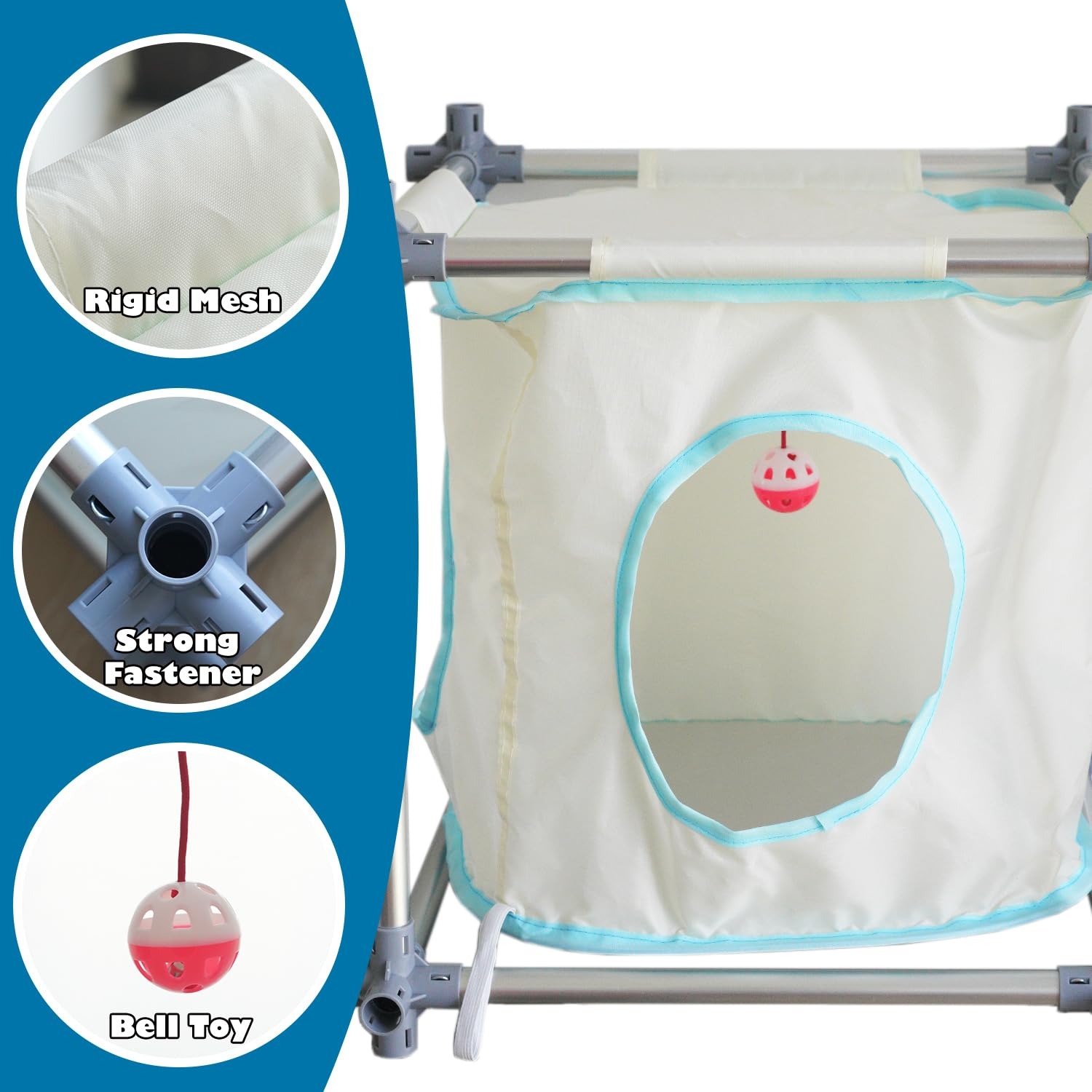
The interesting part is the doors. There are double zip doors on both sides. One job of those doors is obvious, letting you and your cat in and out. The second job is the reason people buy this kit specifically. Those same doors are connection points. Unzip one, line it up against a matching door on another INTURN section, zip them together, and the two spaces merge into one. A tunnel can bridge two pens that sit a few metres apart. A second box can double the floor area.
That is what modular really means in practice. You are not committing to a final layout on day one. You buy a section, see how your cat uses it, then add what makes sense. Some people end up with a straight run along a fence. Others build an L shape around a corner of the deck. A few run a tunnel from a window so the cat lets itself out without anyone opening a door.
Why mesh and aluminium
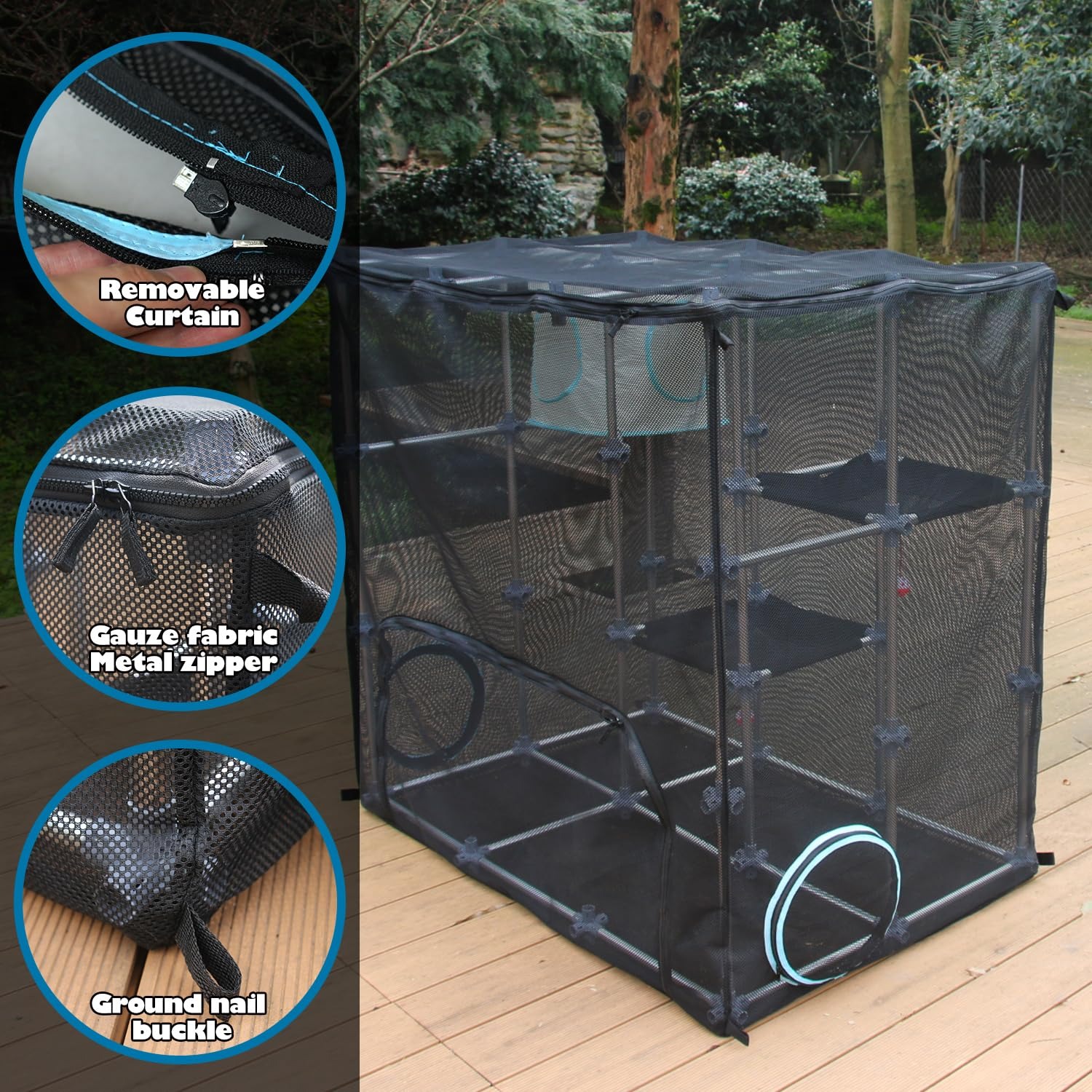
Mesh gets dismissed as flimsy next to timber and wire, but it has real advantages for this kind of product. Air passes straight through, so the inside does not turn into a hot box on a warm afternoon. You can see your cat from the house without walking over. And your cat can see out properly, which matters, because an enclosure with solid sides is far less interesting to sit in.
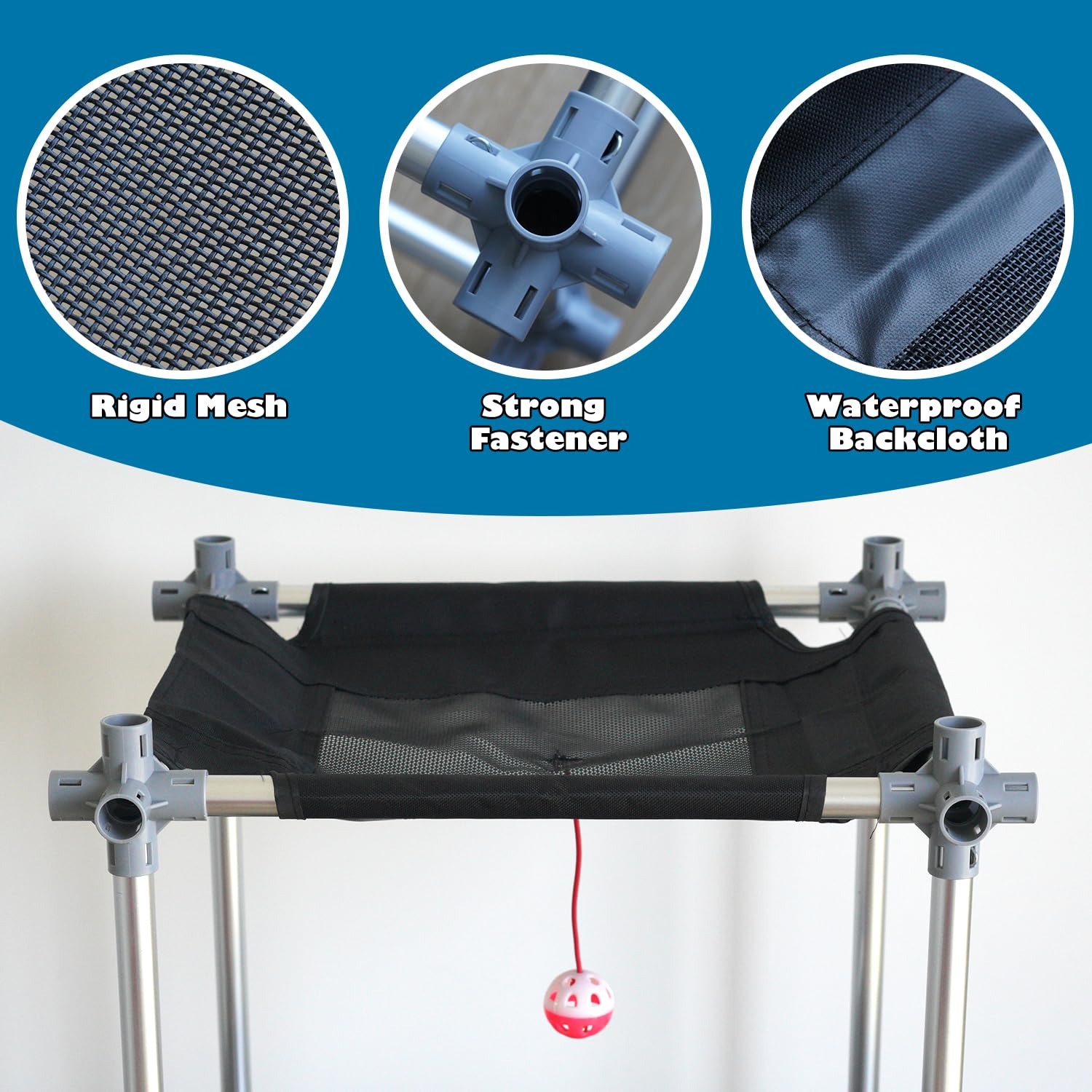
Aluminium keeps the weight low. That sounds like a small thing until you want to shift the enclosure to follow the shade at three in the afternoon, or move it off the grass before mowing. A heavy frame stays where you put it on day one and never moves again. A light one gets used far more often. The locking joints on this kit hold the structure square once assembled, so light does not mean wobbly.
The trade-off is honest. A fabric and mesh enclosure will not last as long outdoors as a timber and wire build, and a cat with a serious scratching habit can damage mesh over time. You get flexibility and portability instead of permanence.
Who this suits
Indoor cats who stare out windows are the obvious match. So are cats recovering from surgery who need confinement but go stir crazy inside. Older cats who want sunshine without climbing anything do well in a flat, open space like this.
It also suits a specific type of home. Apartments with a balcony of about 1.2 metres square. Rentals where you cannot drill into anything. Homes with small yards where a permanent structure would eat the whole lawn. People who take their cat caravanning or to a holiday house and want a safe outdoor pen at both ends.
It is less suited to anyone who wants to leave a cat outside unattended for hours. No zip-closed fabric enclosure should be treated as a locked cage. Think of it as supervised outdoor time, the kind where you are gardening or reading nearby, not a replacement for a secure cat run.
Working out what size you need
Start with the floor space you actually have. Measure your patio, balcony or lawn area and compare it against the 119.4 by 119.4 centimetre footprint, then leave a walking path around it. If the enclosure takes up the whole balcony and you cannot reach the clothesline, it will get resented fast.
Then count cats. One cat has a generous territory in a single section. Two cats who already get along will share it happily for supervised play. Three starts feeling tight once you add beds, a water bowl and a litter tray. If you have a multi-cat house, plan on connecting sections from the start rather than cramming everyone into one box.
Think about height too. At 78.7 centimetres, a cat can stand, sit and stretch. It cannot climb vertically in any meaningful way. Cats value height, so if yours loves perching, add a hammock inside and consider linking an extra section for more total roaming distance. Horizontal space is easier to add with this system than vertical space.
Setting it up well
Pick level ground. A slope puts uneven load on the joints and makes bowls tip. Grass works well and cats enjoy it, though you should move the enclosure every few days so the lawn underneath does not yellow. Decking and paving are fine with a mat inside for comfort.
Shade matters more than most people expect. Mesh filters light, it does not block it. Position the enclosure under a tree, an awning or an umbrella during the hottest hours, and always put water inside. The lightweight frame makes it easy to chase shade across the day, which is a genuine benefit rather than a sales line.
Furnish the inside. An empty box is boring. A bed, a hammock, a scratching mat and something with a view will keep a cat in there far longer. A scratching post also gives claws a better target than the mesh walls, which extends the life of the enclosure.
Introduce it gradually. Put the enclosure up, leave the door open, and let your cat investigate on its own terms. Toss a few treats inside. Most cats settle within a session or two. Shoving a nervous cat in and zipping the door is the fastest way to make it refuse the thing permanently.
Looking after it
Mesh cleans easily with warm water and a mild, pet-safe detergent. Spot clean, let it dry fully, and keep bleach and solvents away from it. The washing machine will wreck the panels and stitching, so do not be tempted.
Wipe the aluminium dry after rain. Check the locking joints and zips every few weeks, since a zip that sticks early becomes a zip that fails later. A little silicone spray on a stiff zip usually sorts it.
Store it under cover when it is not in use. Constant sun degrades fabric, and damp storage breeds mildew. Pack it away dry, keep it in a shed or garage, and the kit will last years rather than one summer.
The short version
This is a mesh and aluminium enclosure measuring 119.4 by 119.4 by 78.7 centimetres, with zip doors on both sides that let you connect it to other INTURN sections. It needs assembling, it is light enough to move, and it packs flat.
Buy it if you want to give an indoor cat safe outdoor time without building anything permanent, and if you like the idea of starting with one section and expanding later. Measure your space first, plan for shade, put something comfortable inside, and use it as supervised outdoor time rather than an all-day pen. Done that way, it is one of the easiest upgrades you can make to an indoor cat's week.