
The complete guide
How to Choose a Portable Catio for Safe Outdoor Time
The problem with a cat who wants out
If you have an indoor cat, you know the sound. The chirping at the window. The dash toward the door the moment it opens. The long stare at a bird on the fence. Cats are built to patrol, stalk, and sunbathe, and four walls do not switch that instinct off.
Letting them out solves the boredom and creates four new problems. Cars. Dogs. Territorial neighbourhood cats. Local wildlife that would rather your cat stayed home. In many places there are also curfews, council rules, or a lease that says no free-roaming pets. So owners end up stuck between a frustrated cat and a list of real risks.
A portable catio is the practical middle ground. It is a contained outdoor space that you can put down on grass, decking, or a balcony, let your cat use for an hour, then pack away. No building permit, no digging post holes, no permanent change to a rental.
What this one actually is
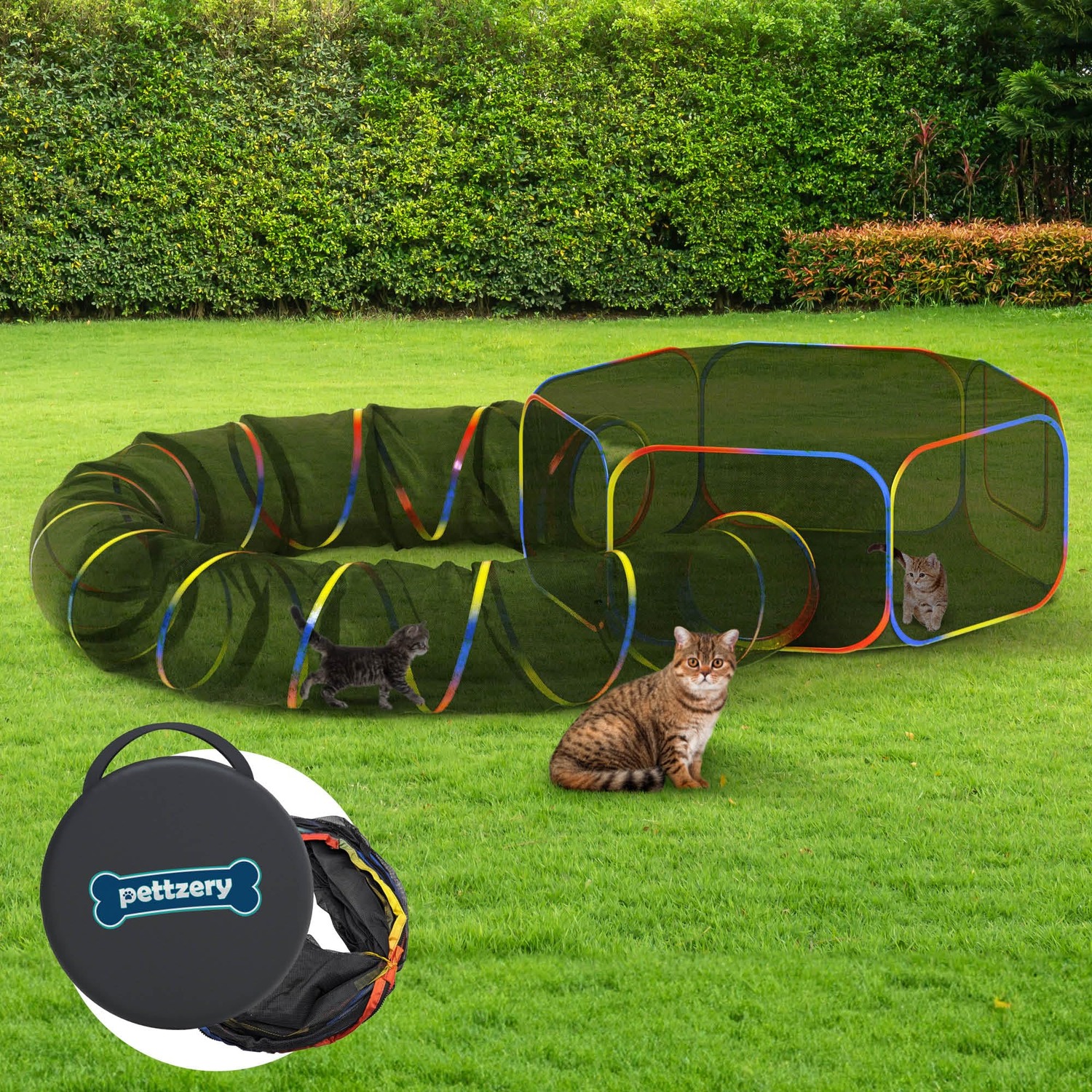
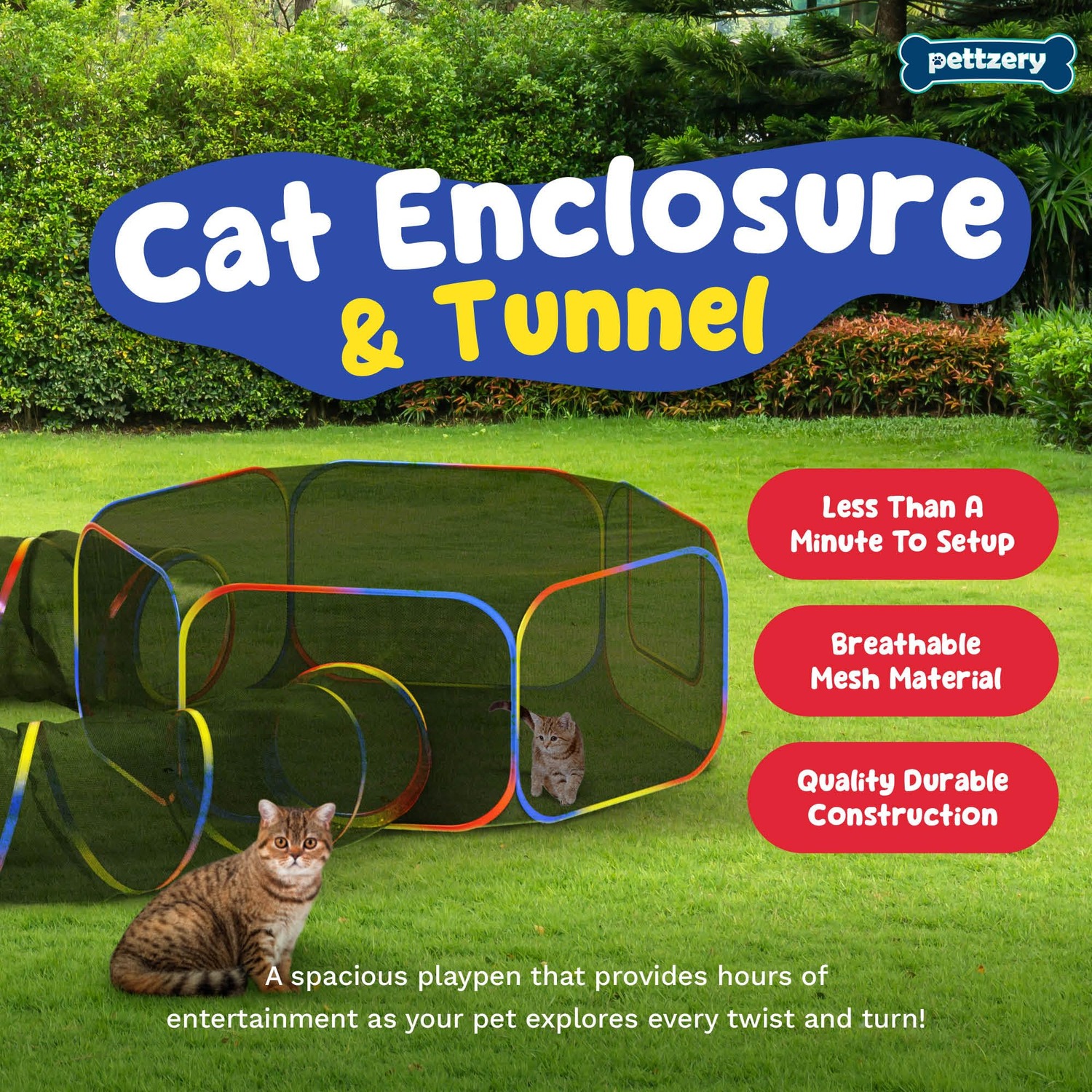
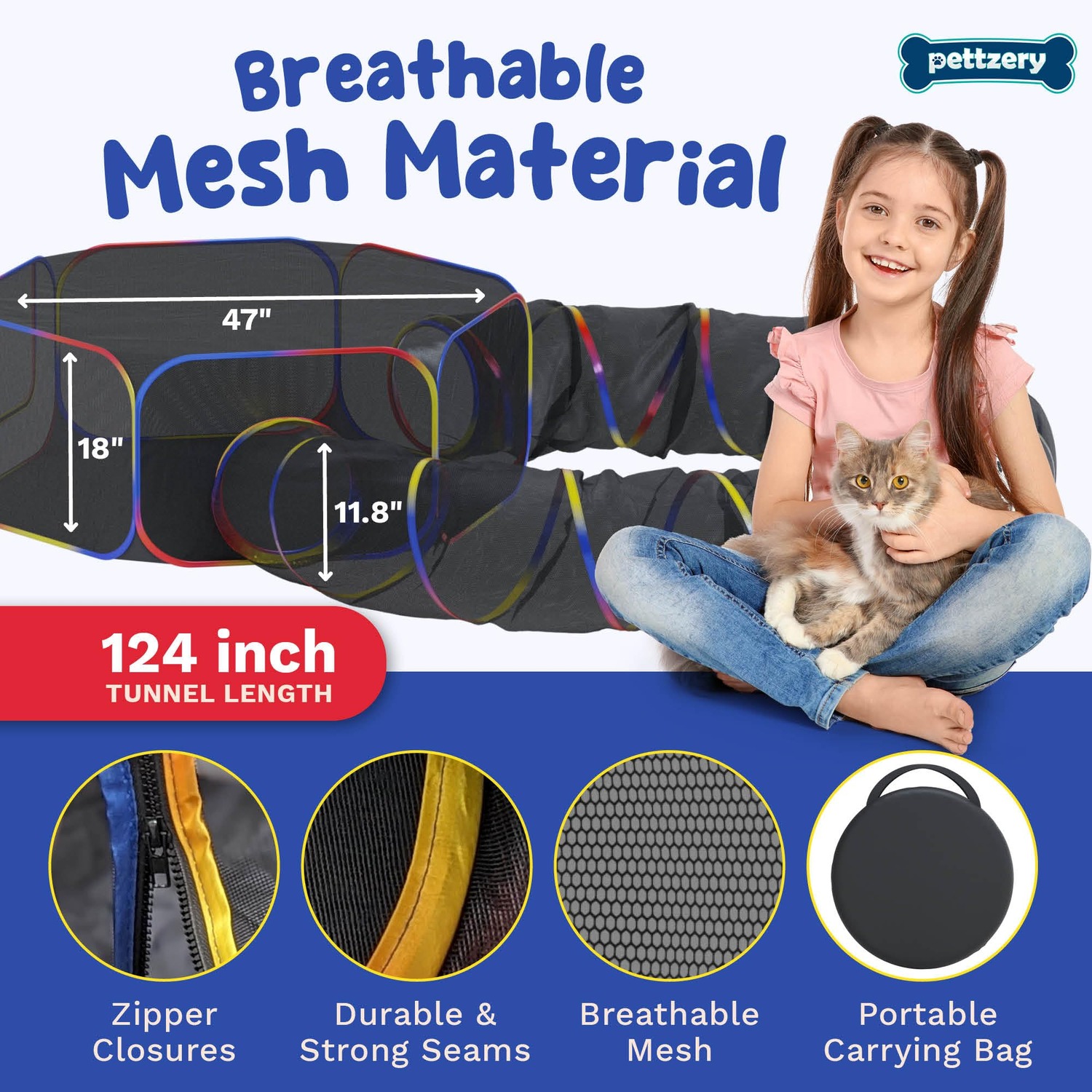
The Pettzery PT201 is a pop-up enclosure supplied with a zip-on play tunnel. Two pieces, one carry bag.
The tent opens to 119.4 cm square and 45.7 cm high. In practical terms, that is a little over a metre each way, which is enough for a cat to take real steps rather than just turn around. The height suits sitting, stretching, and rolling, not standing on hind legs, which is typical for this style of ground-level enclosure.
The build is Oxford cloth with mesh panels. Oxford cloth is a tight woven fabric that turns up constantly in outdoor gear because it handles being folded, dragged, and packed. The mesh does two jobs. It keeps the air moving so the inside does not turn into a hot box, and it lets you see your cat the entire time. That second part matters more than people expect, especially in the first week when a cat is still deciding how they feel about the whole idea.
Zips close the openings. Assembly is listed as not required, because the frame springs into shape on its own.
The tunnel changes the experience
A plain mesh pen gives a cat somewhere to be. A tunnel gives them something to do.
Cats are ambush animals. A tube triggers the instinct to hide, wait, and burst out. Attach the tunnel to the main tent and you have created a little circuit, and most cats will run it several times before settling down. That energy burn is the difference between a cat who naps happily afterwards and a cat who comes back inside still wound up.
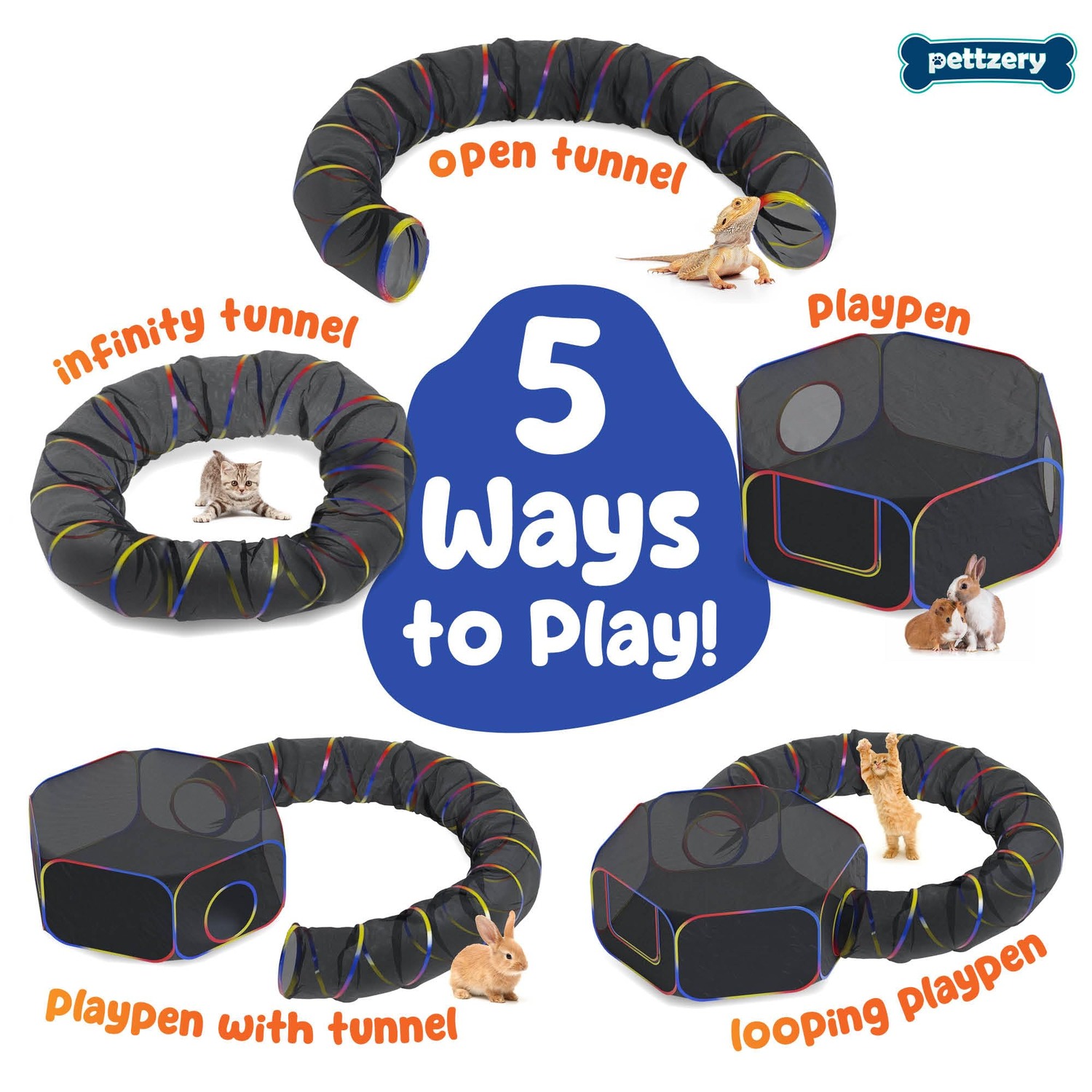
The tunnel also unzips completely. That means you can use it indoors on a rainy day, or leave it out of the setup when space is tight on a small balcony. Buying a cat playpen with tunnel as one set is generally cheaper and tidier than buying the two separately.
Who this suits
Apartment and unit owners get the most out of it. If you have a balcony and no yard, a balcony cat enclosure is often the only legal and safe way to give a cat outdoor time. Check the floor area first, since you need at least 120 cm square of flat space.
Renters are the second group. Nothing is drilled, screwed, or fixed in place, so there is nothing to explain at the end of a lease.
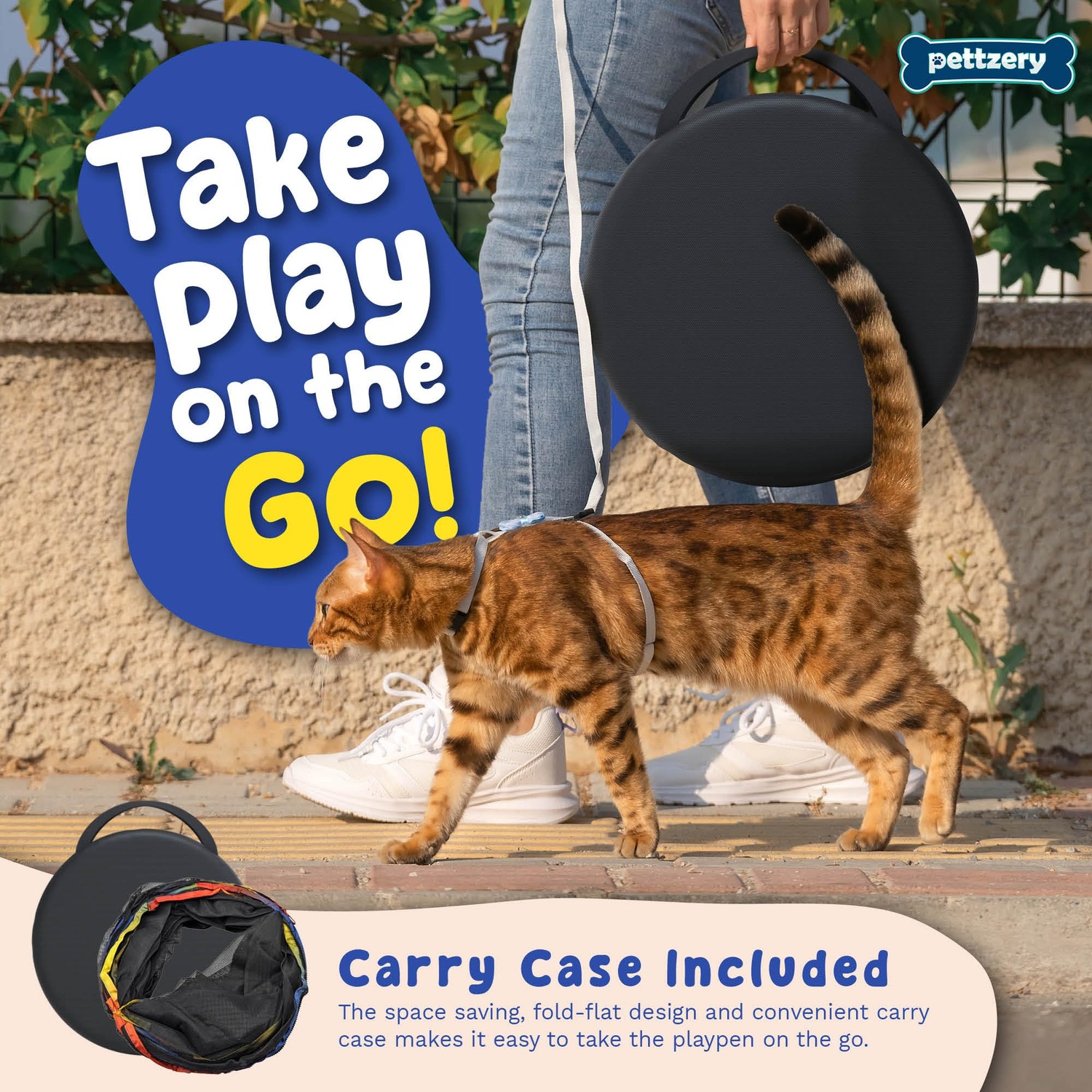
It also suits people who travel with pets. A foldable catio packs into a car boot alongside the camping gear, which means a holiday house or caravan site can have a familiar outdoor patch ready in minutes. Cats cope better with new places when something smells like home.
Finally, multi-pet households get extra mileage. The listed target species include ferrets, guinea pigs, and rabbits, so the same enclosure can serve a few different animals on rotation.
How to choose between enclosure styles
There are roughly four options on the market and they solve different problems.
Fixed timber catios are the gold standard for permanent outdoor access. They are also expensive, need installation, and are not an option for renters.
Walk-in mesh tents are tall enough for you to step inside. They are great if you want to sit out with your cat, but they take up far more storage room and are heavier to move.
Pop-up ground enclosures like this one trade height for speed and portability. You cannot climb in with your cat, but you can have it set up before the kettle boils and packed away before dinner.
Cat strollers and backpacks keep a cat contained while you walk. Useful, but a cat in a stroller is a passenger, not a cat who gets to stretch on grass.
If your priority is daily short sessions with zero hassle, the pop-up style wins. If your priority is all-day unsupervised outdoor access, you need a fixed structure instead.
Getting the first session right
Do not take a cat straight outside into a brand new enclosure. Open the tent indoors with all the zips undone, drop in a familiar blanket, and let your cat wander through on their own schedule. Treats in the tunnel help. Most cats investigate within a day or two.
Once they are comfortable, move outside and keep the first session to ten or fifteen minutes. Pick a calm, shaded spot. Sit nearby. Bring water.
Build up from there. Some cats are relaxed by session three. Others take a fortnight, and a small number never warm to any enclosure at all. That is a cat thing, not a product fault.
Safety points worth knowing
This is a supervised-use product. Zips keep a settled cat contained, but no fabric enclosure is a locked cage, and a cat left alone long enough will test the seams. Stay within sight.
Watch the weather. The listing does not claim a waterproof rating, so bring it in before rain. A lightweight pop-up can also move in wind, so avoid breezy days and exposed corners, and place something weighted inside like a cat bed.
Heat deserves special attention. Mesh panels let sunlight straight through. Always set up so part of the enclosure sits in proper shade, offer water, and never leave a cat in direct midday sun.
Looking after it
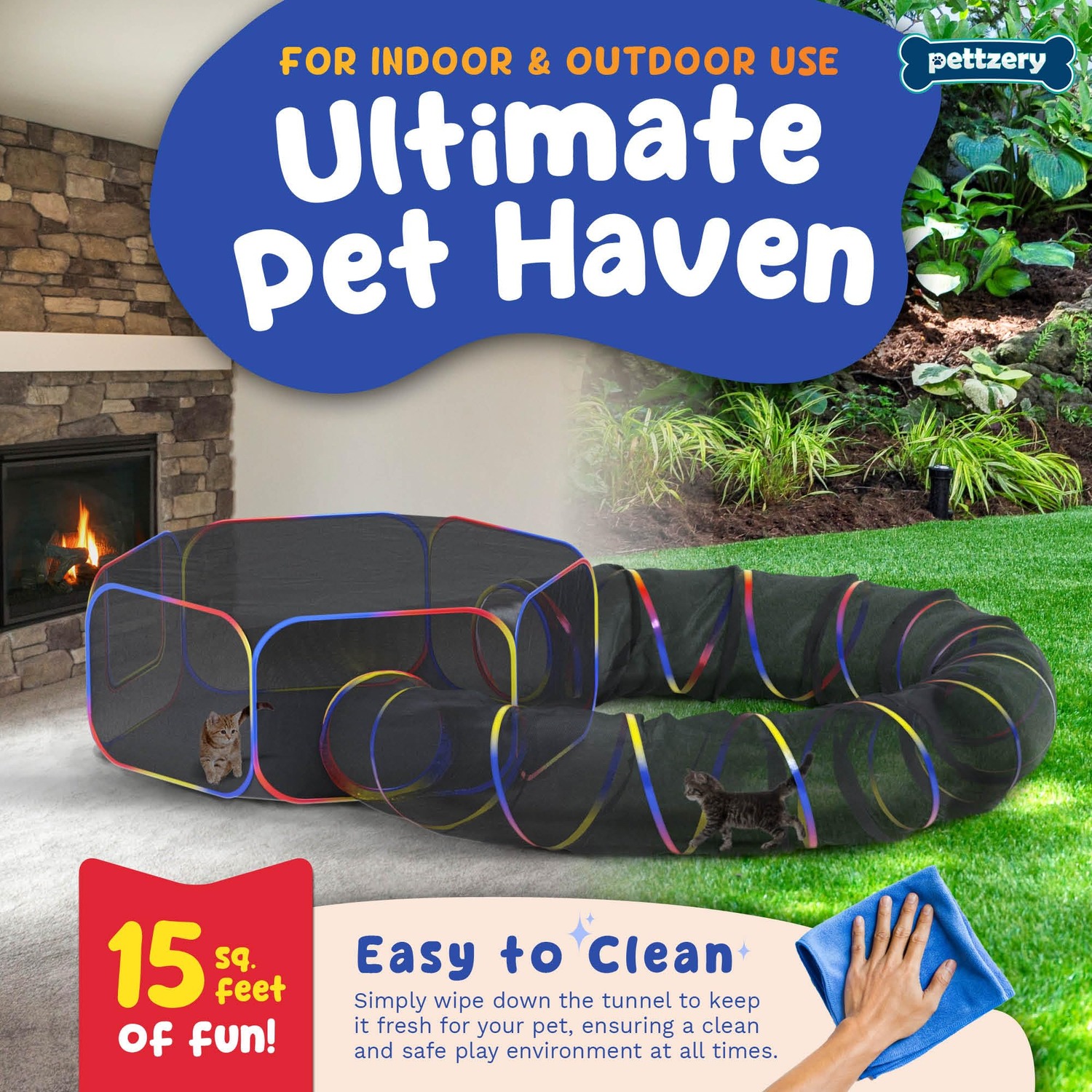
Care is straightforward. Shake out fur and grass after each use. Spot clean the Oxford cloth and mesh with mild soapy water and a soft cloth, then let it air dry fully. Skip the washing machine, the bleach, the dryer, and the iron.
Store it dry. Packing damp fabric into a sealed bag is how mesh gear develops a musty smell and the stitching weakens. Keep it out of permanent direct sun too, since UV is harder on fabric than anything a cat will do to it.
Folding a pop-up frame takes one demonstration and then it clicks. Keep the card that comes with it until the motion feels natural.
The short version
If you have a cat who wants outside and a situation that will not allow free roaming, this is a sensible answer. It opens in about a minute, gives your cat a metre-plus square of grass and fresh air, adds a tunnel so there is actually something to do, and folds into a bag when you are finished.
It is not a permanent structure and it is not for leaving a cat alone in the yard. It is for supervised sessions, balconies, holidays, and afternoons in the sun. Judged on that job, an outdoor cat tent of this style does it well, and the two-piece set makes it better value than a bare pen.