
The complete guide
How To Choose An Outdoor Cat Tunnel That Your Cat Will Actually Use
The problem with letting a cat outside
Nearly every cat owner hits the same wall. Your cat sits at the glass door watching birds, tail flicking, completely fixated. You know she wants out. You also know what is out there: roads, dogs, other cats with opinions, and in a lot of neighbourhoods, a council rule about roaming pets.
So you compromise. Maybe a walking lead, which about one cat in five tolerates. Maybe supervised time on the lawn, where you spend the whole session half-crouched, ready to grab her. Neither is relaxing for anyone.
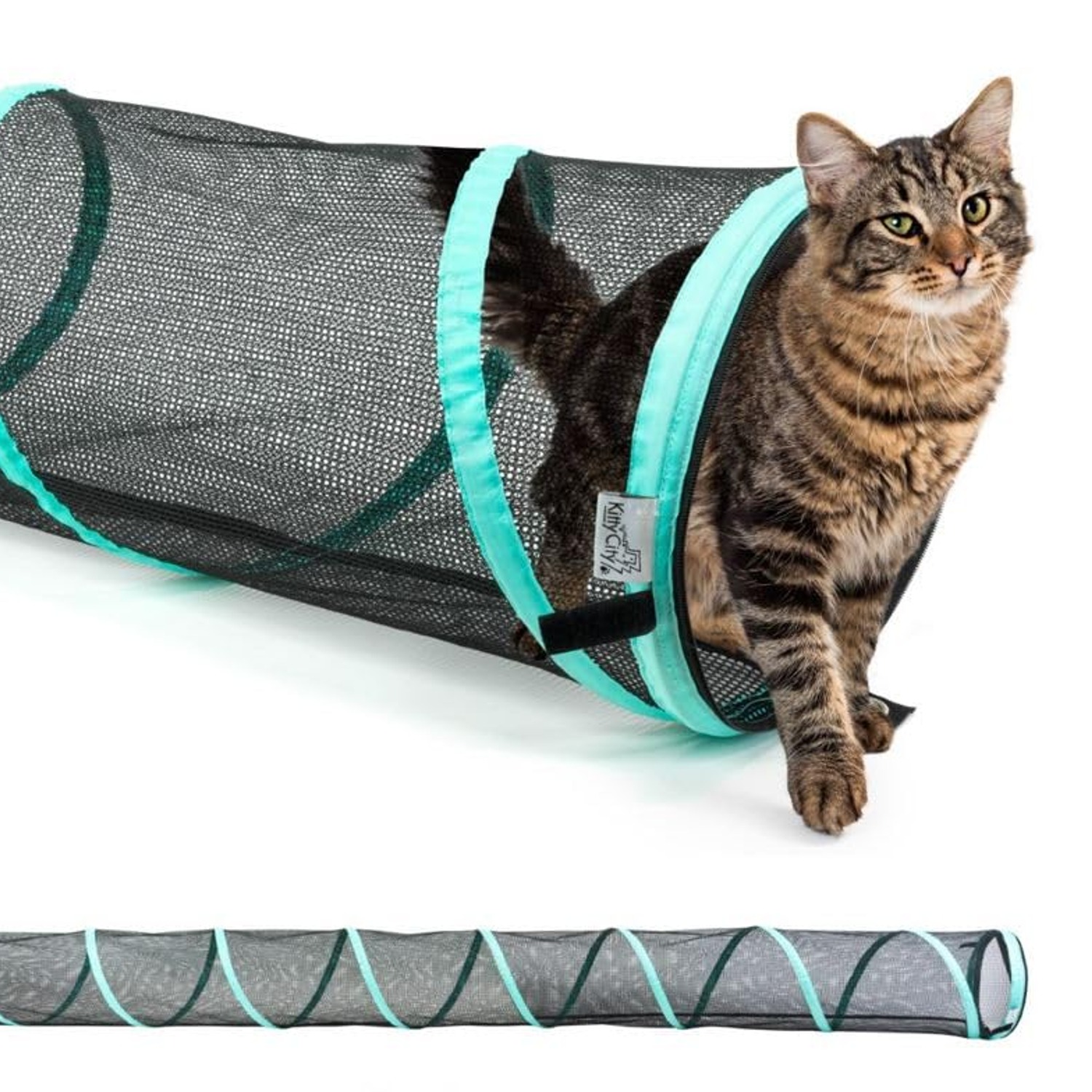
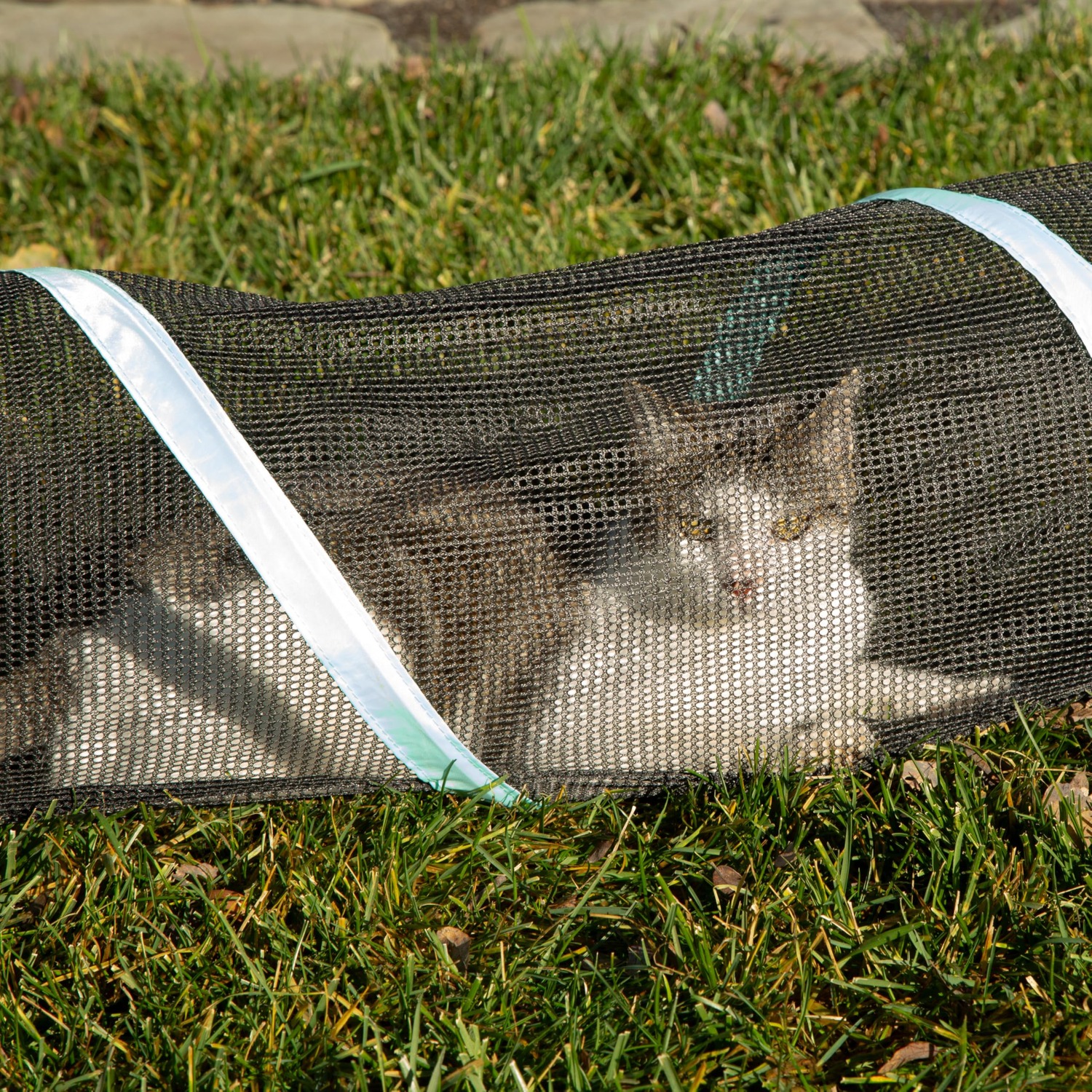
An outdoor cat tunnel solves this in a very direct way. It is a long, enclosed, fabric run that you lay out on the grass. Your cat goes in one end, pads along it, sniffs the air, watches insects through the fabric, and comes back. She is outside. She is also contained. You can drink your tea.
How a 3 metre cat tunnel works
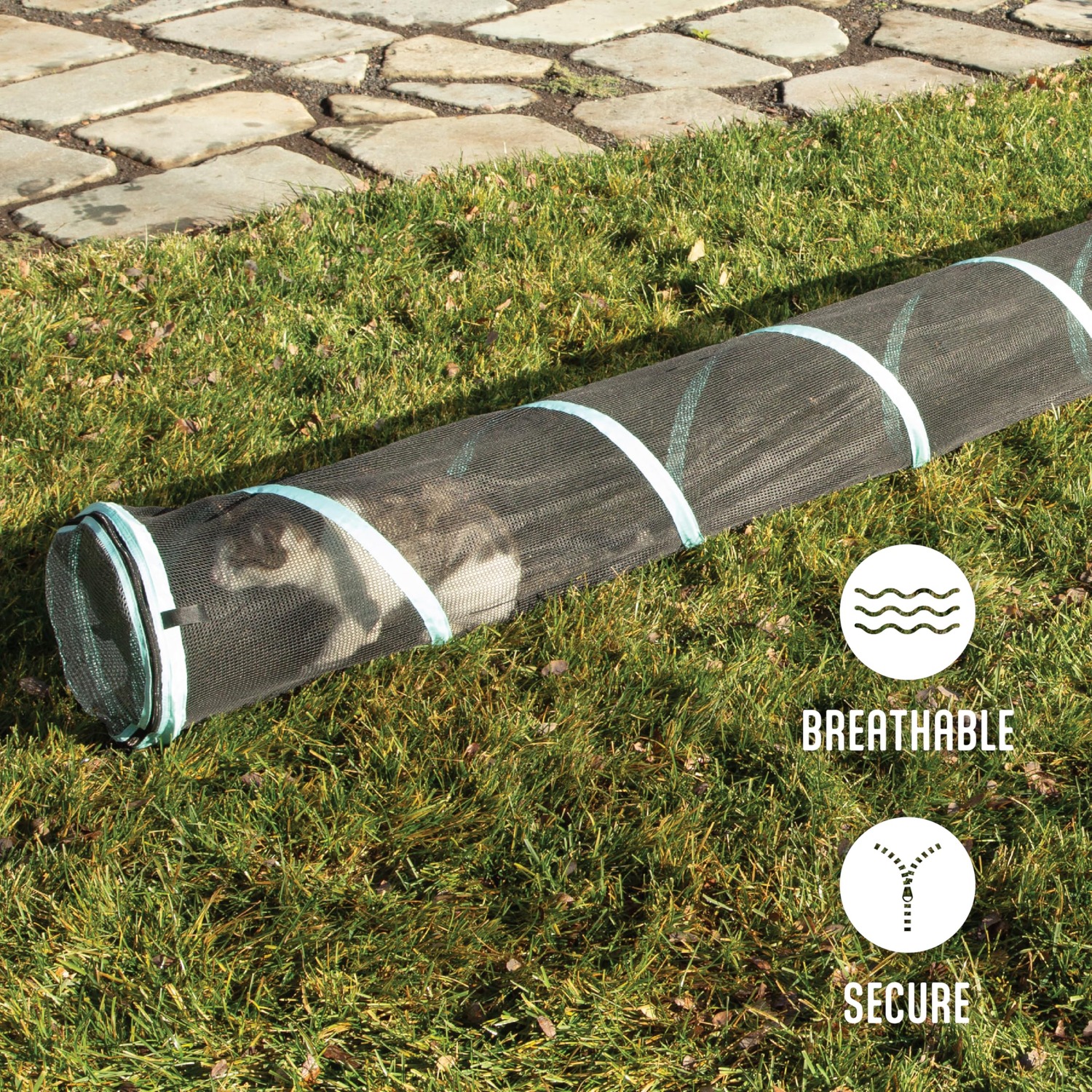
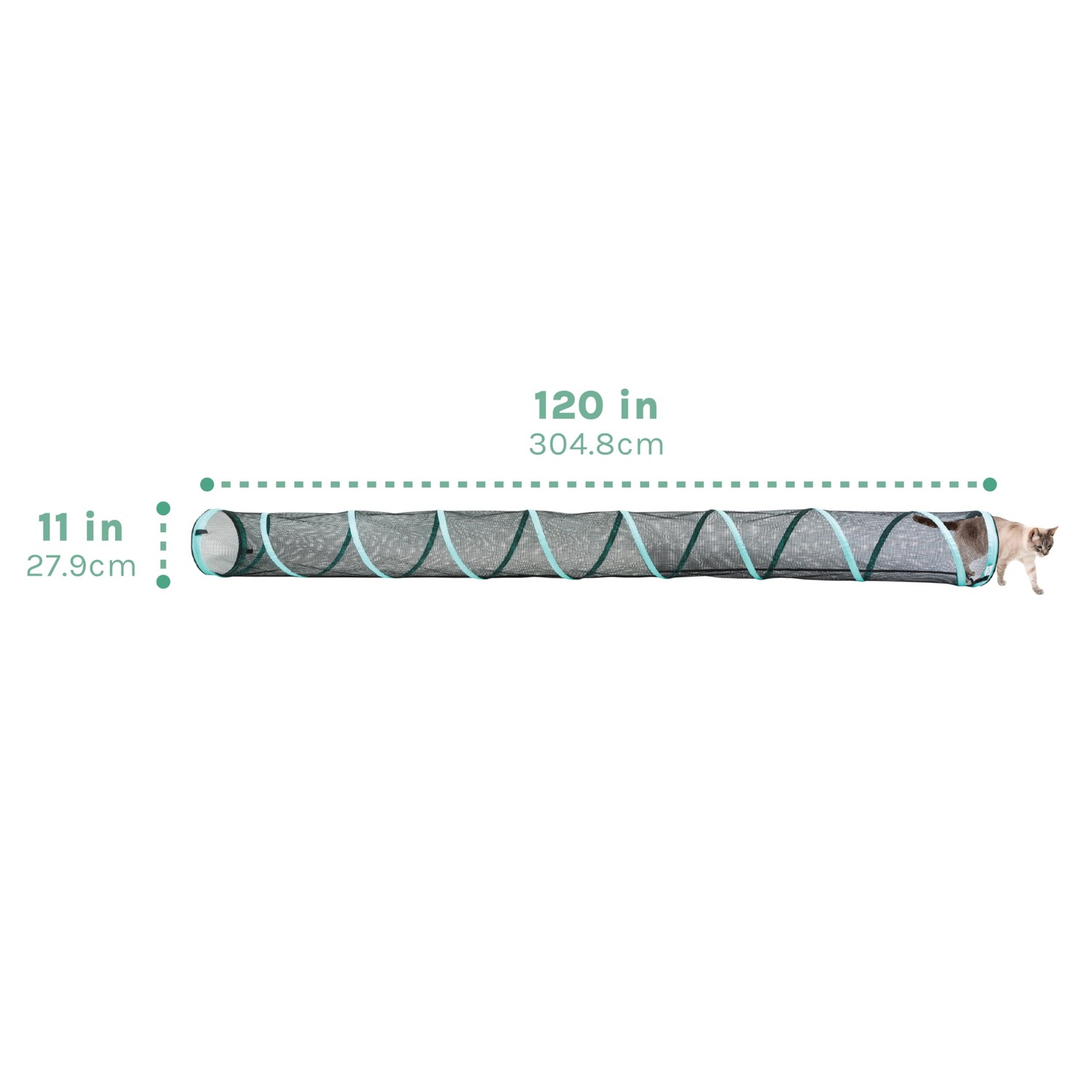
The design is simple on purpose. This one is 3.05 metres long with a round opening 0.28 metres across. It is polyester, it weighs 816 grams, and it folds down flat when you are finished with it.
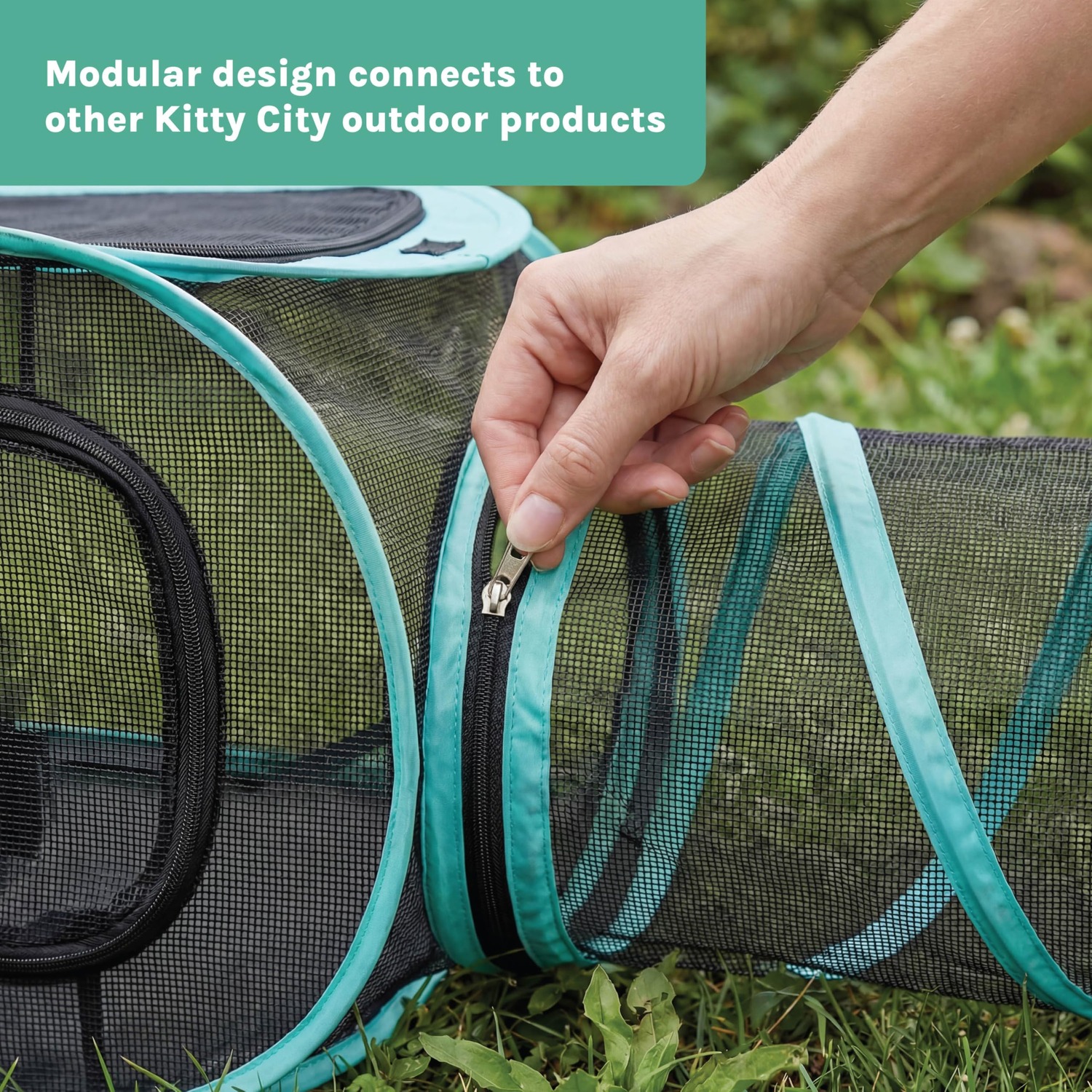
The two features that make it an outdoor product rather than an indoor toy are the zips and the stakes. Both ends of the tunnel zip closed. That means you can shut your cat in completely, or shut one end to make a safe dead end she can retreat into, or open both and let her treat it as a thoroughfare. The stakes pin the tunnel to soft ground so it does not shift or roll when she runs through at speed. Without them, a lightweight tunnel on a breezy day is a kite.
Three metres matters more than you might expect. A short tunnel is a novelty that a cat investigates once. At three metres she can actually accelerate, which changes the tunnel from a curiosity into exercise. That is the difference between a cat run tunnel and a toy.
Who it suits
Indoor cats in units and townhouses. If your cat has never been outside and never will be in the usual sense, this is a controlled introduction. Fresh air, grass smells, sunshine on her back, with walls around her the whole time.
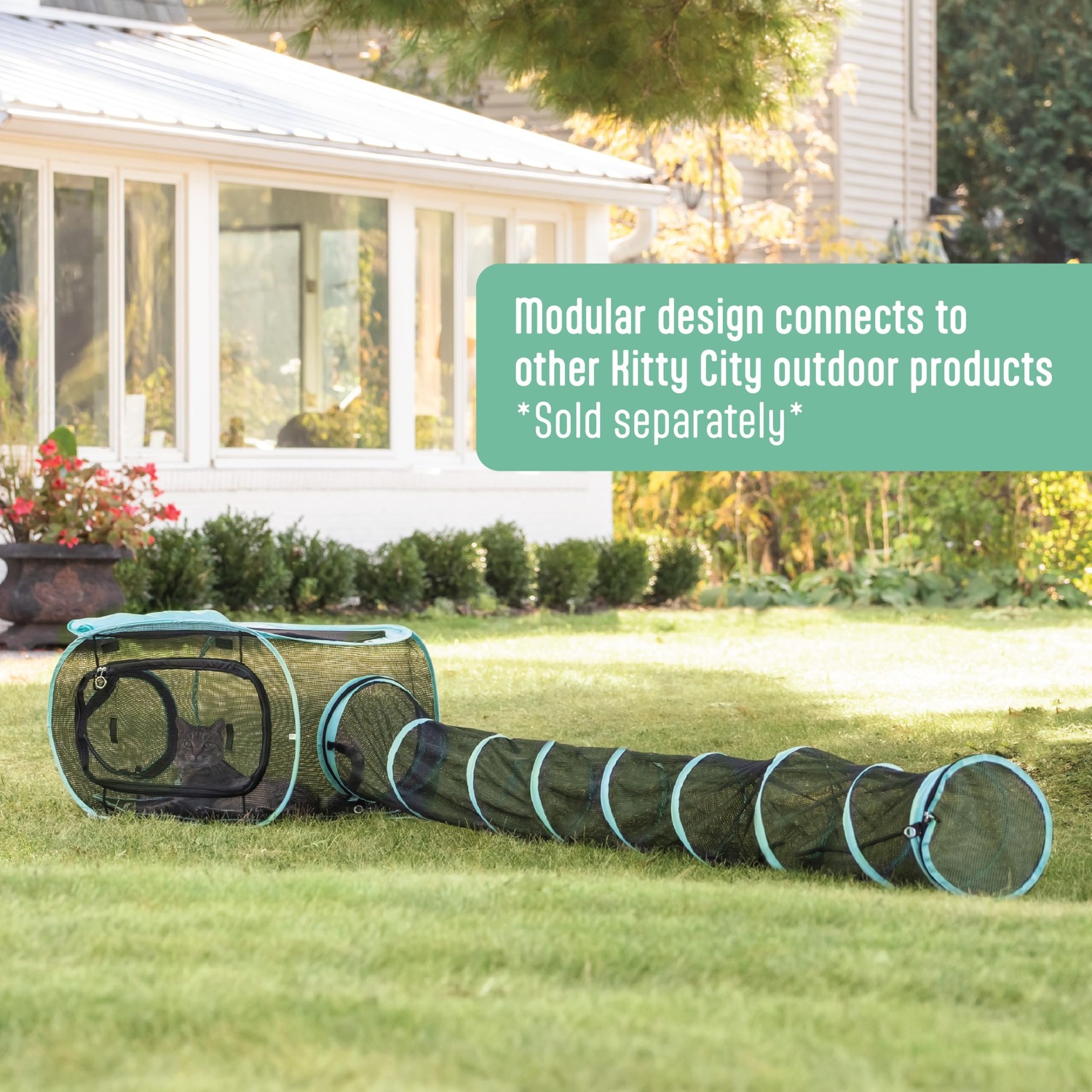
Households with a catio. This is where the product really earns its place. Open one zipped end at the catio entrance and the tunnel becomes a cat tunnel enclosure connector, pushing the usable space out across the lawn. The same approach works at a cat flap or a propped back door.
Timid cats. Nervous cats hate open ground. They stick to fence lines and shrubs because cover feels safe. A covered run gives them that cover, so a cat who panics on a walking lead will often stroll happily through a tunnel.
People who move around. Renters, caravanners, anyone who visits family with their cat. It weighs under a kilo and packs flat, so it travels.
Bored indoor cats in winter. Pull it inside and run it down the hallway. A long cat tunnel indoors still beats a cat staring at the wall.
How to choose the right one
A few things separate a tunnel you will use for years from one that ends up in the bin.
Length. Short tunnels get ignored. If you have the space, go long. This one is 3.05 metres, commonly listed as a cat tunnel 10 foot, and that is a sensible minimum for outdoor use.
Diameter. 0.28 metres suits most adult domestic cats. A particularly large or barrel-chested cat might find it tight. If you have a Maine Coon or similar, measure across the shoulders first. The breed guidance on this model is for small breeds.
Closures. This is the bit people skip, and it is the most important bit outdoors. Without zips you have an open pipe, and an open pipe is not containment. Zipped ends turn the tunnel into a defined space you control.
Anchoring. Stakes are what keep the tunnel honest on grass. Check they are included, because they usually are not on indoor models.
Expandability. If you think you might want more later, buy into a range. This tunnel is part of the Kitty City Outdoor Modular line and works with the Outdoor Mega Kit, so you can build out a proper cat tunnel system rather than replacing everything.
Pack-down. A collapsible cat tunnel that folds flat will get used. One that stays rigid gets stored in the way, then resented, then thrown out.
Setting it up well
Pick your spot before you unfold anything. Shade matters. Fabric in full summer sun gets uncomfortably warm inside, and a cat will refuse a hot tunnel. Running it along a fence line or under a hedge gives shade and gives your cat the edge-of-the-world feeling cats prefer.
Lay it out straight, then push the stakes in at each end. Give the tunnel a firm tug to check it holds. On a patio where stakes will not bite, brace it against a wall or weigh the ends with something solid.
For the first session, leave both ends open. A cat that can see daylight at the far end will walk through. A cat facing a zipped dead end on day one may decide the whole thing is a trap. Roll a ball through it, or sit at the far end and call her. Most cats get it within a minute or two.
Once she is confident, you can start zipping one end for proper containment. Always stay with her outdoors. Fabric is not fox-proof, dog-proof or escape-artist-proof, and a tunnel is a supervised play space, not an unattended enclosure.
Looking after it
Outdoor gear gets dirty. Shake the tunnel out after each use to clear grass, leaves and grit, because grit is what wears fabric and jams zips.
For cleaning, a damp cloth with mild soap handles most of it. For a deeper clean, it can go in the machine on a gentle cycle. Let it air dry completely before folding, since storing damp polyester is how you end up with a musty tunnel your cat will not go near.
Keep an eye on the zips. A quick check at the ends every few weeks catches a sticking slider before it fails. If your cat is a determined scratcher, look over the seams too.
Bring it in when the weather turns. Leaving any fabric product out through months of sun and rain will fade and weaken it. Folded away, it takes almost no room.
The short version
A 3 metre outdoor cat tunnel is one of the better value-for-money enrichment buys for a cat who wants outside but cannot have free run of the neighbourhood. This one gives you 3.05 metres of enclosed run, zips at both ends for real containment, stakes to hold it steady, and a fold-flat design at 816 grams that you can carry out with one hand.
It works alone on the lawn, it works as a connector off a catio or cat flap, and it works indoors down a hallway when the weather is miserable. Supervise your cat while she uses it, shake it out afterwards, and store it dry. That is genuinely all there is to it.