
The complete guide
Choosing a Pop-Up Cat Enclosure, A Practical Buyer's Guide
The problem with letting cats outside
Every cat owner runs into the same conflict eventually. Your cat sits at the window making noises at birds, flattens themselves against the glass when the sun hits the deck, and clearly wants out. Meanwhile you know what is out there. Cars, dogs off lead, snakes in some parts of the country, ticks, fleas, fights with the neighbourhood tom, and the real chance they simply do not come home one evening.
Indoor cats live longer. That is well established. The trade-off is that a bored indoor cat finds its own entertainment, and that entertainment is usually your sofa arm, your curtains, or your ankles at three in the morning.
A pop-up cat enclosure is the compromise that actually works for most households. It puts your cat outside, on grass, in moving air, with the full sensory load of the outdoors, inside a mesh shell that keeps the risks out. Nobody is building a fence. Nobody is drilling into a rental balcony. You open it, your cat goes in, and later it goes back in a bag.
How a pop-up enclosure works
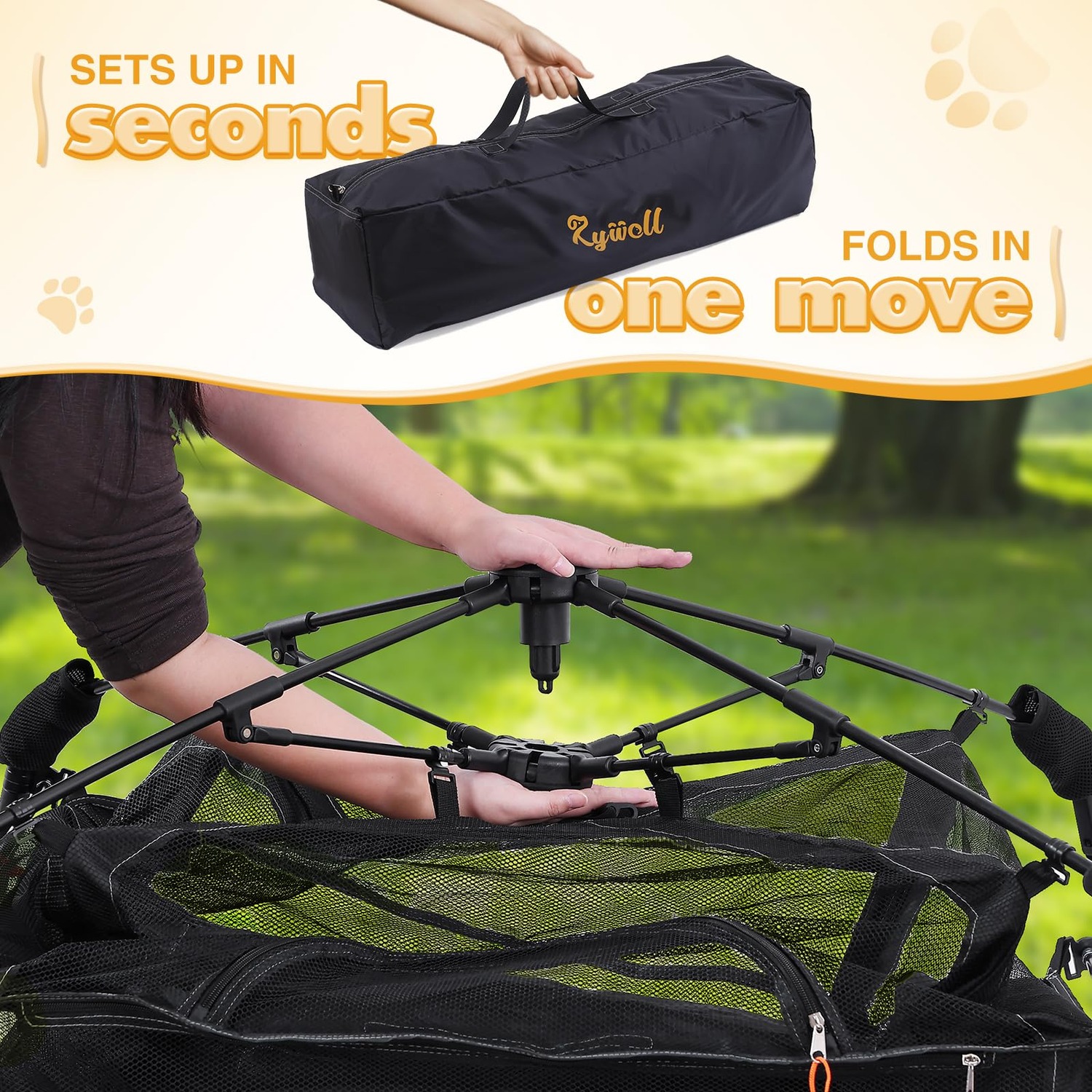
The mechanism is simpler than it looks. A central hub sits at the top of the frame with support poles running from it. You hold the base, press the top section into its slot, and the tensioned frame snaps into shape. To pack it away, you press the lower support rods with both hands and the whole thing collapses inward.
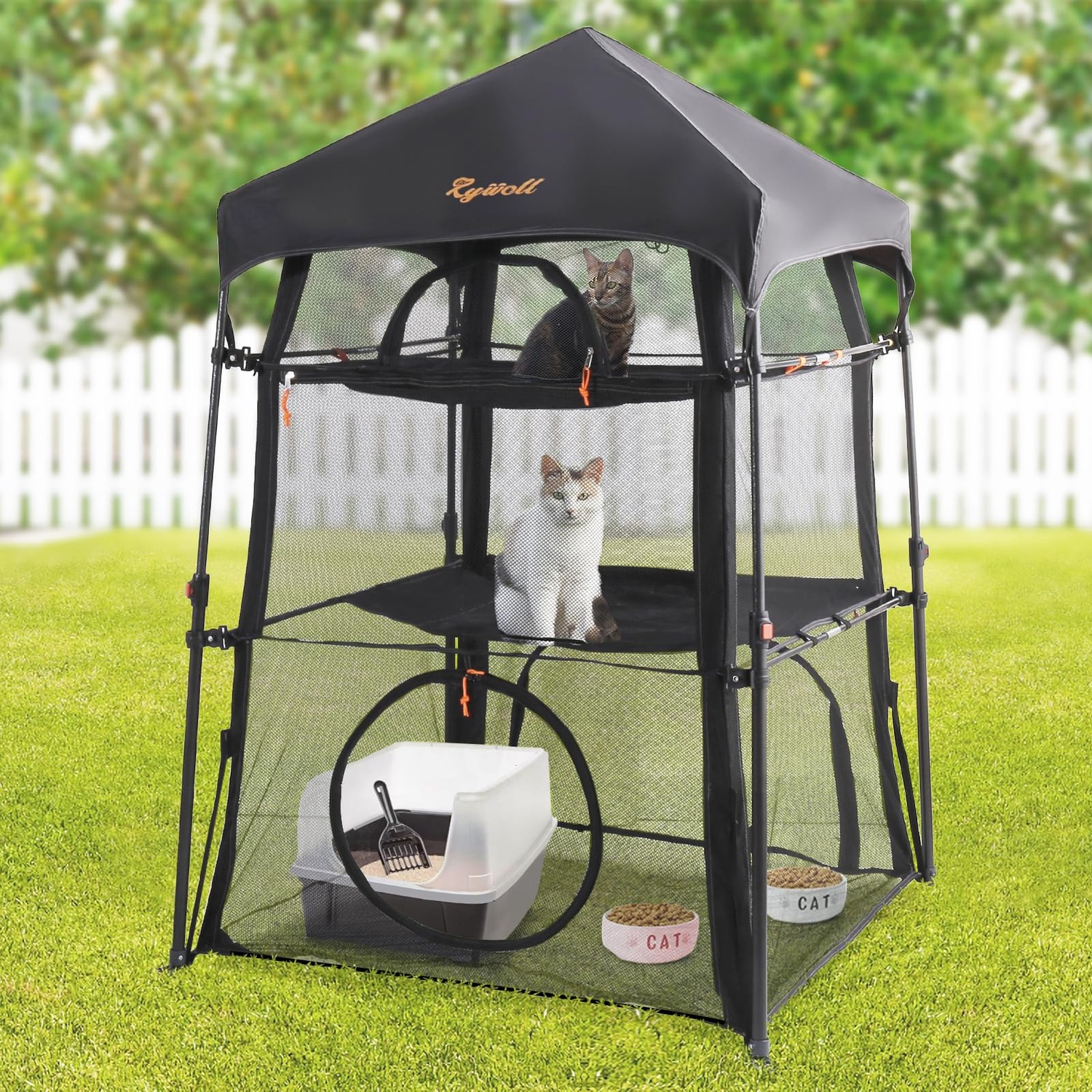
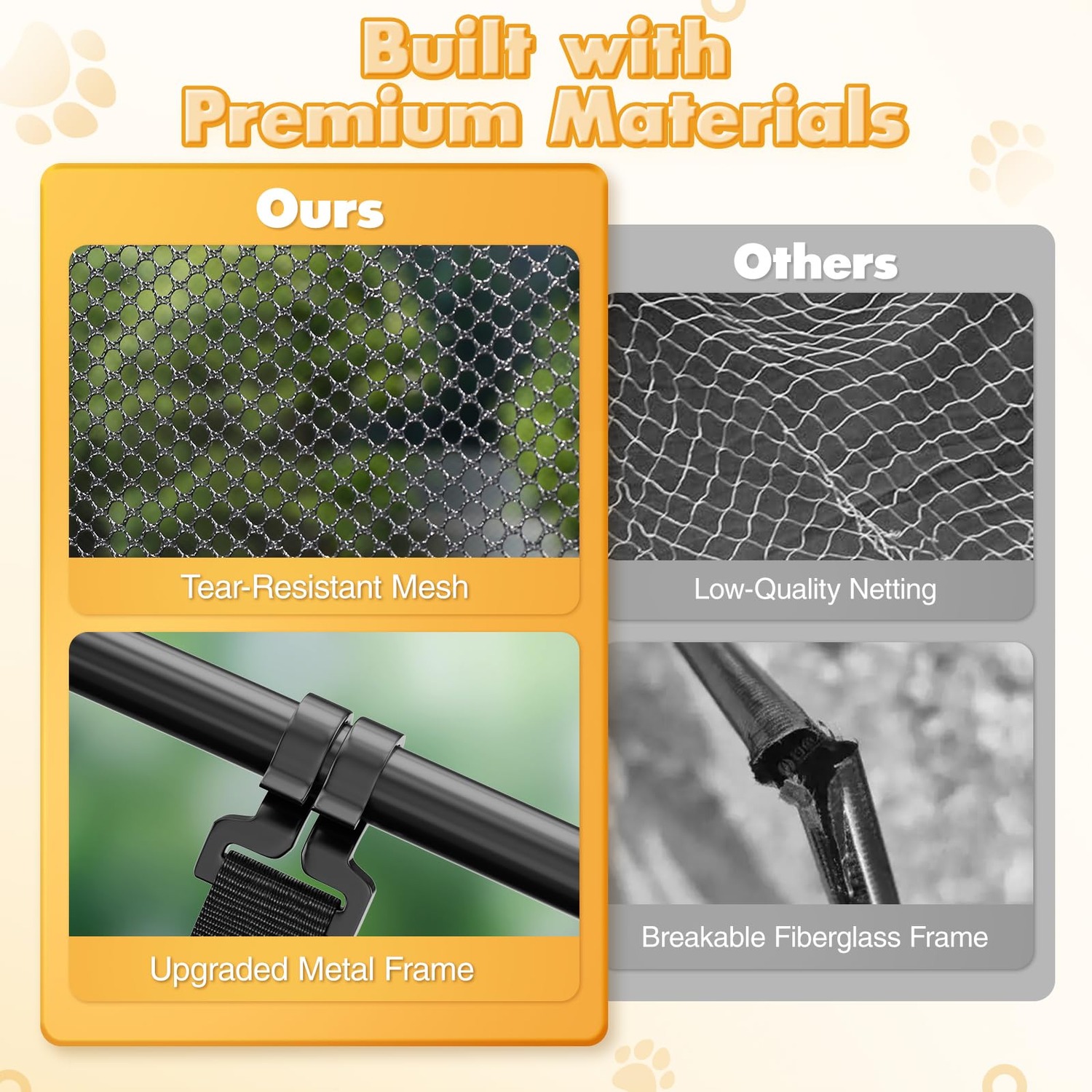
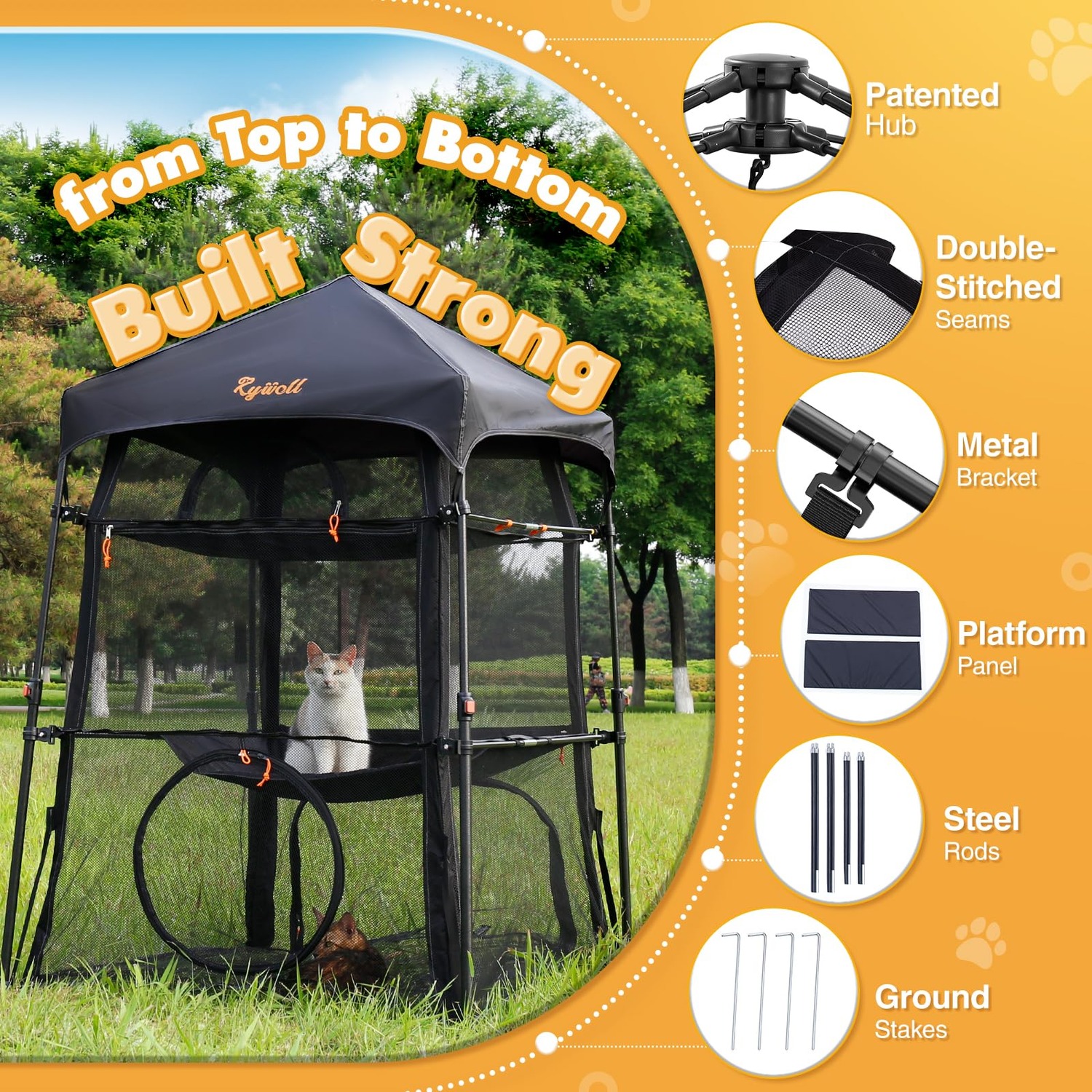
This one is 110 cm square at the base and 145 cm tall. The frame is alloy steel, the panels are Oxford cloth, and the walls are mesh so air moves through from every direction. Triangular reinforcement blocks sit at the pole corners, and the side pole stress points are carried across the full fabric panel instead of a single stitched tab. That matters more than it sounds, because stitched tabs are where cheap tents tear first.
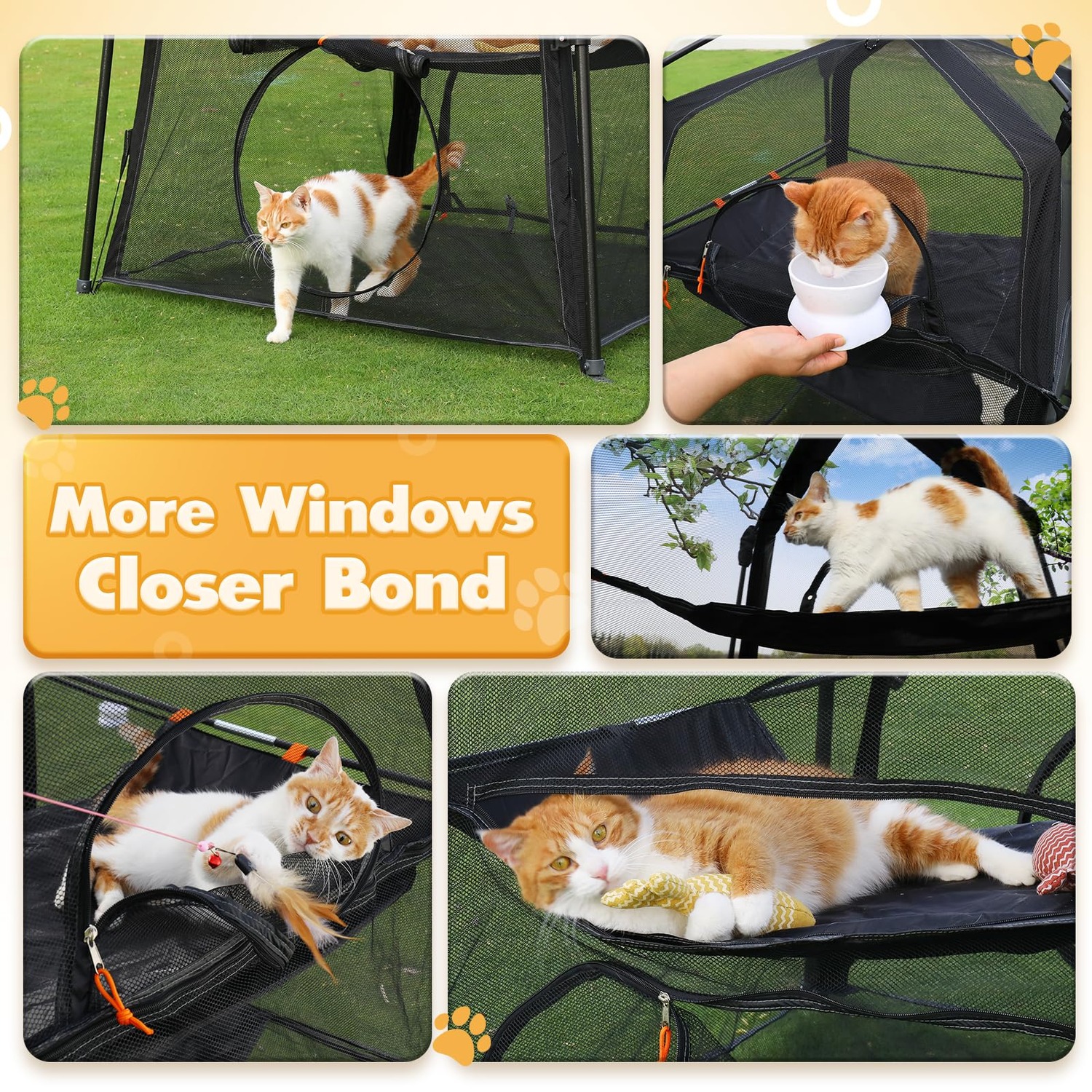
Everything closes with zips. There is a large opening at the bottom so you can reach in properly, and smaller interactive windows for passing a toy through or giving a scratch behind the ears. At the base there is a connector for standard cat tunnels, so you can extend the run if you already own tunnel sections.
Tent pegs come in the box. On grass or soil, peg all four corners. On a balcony, deck or indoor floor the pegs have nothing to grip, so use weights instead. Anything heavy and stable works.
Why height matters more than floor space
If you have ever watched a cat choose where to sit, you will notice they almost always go up. The top of the fridge, the back of the sofa, the bookshelf. Cats read height as safety and as a better vantage point.
This is where a tall mesh cat enclosure beats a flat pen of the same footprint. Three tiers in 145 cm of height turn a one-metre square into something a cat can actually explore. They climb, they perch, they drop to the ground level, they chase each other up and down. In a multi-cat house the levels also reduce friction, because two cats sharing a space vertically is very different from two cats sharing a space horizontally.
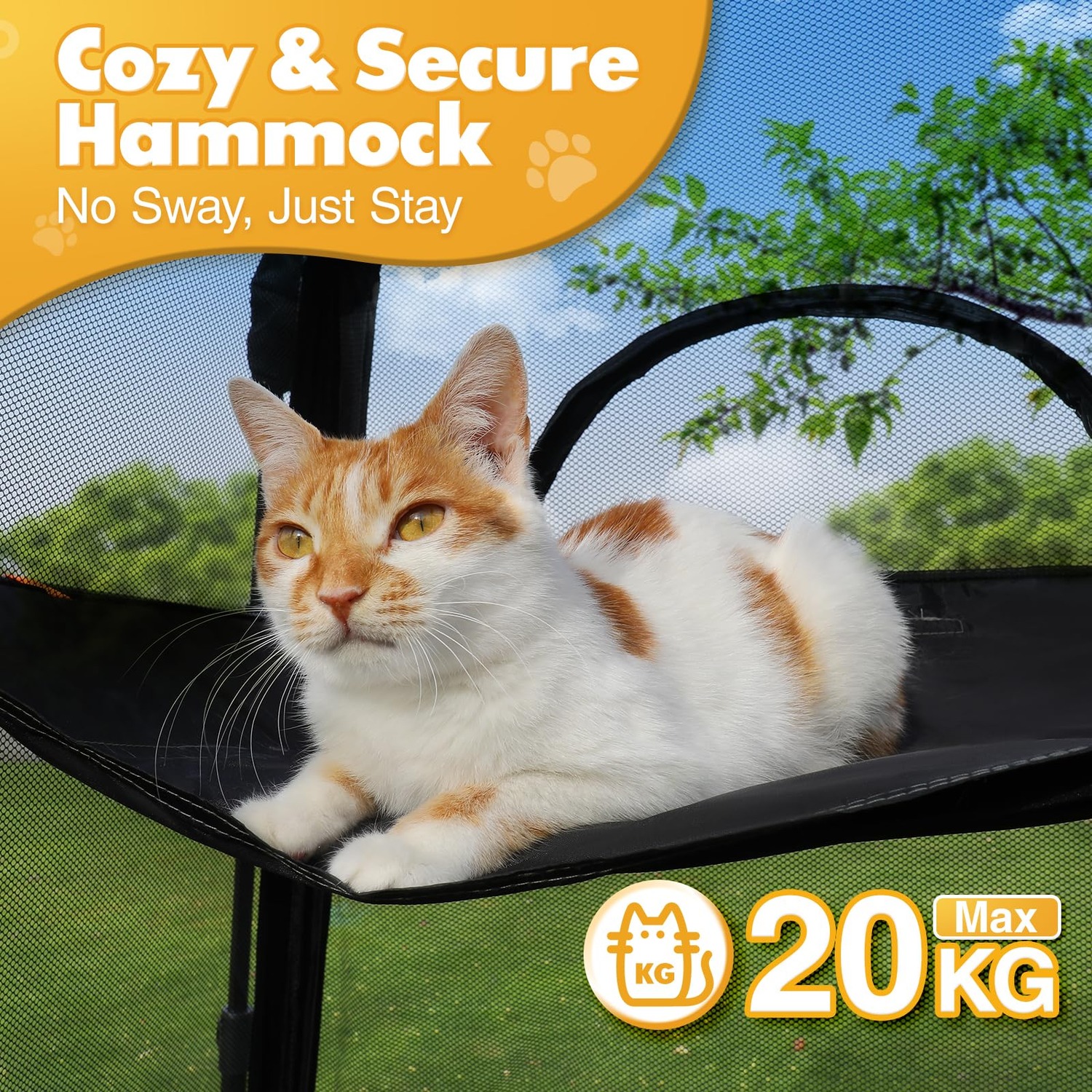
Expect some flex in the shelves. That is normal for any fabric structure, and the fix is tension. Peg or weight all four corners and the whole frame firms up, which tightens the tiers and makes jumps feel more solid underfoot. Cats who hesitate at first usually sort it out within a few sessions, especially if you put treats on the level you want them to try.
Who this suits
It fits a few clear situations. Renters who cannot build anything permanent get a catio without touching the property. Apartment owners get a safe way to use a balcony. Campers and caravanners get a travel cat enclosure that goes in the boot with everything else.
It is also genuinely useful indoors. A new kitten who is not ready for the run of the house, a cat recovering from surgery who needs rest but hates being shut in a bathroom, or a slow introduction between a resident cat and a newcomer who need to see each other without contact. All of those go better with a contained, airy space that everyone can see into.
Where it is less ideal: if you want something your cat can use unsupervised all day, every day, in all weather, a permanent built catio is the better investment. A fabric tent is for supervised sessions, not for leaving a cat in from breakfast to dinner.
How to choose and where to set it up
Start with the ground. You want flat, soft ground for pegging, with no sharp sticks or stones under the floor panel. A patch of lawn is ideal. Gravel chews fabric and does not take pegs well.
Then think about shade. A black tent in full afternoon sun gets warm, and cats will overheat faster than you expect. Site it where there is tree shade or building shade for at least part of the session, and always put water inside. If the only spot you have is sunny, use it in the morning or late afternoon instead of midday.
Measure before you buy. A 110 x 110 cm footprint needs more than 110 x 110 cm of clear space once you allow for peg room and for walking around it. On a small balcony, mark it out with tape first and see how the space feels.
Finally, plan the first session. Set it up indoors with the doors open and let your cat wander in and out at their own pace, with a blanket they already like on the bottom tier. Do not pick your cat up and post them in through a zip opening. Cats remember how a new object was introduced to them, and a bad first impression takes weeks to undo.
Care and getting a long life out of it
Fabric enclosures fail in predictable ways, and almost all of them are preventable.
Dry it before you fold it. Packing a damp tent into a bag is how you get mildew, and mildew is the one thing you cannot fully clean out. If it has been on wet grass, stand it open in the shade for an hour first.
Shake it out after each use. Fur, litter, dry leaves and grit all collect in the corners, and grit inside the fabric acts like sandpaper every time you fold it. Spot clean with warm water and a mild pet-safe detergent. Never put it in the washing machine or the dryer.
Store it out of the sun. Long-term UV exposure is harder on mesh than any amount of cat play. A cupboard or garage shelf is fine.
Check the hardware occasionally. Zips are the first thing to go on any tent, so keep them clean and do not force them. Count your pegs when you pack up, because losing them one at a time is the slow way to end up with a wobbly enclosure.
The short version
This is a 110 x 110 x 145 cm pop-up cat enclosure with three climbing tiers, an alloy steel frame, Oxford cloth and mesh panels, zip closures, interactive windows and a tunnel connector at the base. It weighs 5.9 kg, comes with a carry bag and tent pegs, and carries a 12 month warranty. Assembly is required for the first setup, after which it opens and closes in seconds.
Buy it if you want to give your cat safe outdoor time without building anything, if you rent, if you travel with your cat, or if you need a contained airy space for a kitten or a recovering pet. Peg it on grass, weight the corners indoors, keep it shaded, supervise the sessions, and dry it before it goes back in the bag. Do that, and it will give you a lot of happy afternoons.