
The complete guide
How to Choose a Foldable Cat Enclosure That Your Cat Will Actually Use
The problem with a cat who wants out
Most people who keep their cat indoors did not make that choice lightly. Roads, dogs, other cats, ticks, snakes and the quiet risk of a cat that simply does not come home are all good reasons. The trouble is your cat does not understand any of it. They sit at the window, they chirp at birds, and they make a break for the door every time the groceries come in.
A foldable cat enclosure is a middle path. It carves out a patch of grass, deck or balcony and puts mesh between your cat and everything else. They get warm ground, moving air, bird noise and the smell of soil. You get to sit nearby with a cup of tea instead of patrolling the fence line.
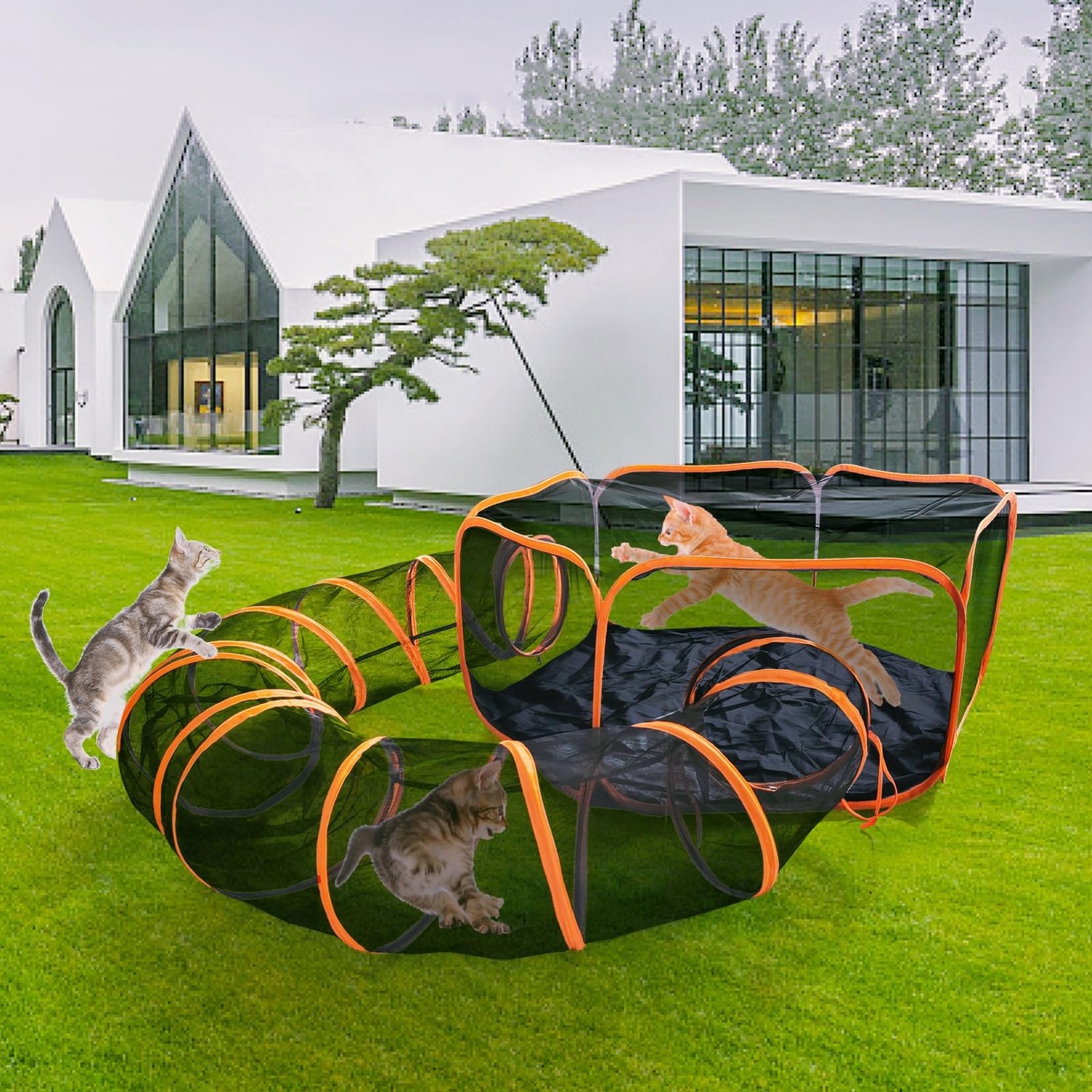
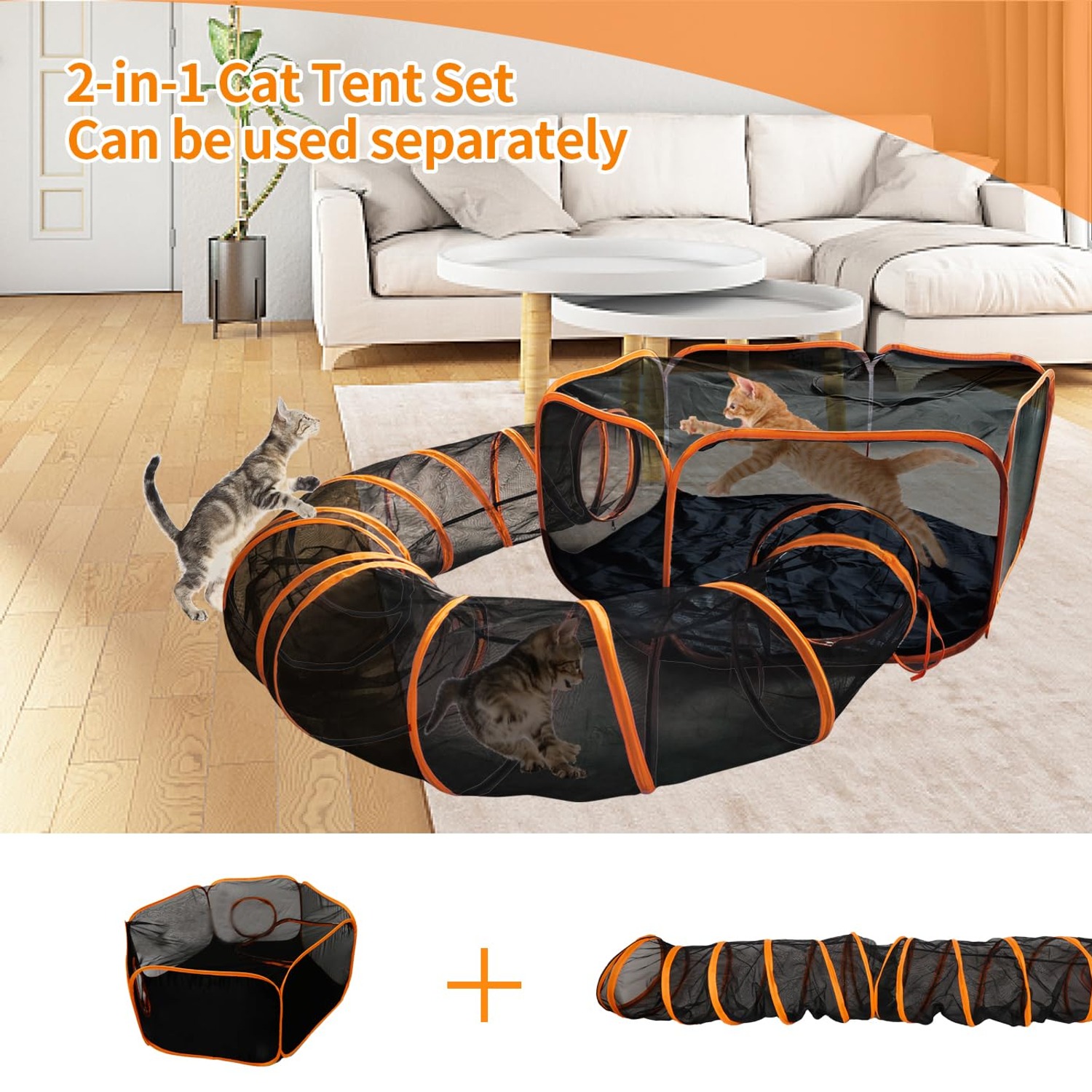
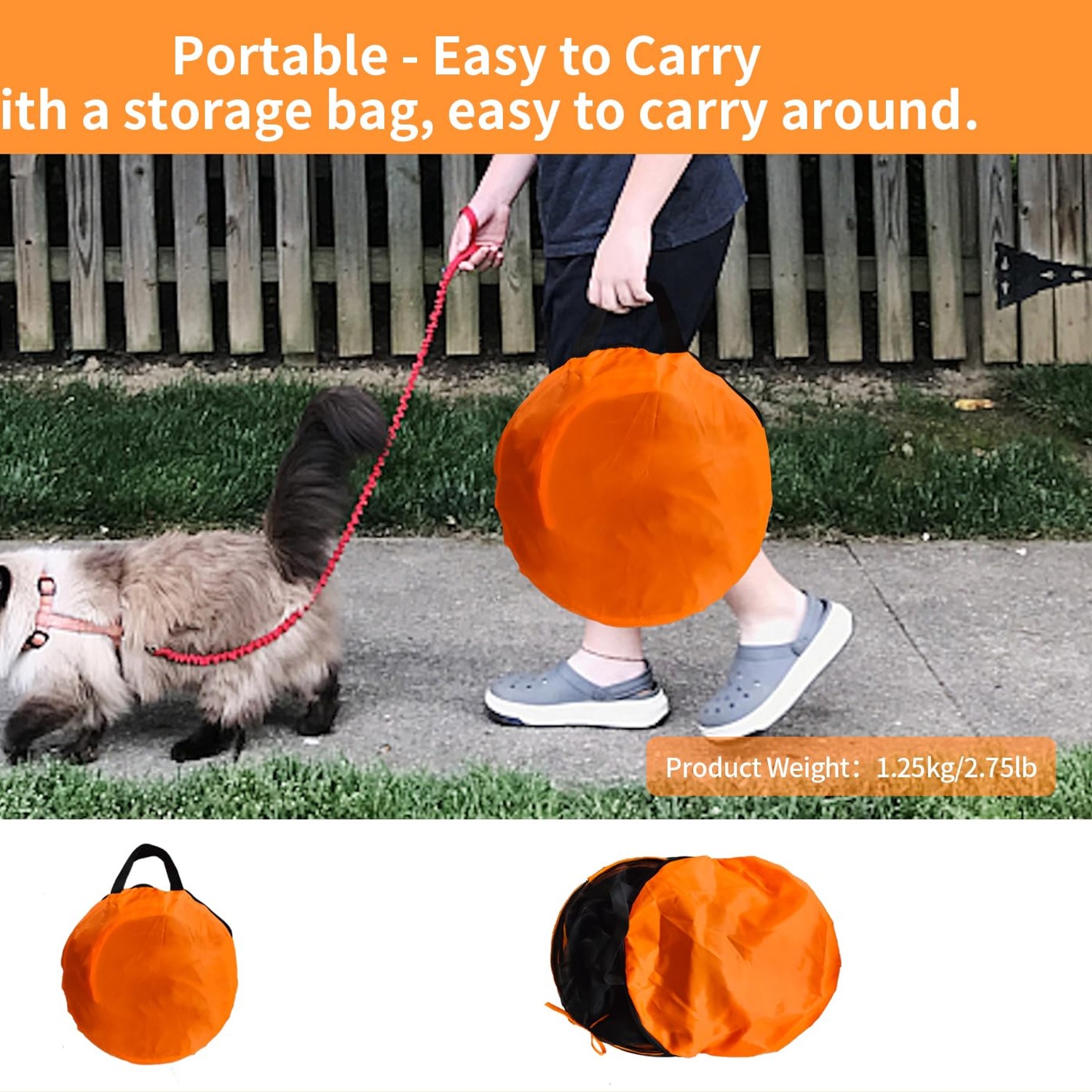
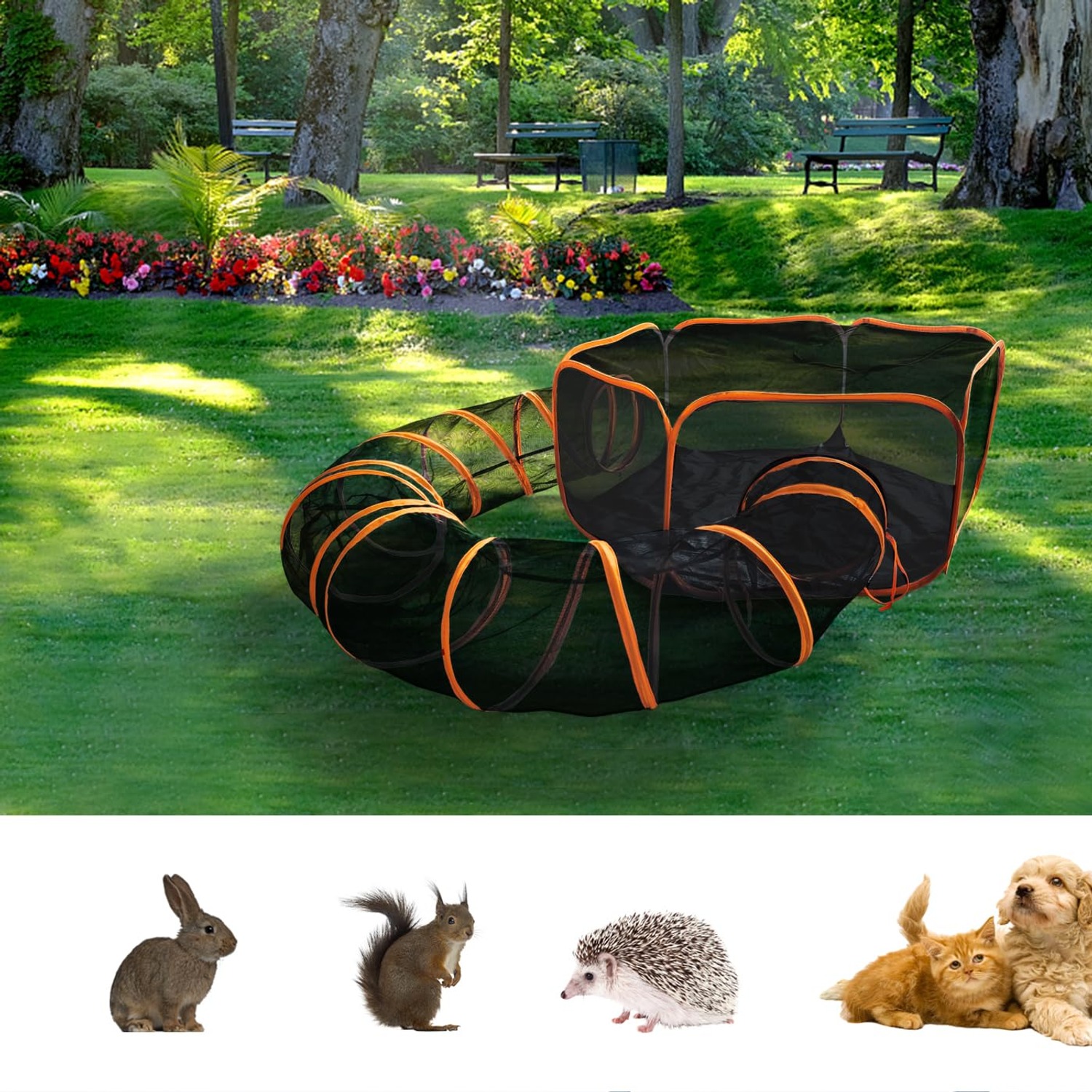
The version covered here is a square tent that measures 120 x 120 x 45 cm, with a long tunnel that zips on to the side. It folds flat into a bag, which is the detail that changes how often it gets used.
How this kind of enclosure works
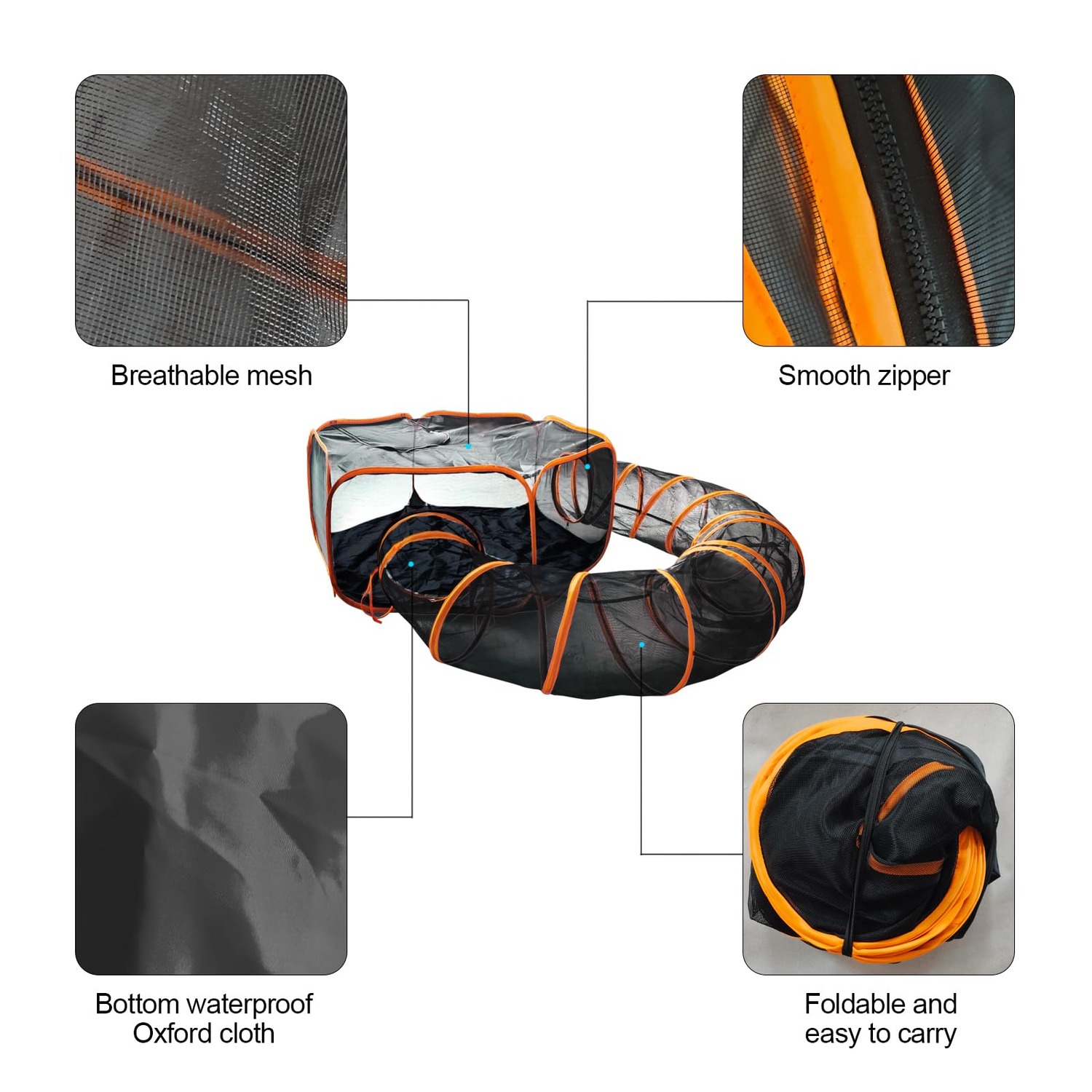
The build is straightforward. An alloy steel frame holds the shape, mesh panels form the walls and roof, and an oxford fabric base gives a solid floor. Two zip doors let you in, and one of them is also where the tunnel connects.
The mesh is doing more work than it looks. It keeps air moving, which matters a great deal on a warm afternoon, and it gives your cat a 360 degree view. Cats relax faster when they can see what is coming. A solid-walled box with one window makes a nervous cat tense. An open mesh cat tent does the opposite.
The fabric floor matters too. On lawn, a bare-bottomed pen lets claws catch in roots and lets paws get wet and muddy. A proper base keeps the running surface even, which is important once a cat decides to sprint through the tunnel at full speed.
The tunnel is the part that separates this from a simple pop up cat tent. A single box gets boring. A loop does not. Your cat can enter the tunnel, run its length, come out the other side and turn straight back in. That circuit is what turns a sniff-and-sit session into real exercise.
Who it suits
Indoor cats with outdoor longing. This is the obvious one. If your cat has never been outside, start with short sessions and let them set the pace.
People who move around. Caravanners, campers, people who house-sit, and anyone who takes a cat to a holiday rental. A travel catio that packs into a bag solves the problem of what to do with the cat when you get there.
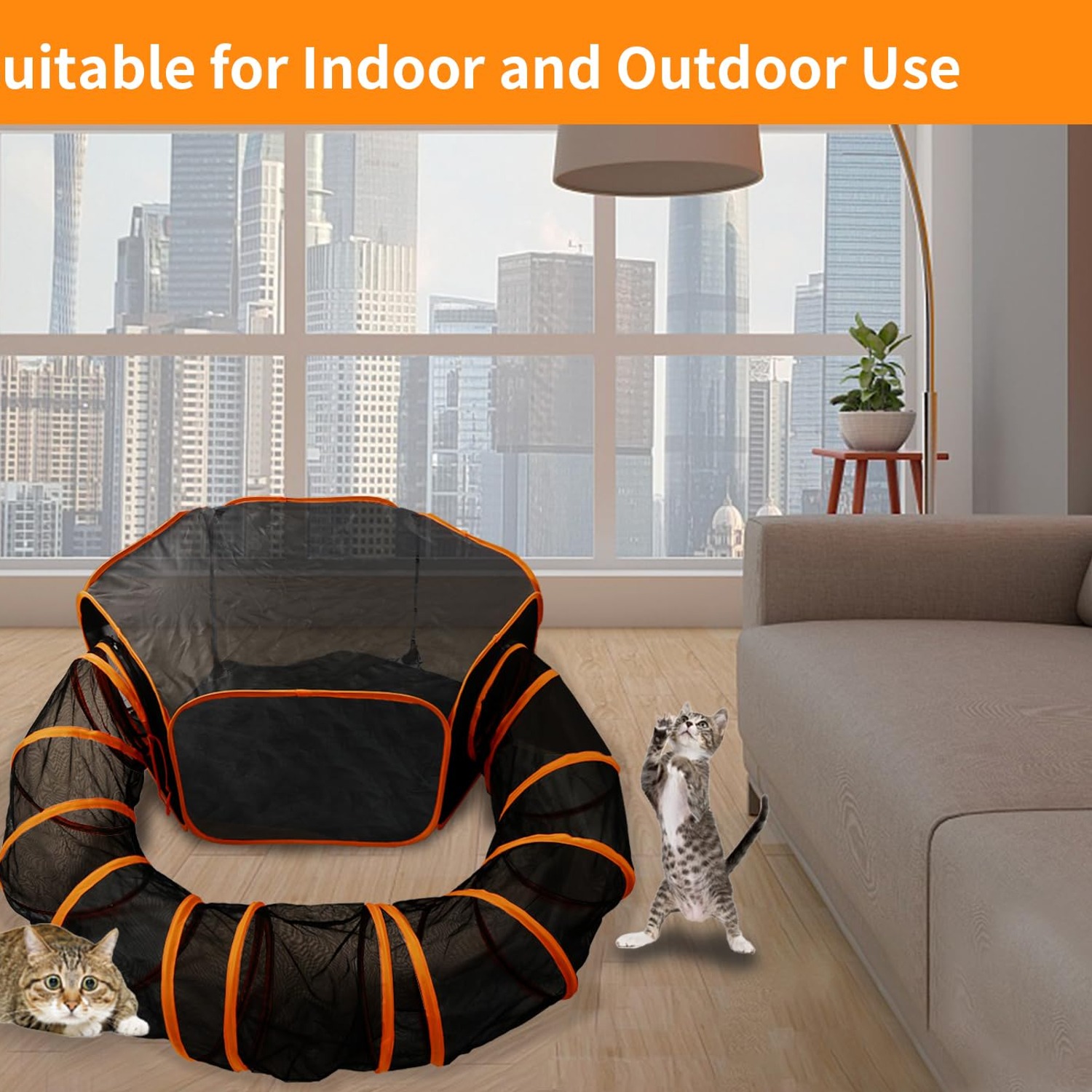
Renters and apartment dwellers. You cannot bolt a timber catio to a rented balcony. You can set a folding one out for the afternoon and put it away before the inspection.
Households managing transitions. New kitten, new rescue, a cat recovering from surgery, a resident cat who needs a break. Set the tent up indoors and you have a ventilated, visible separation space that does not feel like a cage.
Rabbit and small pet owners. The listing names rabbits as a target species. The fabric base is genuinely useful here, since rabbit claws and uneven ground are a bad combination.
It suits large cats less well. At 45 cm high, a big adult will have their head near the roof when standing. Most cats spend their time low, so this is rarely a dealbreaker, but it is worth measuring if your cat is on the larger side.
Choosing the right outdoor cat pen
A few things actually matter when you are comparing a portable cat enclosure to the alternatives.
Footprint. Measure your space before you order. The tent alone needs a clear 120 x 120 cm. The tunnel needs a run beside or around it, so the full set needs considerably more. On a tight balcony, run the tent on its own and keep the tunnel for garden days.
Height versus floor area. Some enclosures are tall and narrow. Cats generally prefer wide and low, because they want to walk, roll and stretch out rather than climb. A square 120 cm floor gives more usable room than a tall tower of the same volume.
Door count and placement. Two zip doors means you can get in without forcing your cat past you, and it means you can hook the tunnel up at either end. Single-door enclosures become awkward the moment you need to reach a water bowl.
Pack-down. If it is hard to fold, it will stay in the shed. The reason a folding design beats a built structure for a lot of households is purely practical. Something that takes a minute to put up gets used on a Tuesday afternoon. Something that takes twenty minutes gets used twice a year.
Materials. Steel frame over plastic rod. Mesh with a tight weave. A base that wipes rather than soaks. Those three things decide whether the enclosure survives a full season of use.
Setting it up well
Pick level ground first. A tilted base makes the frame sit oddly and makes the tunnel sag. Grass, decking and paving all work fine.
Think about shade before you think about anything else. Mesh does not block heat. A cat sitting in full afternoon sun inside an enclosure can get into trouble quickly, so position it under a tree, an awning or a shade sail, and move it as the sun shifts. Always put water inside.
Add weight if it is breezy. The enclosure is light by design, and a gust can shift it. A litter tray, a water bowl and a folded towel inside give it ballast. On an exposed site, peg it or skip the session.
For the first outing, bring something that already smells like home. A blanket from their bed, a familiar toy, a few treats scattered at the far end of the tunnel. Leave a door open and sit nearby. Most cats go in within a few minutes once they see that nothing is being done to them.
Check every zip before you walk away. It takes two seconds and it is the single most common way cats get loose from a soft enclosure.
Keeping it in good shape
Care is simple, and doing it properly roughly doubles the life of the thing.
After each use, shake out fur, grass and litter. Wipe the base and the lower mesh with a damp cloth and a little mild soap, then go over it again with clean water. Let the whole unit dry fully in open air before it goes in the bag. Folding damp fabric is how enclosures develop a smell that never quite leaves.
Do not machine wash it. The frame is sewn into the panels and a wash cycle will wreck both. Do not tumble dry it either.
Store it dry, out of direct sun, and away from anything sharp. Before each use, run your eye over the zips and feel along the frame for bends or splits in the mesh. Small tears grow fast once a claw finds them, so patch early.
The short version
If you have an indoor cat who stares out the window, a folding enclosure is one of the cheapest ways to improve their week. This one gives you a 120 x 120 x 45 cm mesh tent, a tunnel that zips on to make a proper circuit, a steel frame, a wipe-clean oxford base and a bag to put it all in.
Measure your space. Plan for shade. Weigh it down on windy days. Start with short, supervised sessions and build up. Dry it fully before you fold it.
Do those things and you get a safe outdoor patch that sets up in about a minute, travels in the boot, and gives your cat something far more interesting than the view through glass.