

The complete guide
How to Choose a Cat Tent and Tunnel for Safe Outdoor Time
The problem with a window-only cat
Indoor cats live longer. That is not in dispute, and it is why most of us keep them in. But anyone who has watched their cat sit at the glass for forty minutes, chattering at a magpie, knows the trade-off is real. The outside world is right there and completely out of reach.
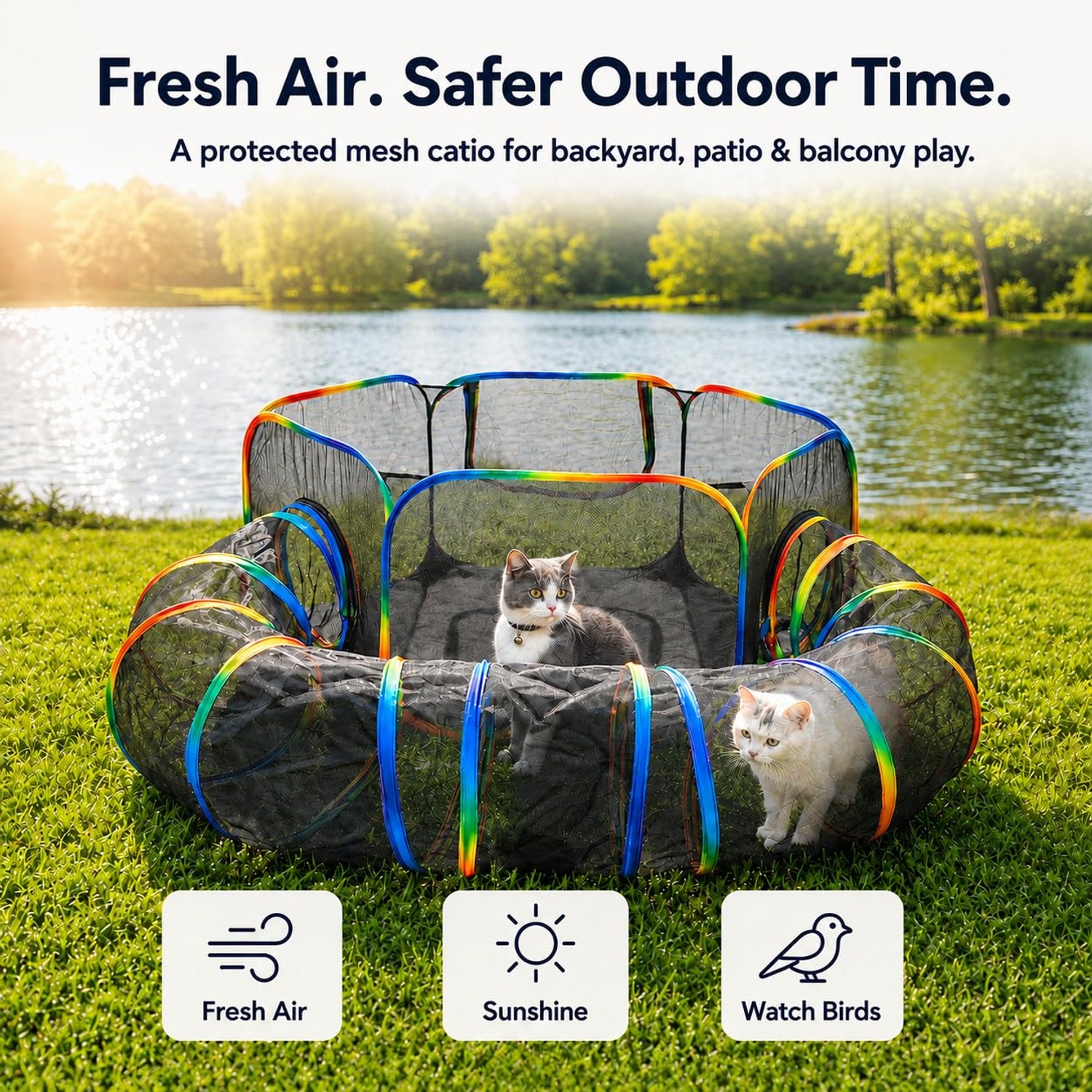
A cat tent and tunnel sits in the middle. It is a contained patch of outdoors your cat can actually occupy. They feel the breeze, smell wet grass, hear things they only ever hear muffled, and you are not standing at the fence line working out which neighbour's shed they have vanished under.
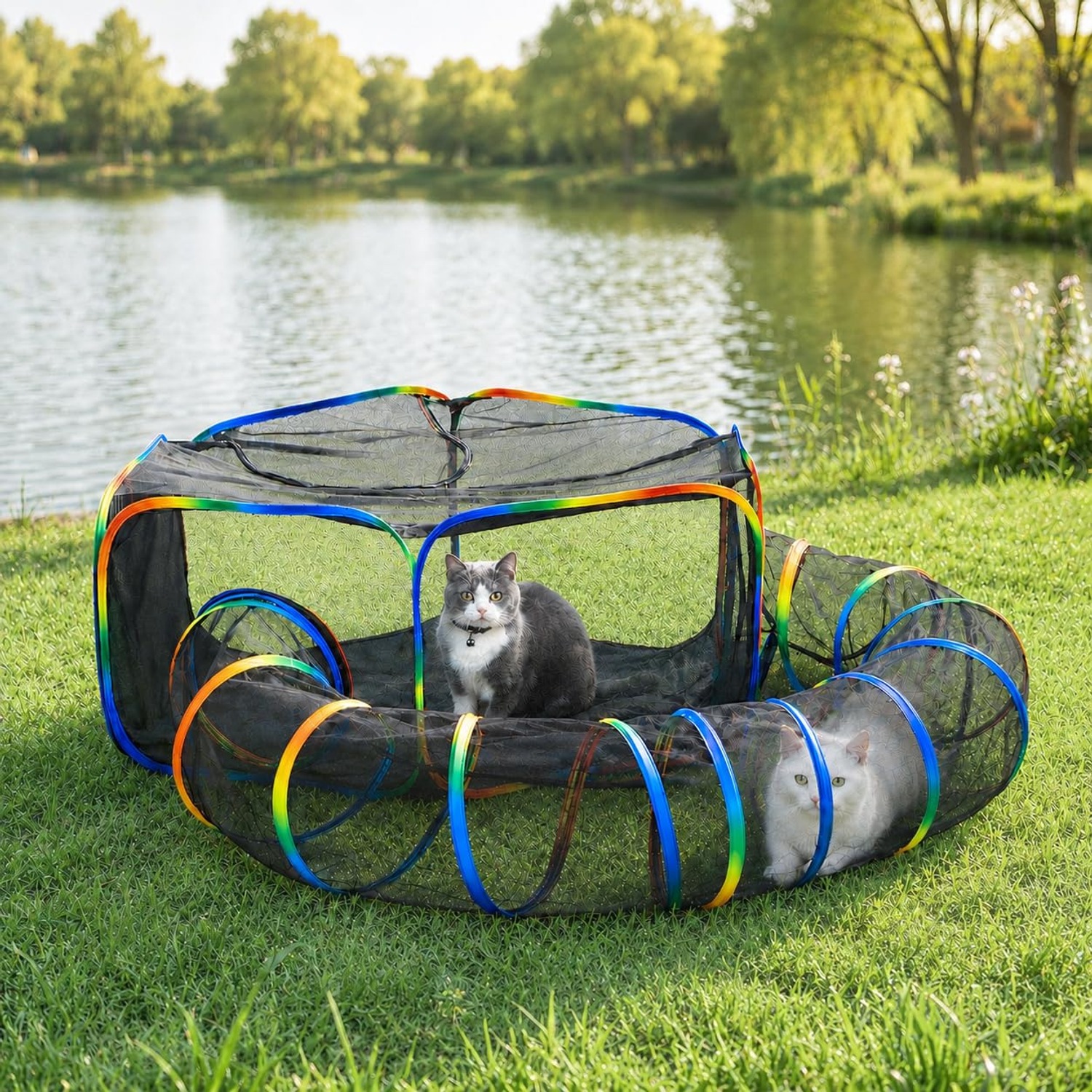
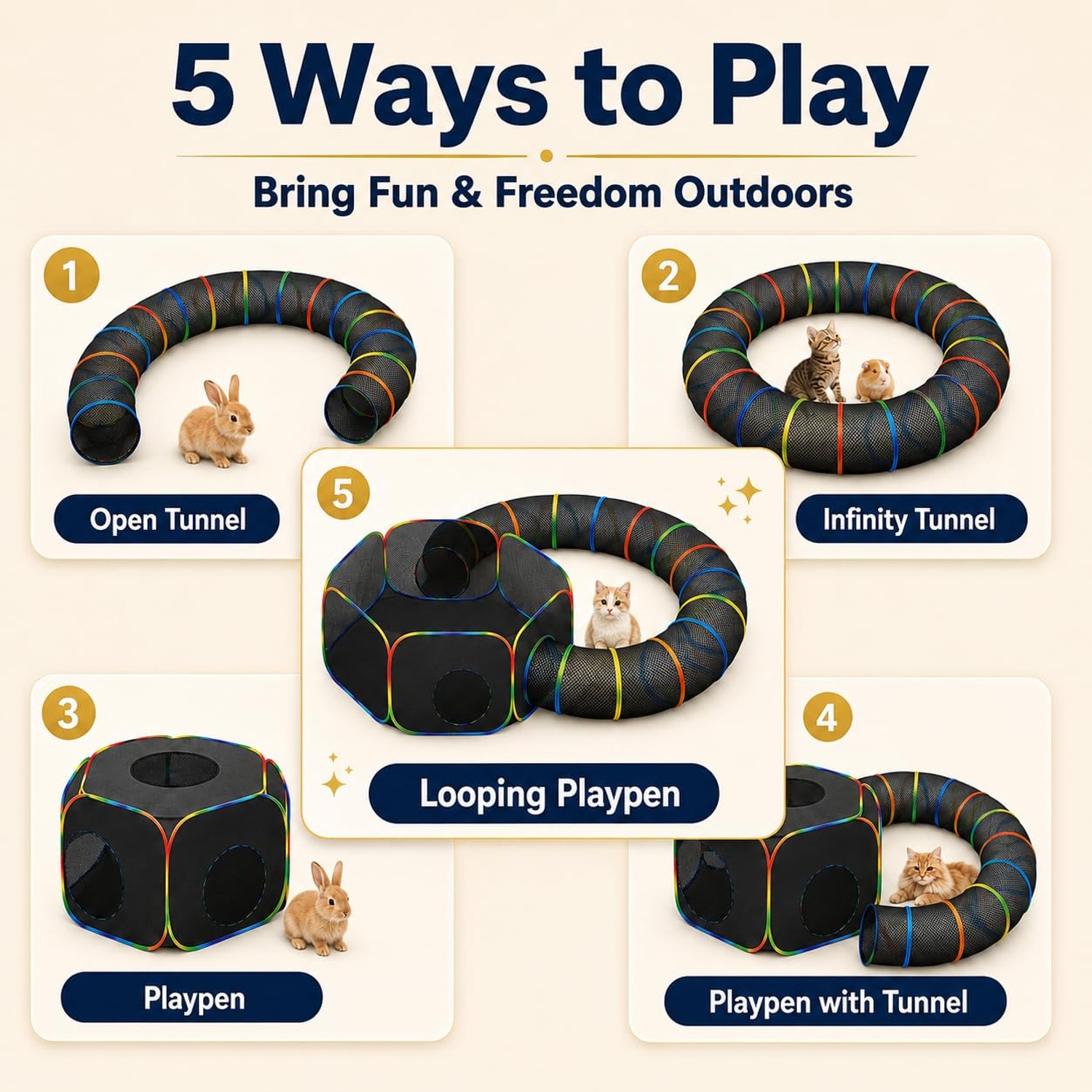
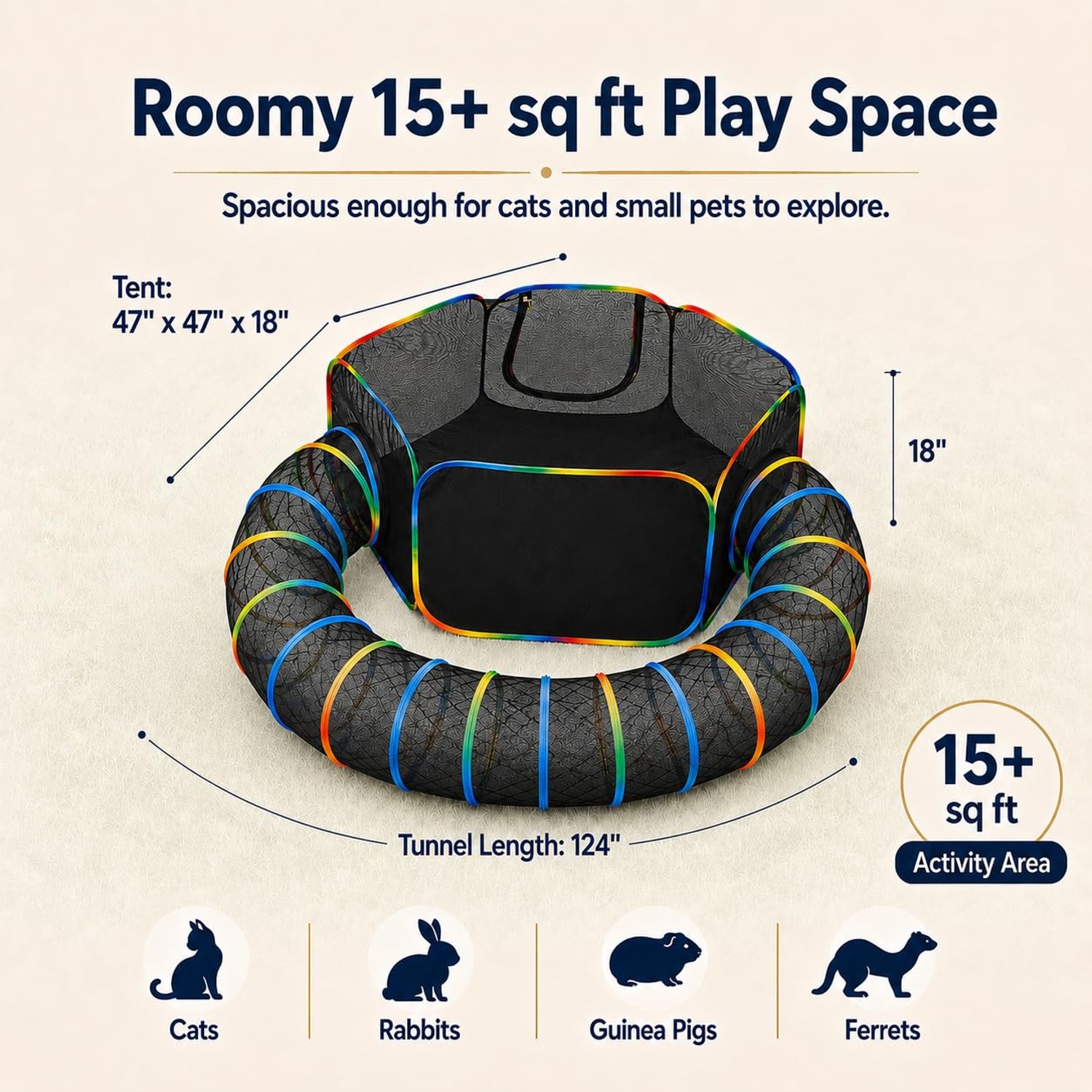
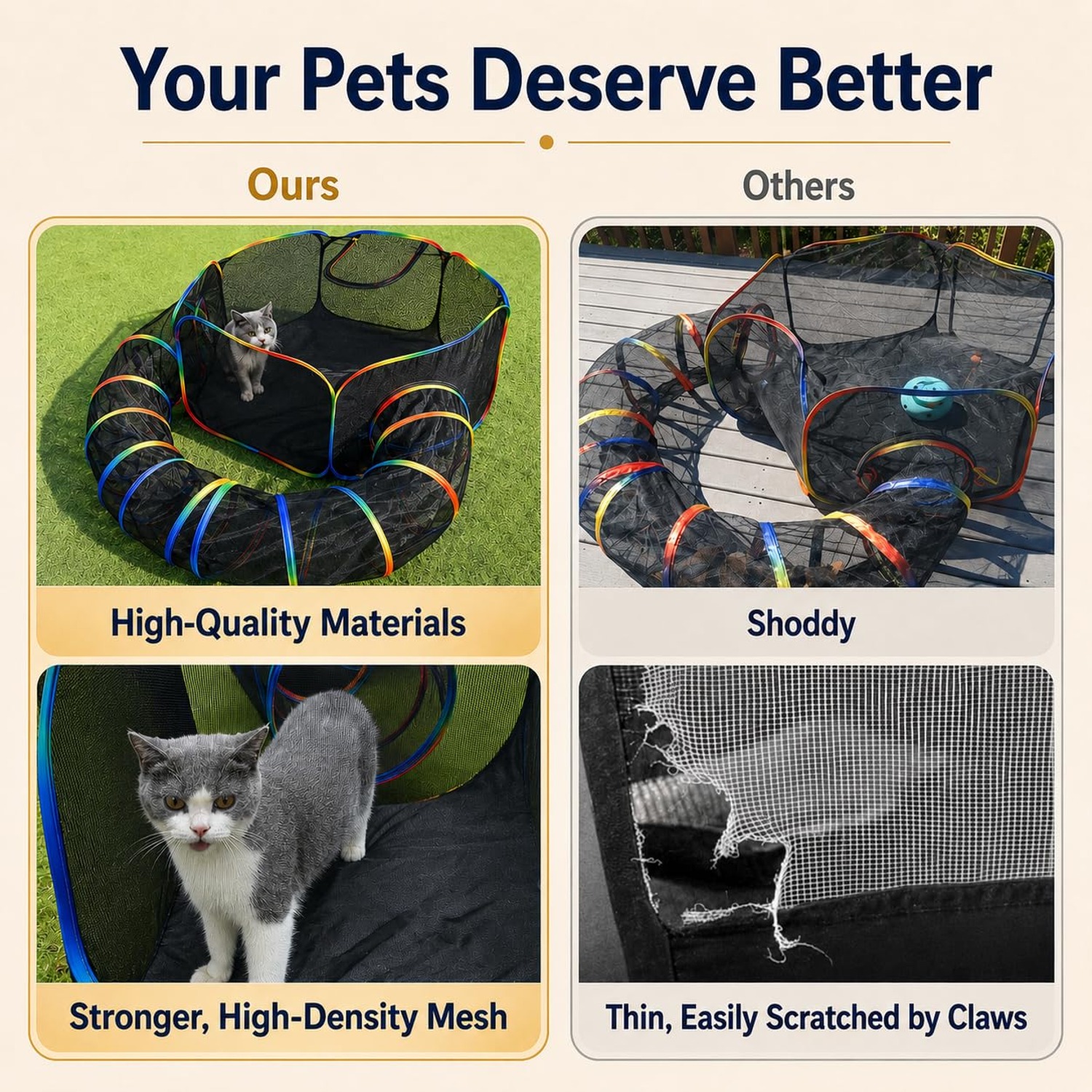
The set on this page is two pieces. A tent with two zipper doors, and a tunnel that zips onto it. Together they make a short run. Apart, they are two separate things you can use in different rooms or different corners of the yard.
How a pop-up enclosure actually works
The structure is flexible frame plus fabric. Polyester panels, mesh sides, and a zip or two holding it all together. It goes up by unfolding rather than bolting, and it comes down by folding rather than dismantling.
Mesh is doing most of the work. It keeps air moving so the inside does not turn into a greenhouse, and it gives your cat a clear view in every direction. Cats care enormously about sightlines. A solid-walled box with one window makes most of them anxious. A mesh enclosure lets them track a bird across the sky without moving, which is exactly the kind of low-effort entertainment cats are built for.
The tunnel adds motion. A tent on its own is a place to sit. A tunnel is a place to run through, hide in, and ambush from. If you have two cats, the tunnel is usually where all the action happens.
When you are done, the whole thing collapses into the supplied storage bag. That is the difference between a portable outdoor cat enclosure and a catio. A catio is a structure you build and leave. This is kit you deploy and pack away.
Who this suits
The clearest fit is an indoor cat with an owner who has outdoor space but does not want a free-roaming cat. Garden, courtyard, deck, or balcony, it does not need to be large.
It also suits renters. You cannot bolt a timber catio to a rented balcony, but you can put a foldable cat tent on it for an hour each afternoon and take it inside after. No drilling, no landlord conversation.
Travellers get a lot out of it too. A portable cat run means a cat who comes camping, visits family, or stays in a holiday rental still gets outdoor time in a space you control. Cats in unfamiliar places are escape risks, and an enclosure removes most of that worry.
Multi-pet homes often use it as a separator. One cat gets the enclosure, the other gets the lawn, and nobody has a disagreement about it.
Who it does not suit: anyone wanting unattended containment. Fabric is not a cage. If you need somewhere your cat can be left alone for hours, you need a built structure with rigid mesh and a lockable door.
How to choose between enclosure types
Start with whether you want something permanent. A fixed catio is better value over years, survives weather, and can be left up. It also costs more, takes a weekend to build, and cannot move.
A pop up catio costs less, needs no construction, and travels. The trade-off is that it needs supervision and should come inside in bad weather.
Then think about your space. A long narrow balcony suits a tunnel better than a wide tent. An open lawn suits the full set connected together. Having both pieces means you can match the shape of the space you actually have rather than hoping one footprint fits everywhere.
Consider your cat's personality. Confident cats take to an outdoor cat playpen in minutes. Nervous cats need the indoor introduction first, with a familiar blanket inside and the doors left open so it reads as a hiding spot rather than a trap.
Access matters more than people expect. Two large zipper doors sound like a small detail until you are trying to post a reluctant cat through a single low opening while holding a water bowl. Wide doors let you lift a cat in sideways, which is far less stressful for both of you.
Setting it up well
Pick shade. Mesh breathes, but direct summer sun on any enclosure is still too much. Under a tree, against the shaded wall of the house, or beneath a verandah all work.
Anchor it. A lightweight enclosure on grass will move in a gust. Tent pegs at the corners, or something heavy inside, keeps it steady. Pegs are not listed as included, so grab a cheap set.
Put the right things inside. Water is essential for anything longer than ten minutes. A familiar blanket helps nervous cats settle. One or two toys are plenty. For a longer session, a small litter tray at the far end from the sleeping spot is worth doing.
Keep the first sessions short. Fifteen minutes, with you sitting nearby, builds far more confidence than an hour of your cat frozen in a corner. Most cats relax by the third or fourth outing.
Looking after it
Cleaning is simple and it needs to happen regularly. Shake out hair, grass, and grit after each use. Wipe the mesh and fabric with a damp cloth and a little mild soap, then let it dry completely in open air.
Do not put it in the washing machine. Do not bleach it. Do not tumble dry it. All three will damage either the seams or the frame channels.
The zips need the most care. They are the parts that fail first on any mesh enclosure. Open and close them in a smooth motion, clear grit out of the teeth, and do not force one that has caught on fabric.
Store it dry. Packing a damp enclosure into its bag is how you end up with mildew and a smell you cannot shift. Give it an hour in the air first, then fold it into the storage bag and keep it somewhere out of direct sun.
A note on the listed dimensions
The supplier spec sheet shows product dimensions of 25 x 25 x 25 millimetres. That is obviously not the erected size of a tent and tunnel set, and it is almost certainly a packed or placeholder figure in the supplier's database.
We have left it exactly as supplied rather than substituting a number we cannot verify. If the erected footprint is the deciding factor for your balcony or courtyard, get in touch before you order and we will confirm with the supplier.
The short version
If you have an indoor cat and any outdoor space at all, a cat tent and tunnel is one of the cheapest upgrades to their week. Your cat gets real air, real smells, and something to chase through. You get to stop feeling guilty every time they stare out the window.
It is a supervised-use product, not a cage. Set it in shade, peg it down, stay nearby, and bring it in when you are done. Treated that way, a cat tent tunnel set will give you a lot of good afternoons.