
The complete guide
How To Choose An Outdoor Cat House That Your Cat Will Actually Use
The problem with leaving a cat outside
Cats are good at finding shelter. They are not always good at finding safe shelter. Left to their own devices, an outdoor cat will squeeze under a car bonnet for warmth, curl up in a pile of garden bags, or wedge itself into a gap in a shed wall. All of those work right up until the moment they do not.
The gap in the quiet garden shelter market is simple. People want something dry, something that will not fall apart after one wet winter, and something a cat will genuinely go into. The last part trips up more products than anything else. Plenty of attractive shelters sit empty in back gardens because the cat took one look and decided it was a trap.
This guide walks through what matters when you choose an outdoor cat house, how the design features connect to actual cat behaviour, and how to set the thing up so it gets used from the first week.
Why cats refuse to use some shelters
Start with how a cat thinks about an enclosed space. A box with one hole in it is, from the cat's point of view, a space with exactly one exit. If anything blocks that exit, the cat is stuck. Dogs, foxes, other cats and curious children all count as things that can block an exit.
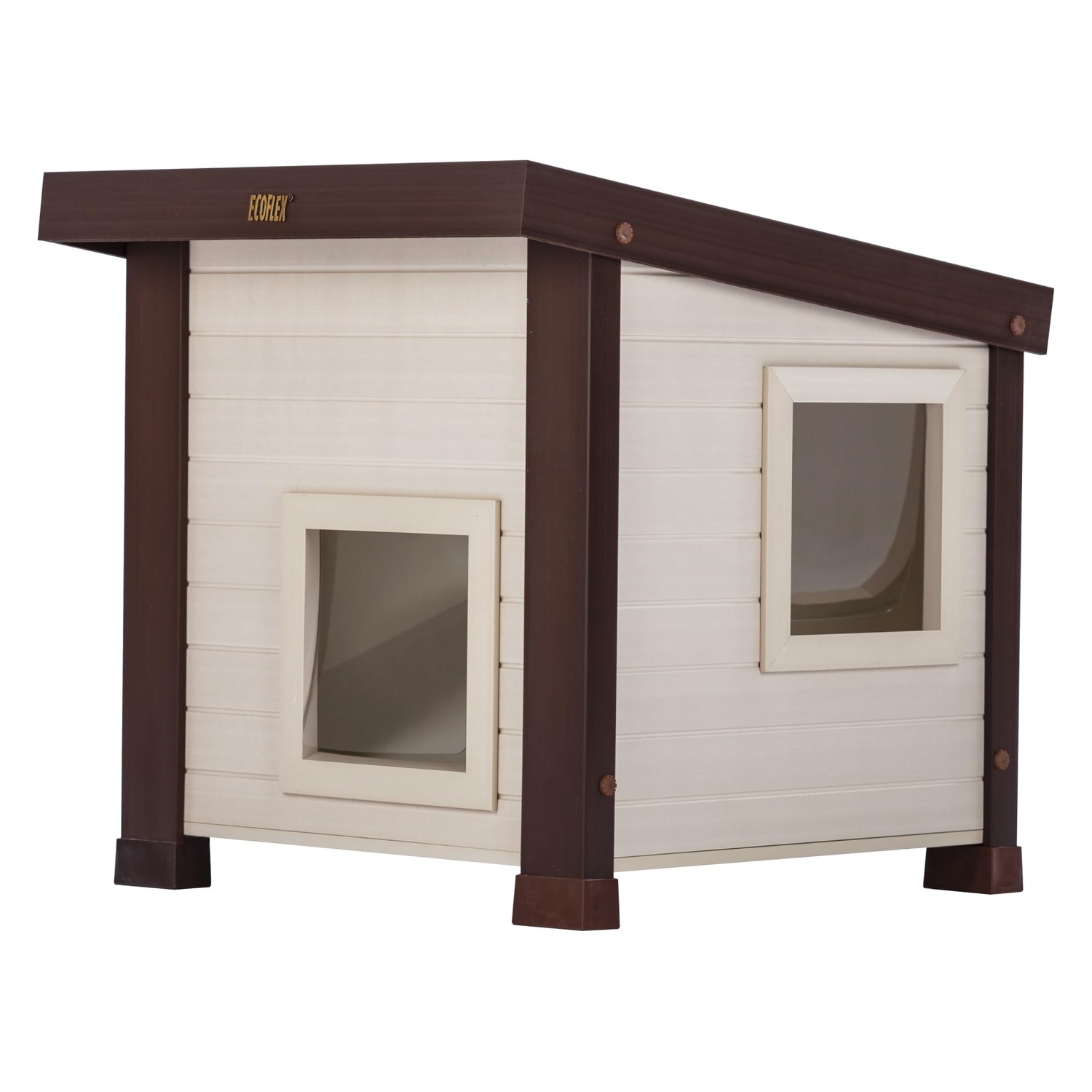
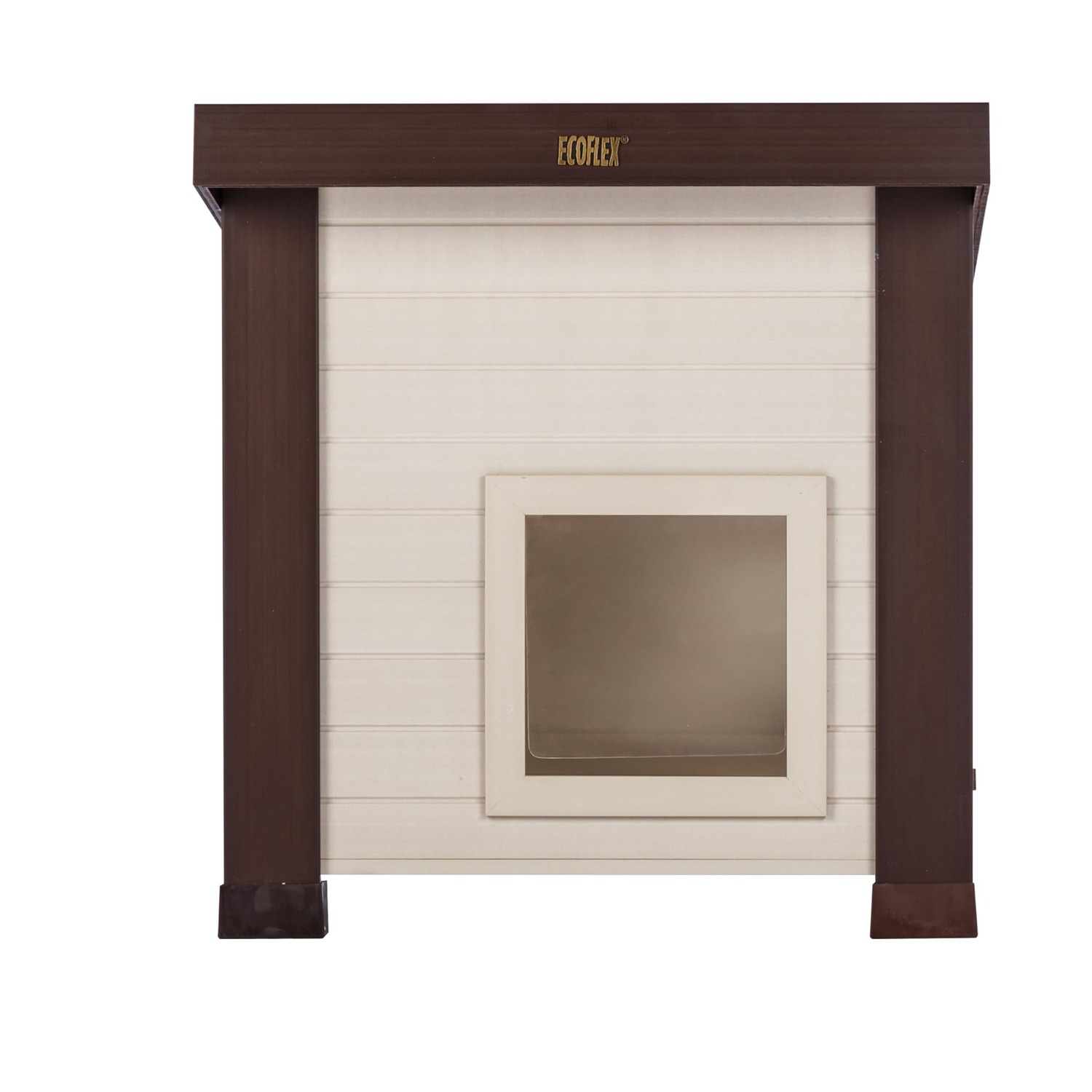
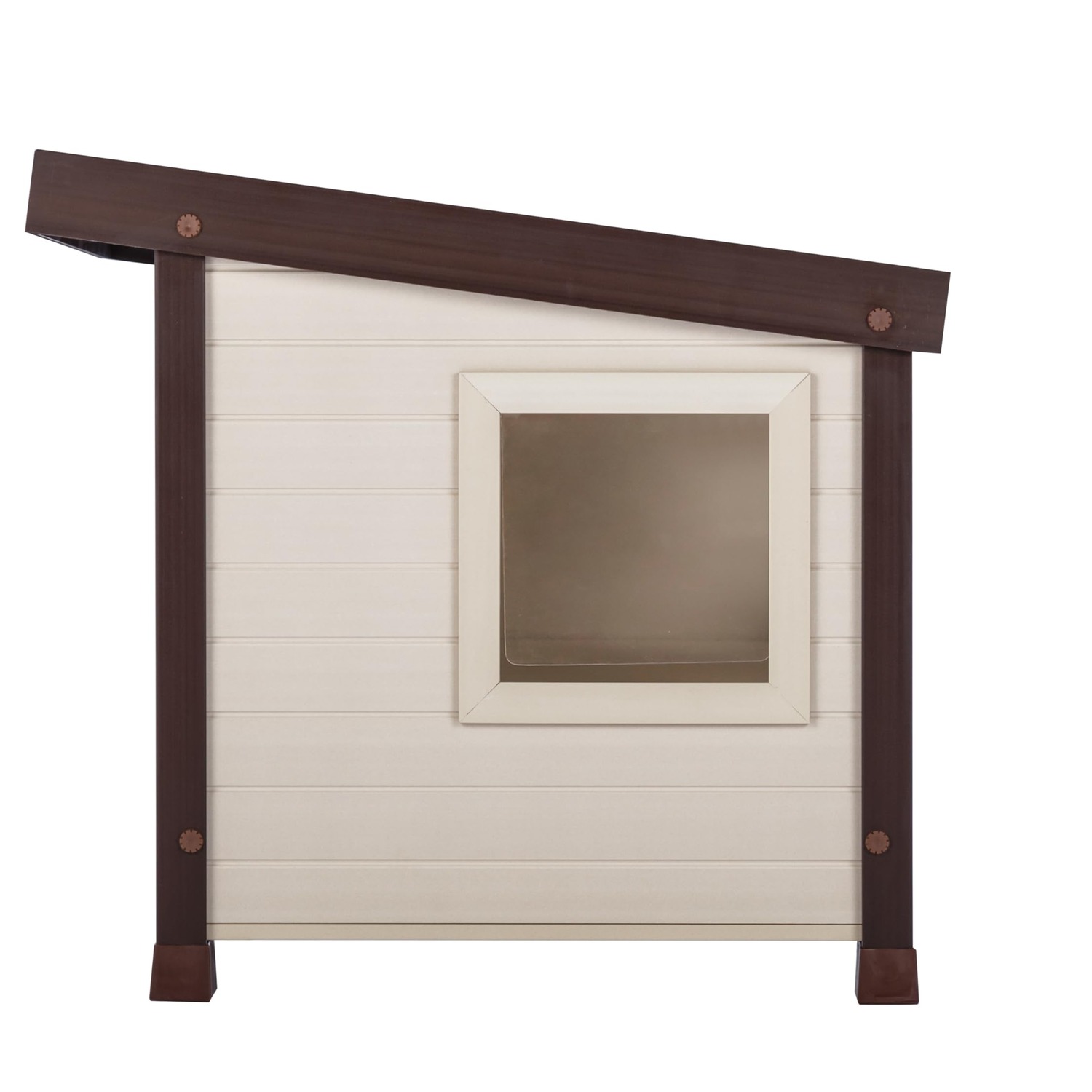
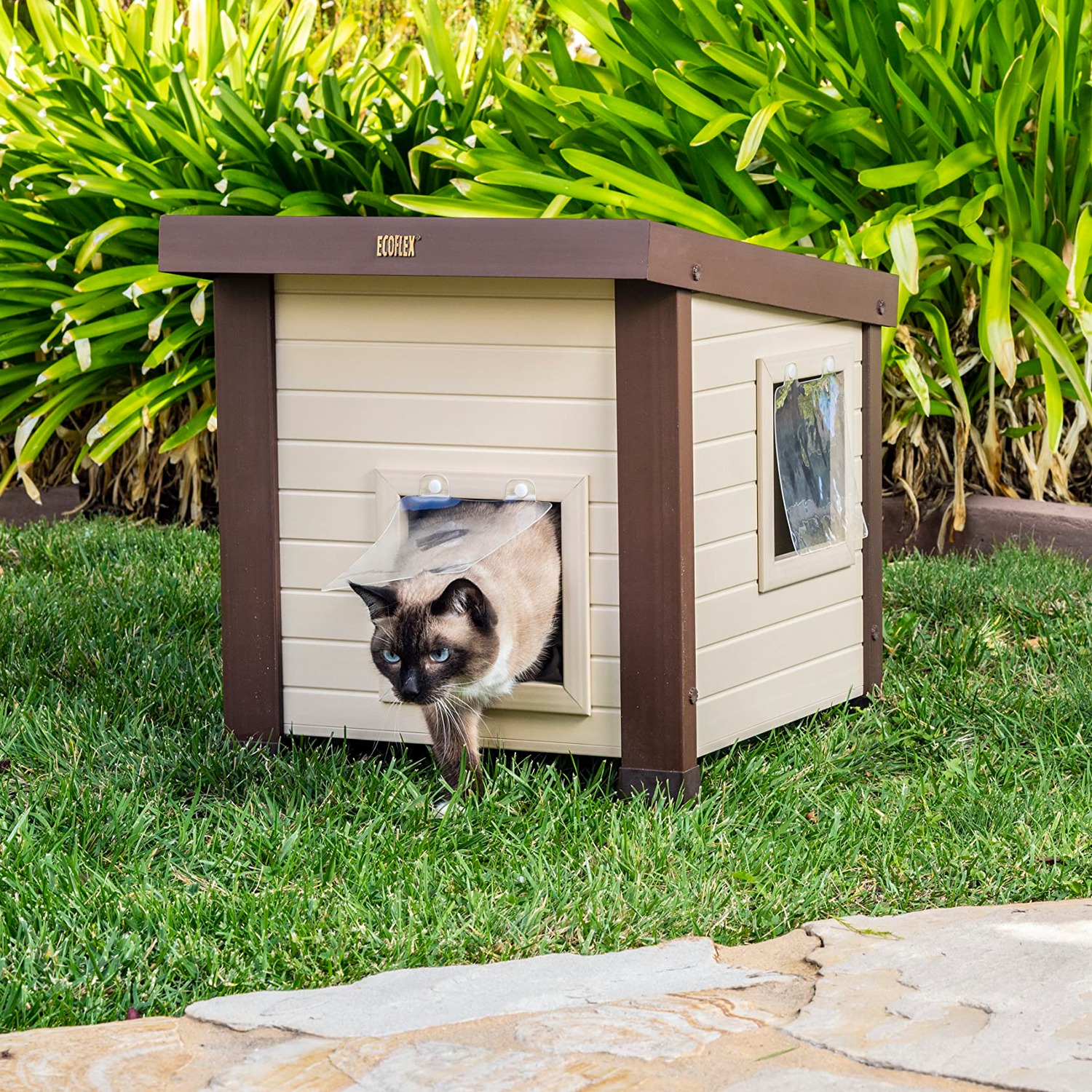
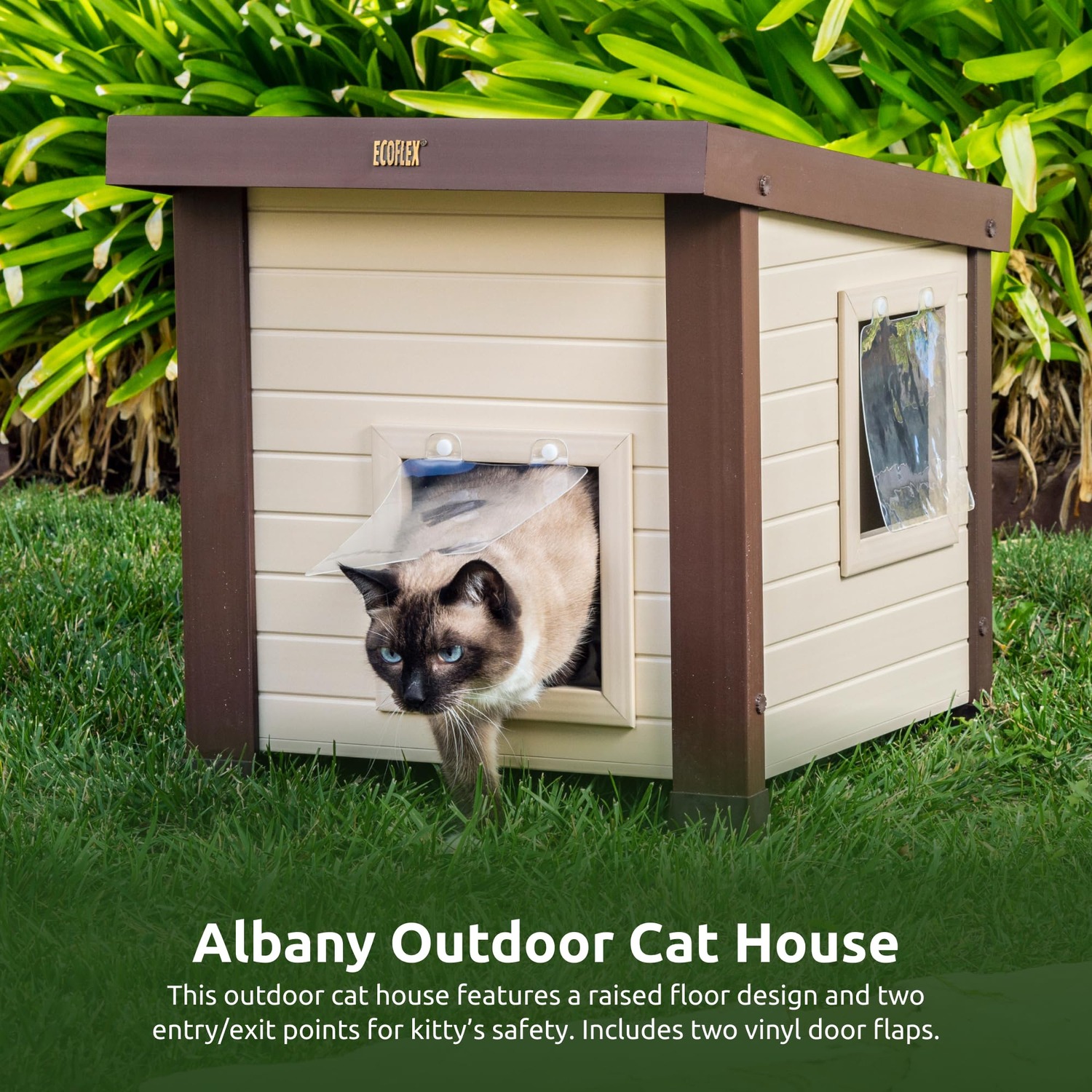
That is why a cat house two doors design is not a luxury. It is the feature that flips a shelter from suspicious to acceptable. The cat can stand at one doorway and look clean through to daylight at the other. Nothing is hiding inside. If something comes in the front, there is a back way out.
The second thing cats assess is sightlines. A shelter tucked into a corner where the cat can see the yard from the doorway gets used. A shelter in the middle of an open lawn, with no cover nearby, tends not to. Cats want their backs protected and their eyes on the approach.
Third is smell. A new plastic or resin shelter has a factory smell that fades in a week or two outdoors. Rushing this is a common mistake. Put the house out, leave it alone, and let the weather take the edge off before you expect anyone to move in.
What resin gives you
Material choice decides how long an outdoor shelter lasts and how much work it is. Resin, which is what this house is built from, handles the outdoors well for a few straightforward reasons.
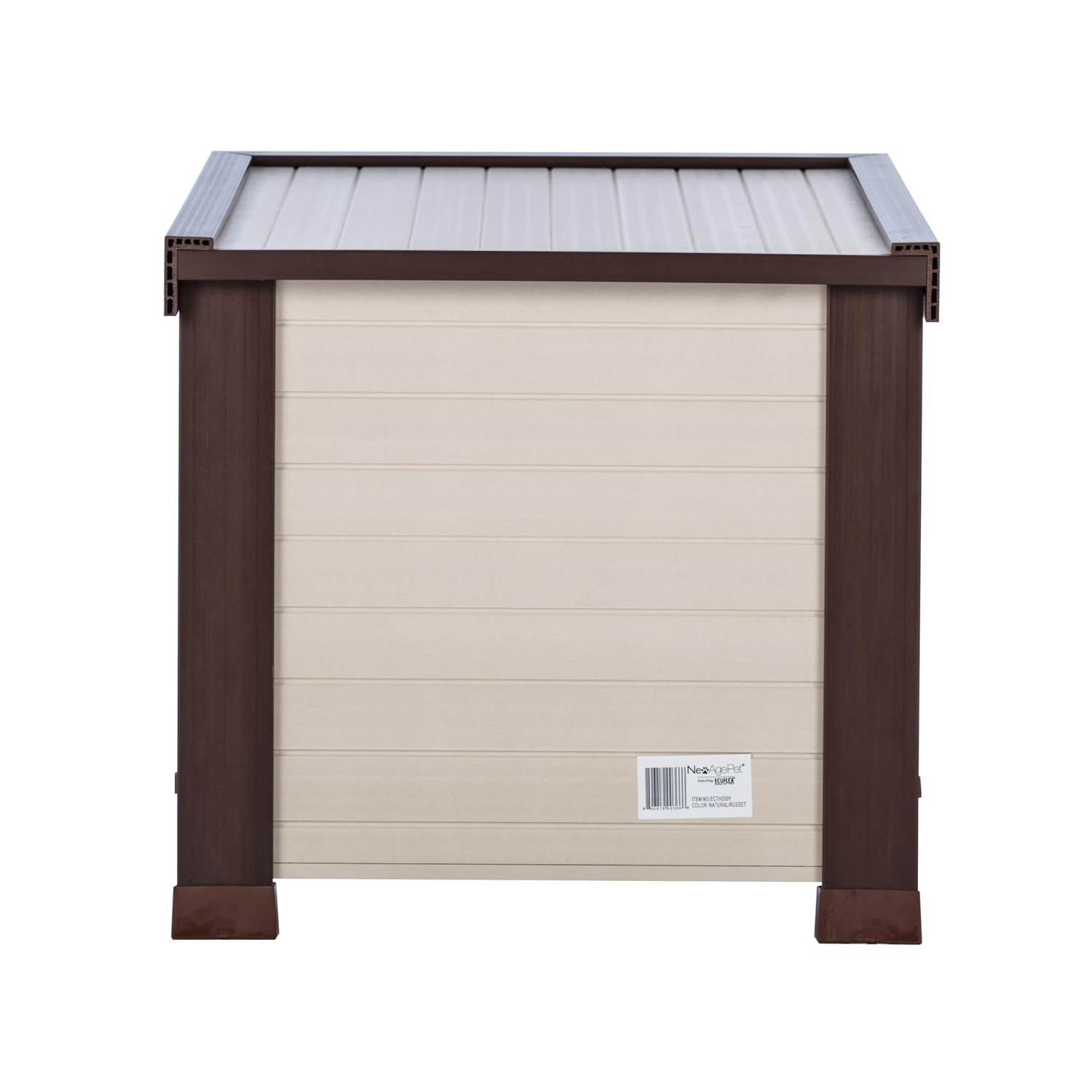
It does not absorb water. Timber shelters look lovely for a season and then start to swell, split and grow mould on the shaded side. Resin does not do that. Rain runs off it and the inside stays dry as long as the doorways are not facing into the weather.
It does not rust and it does not rot. That removes two of the three usual failure modes for anything left in a garden.
And it cleans properly. This matters more than people expect. A cat house waterproof enough to stay outside will also collect dust, pollen, leaf litter, fur and the occasional accident. With a smooth resin interior, you lift the bedding out, wipe the panels with warm soapy water, rinse and let it dry. Ten minutes, done. With fabric-lined or raw timber shelters you are either scrubbing or replacing.
Resin is also easy on the eye in a way that bright moulded plastic is not. The tan finish on this one reads as neutral garden furniture rather than pet equipment, which makes a difference if the house is going somewhere visible.
Sizing it honestly
Here is where people go wrong in both directions.
Too small and the cat cannot turn around, which rules the house out instantly. Too large and the cat cannot warm the space with its own body heat, which is the main way a small unheated shelter stays comfortable on a cold night. A cavernous shelter is a cold shelter.
The recorded dimensions for this house are 19.1 D x 21.8 W x 20.2 H centimetres. Measure your own cat curled into a sleeping position, not stretched out, and compare. Most cats sleep in a tight circle outdoors because it conserves heat. A snug fit is correct, a cramped fit is not.
If you have a very large cat, a long-bodied breed or two cats who insist on sharing, be realistic. One roomier shelter or two separate houses will serve better than forcing the issue.
Placement makes or breaks it
You can buy the best weatherproof cat shelter on the market and ruin it with a bad spot. A few rules that hold up well.
Get it off cold ground. Two pavers, a pallet offcut or a couple of timber battens underneath will stop damp wicking up and improve airflow beneath the floor. This single change does more for winter comfort than most accessories.
Face the doorways away from the prevailing wind. Work out which direction your worst weather comes from and turn the house the other way. Even a slight rotation can mean the difference between a dry interior and a wet one.
Back it against something solid. A fence, a shed wall, a dense hedge. Cats like a protected rear and a clear front.
Keep it near the food, but not right on top of it. A cat shelter for garden use works best within sight of the feeding station, a few metres away, so the cat has a reason to be in the area and a dry place to retreat to after eating.
And leave it alone once it is placed. Moving a shelter around resets the cat's assessment every time.
Bedding, warmth and winter
The house supplies the shell. What goes inside is up to you, and it matters.
Straw is the standard recommendation for outdoor use, and for good reason. It traps warm air, it does not hold moisture, and if it does get damp it still insulates. Hay is not the same thing and will go mouldy, so check what you are buying.
Blankets, towels and fleece feel like kindness and often are not. They absorb moisture out of the air, go cold and clammy, and then actively pull heat out of the cat. Indoors they are fine. In an outdoor cat bed house in winter, straw beats them comfortably.
Self-warming thermal mats, the kind with a reflective layer that bounces body heat back, are a good compromise if straw is not practical. They need no power and no cable.
If you want real heat, an outdoor-rated pet heating pad can be added, provided you have a safe power source and can protect the cable. Use only pads made for outdoor animal use. No pad comes with this house.
For a cat shelter winter setup, the full package is straw bedding, raised off the ground, doorways turned out of the wind, positioned against a wind break. Do that and an unheated resin house performs far better than its specifications suggest.
Colonies, strays and multiple cats
If you are feeding neighbourhood cats, the maths changes. A single large shelter sounds efficient. In practice, cats that are not bonded will not share, and the more dominant animal simply claims it while the others sit in the rain.
Several smaller houses, spread a few metres apart, work much better. Each cat gets a space it can defend, and nobody has to negotiate. This is standard practice for anyone running a stray cat shelter arrangement and it is worth following even with two cats.
Keep the cleaning schedule honest too. Shared or sequentially used shelters pick up fleas and parasites faster than a single-cat house does. Wipe out, refresh bedding, repeat.
Assembly and upkeep
Assembly is required but needs no tools. Lay the panels out on the grass, read the sequence once, and build it where it will sit. Carrying an assembled house through a narrow side gate is an avoidable annoyance.
Ongoing care is light. Shake out or swap bedding weekly. Wipe the interior monthly with warm water and a mild, pet-safe detergent. Twice a year, check the panel joins for grit or leaf debris and reseat anything that has worked loose. Skip harsh solvents and abrasive pads, which will dull the resin surface over time.
The short version
A good outdoor cat house is dry, has two ways out, is sized to the cat rather than to the catalogue photo, and sits in a sheltered corner off the cold ground. This one is built from resin in a tan Classic style, weighs 8.39 kg, assembles without tools and is listed at 19.1 D x 21.8 W x 20.2 H centimetres.
Add straw, raise it on pavers, point the doorways away from the wind, and then be patient. Cats decide on their own schedule. Give it a fortnight before you conclude anything, and most of the time you will look out one wet morning and find somebody already moved in.