
The complete guide
How To Choose A Walk-In Catio That Your Cat Will Actually Use
The problem with the back door
Anyone who lives with an indoor cat knows the ritual. The cat sits by the glass. It chirps at a bird. It looks at you. You say no, because there is a road, or a neighbour's dog, or a cat down the street who has already drawn blood once. So the cat goes back to the sofa and you both feel slightly bad about it.
Keeping cats indoors is better for them and better for local wildlife, but it removes most of what makes a cat's day interesting. Smells change hourly outside. Light moves. Insects do stupid things in the air. None of that happens behind a window.
A walk-in catio is the practical middle ground. It is an enclosed outdoor space the cat can occupy without being able to leave, and it is tall enough for you to step inside too. The cat gets the sensory day it wants. You get to stop worrying about the road.
How this one works
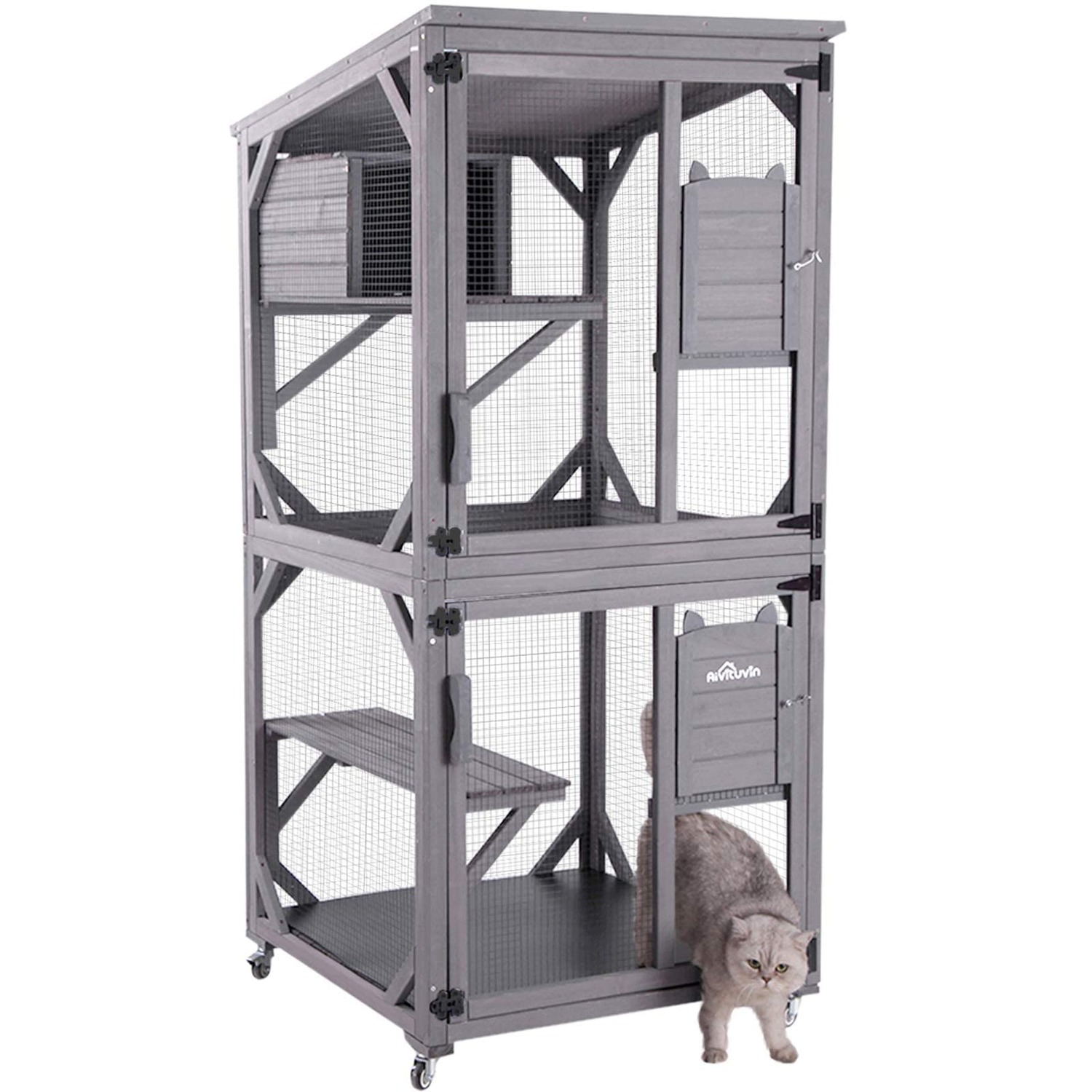
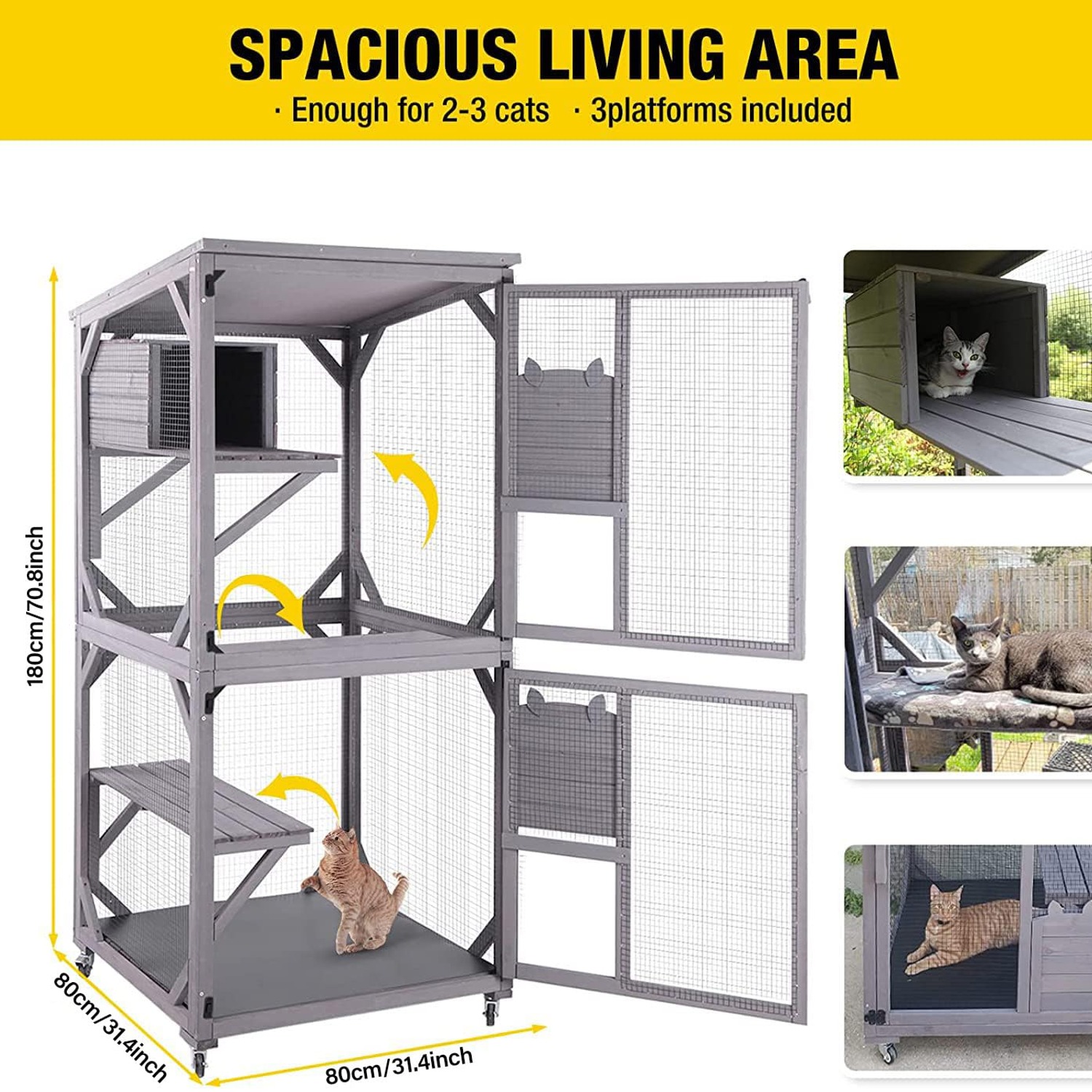
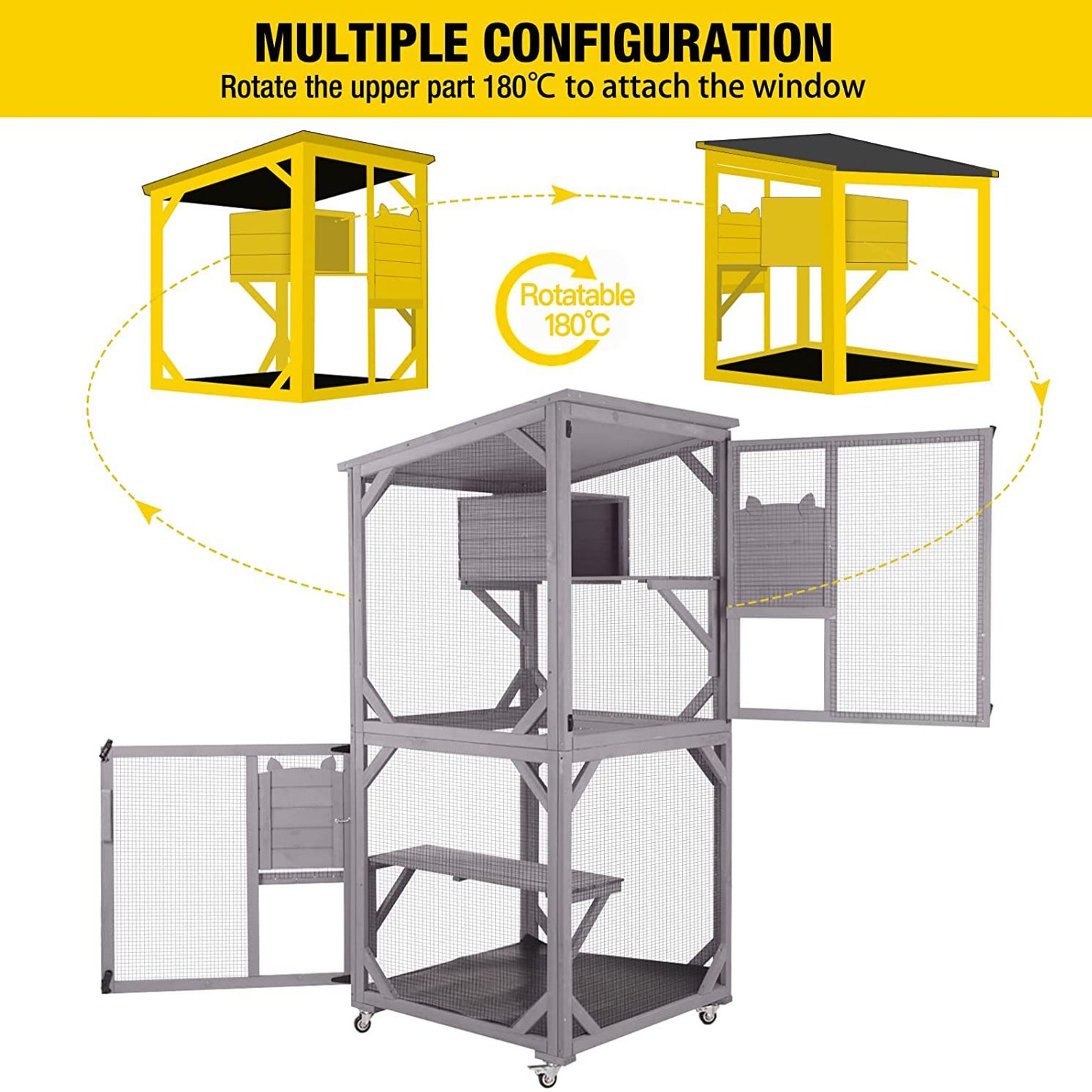
The structure here is a timber frame with mesh panels, 80cm square at the base and 180cm tall. Inside are two levels, so the usable area is far bigger than the floor space suggests. Platforms are rated to hold up to 20kg, which is generous for a domestic cat and means two cats can share a level without anyone flexing.
A nesting box is included. This matters more than most first-time buyers expect. Cats do not relax in open space, they relax in small dark places with a view of the entrance. Without a box or a covered shelf, a lot of cats will use an enclosure for ten minutes and then ask to come in. With one, they will settle for hours.
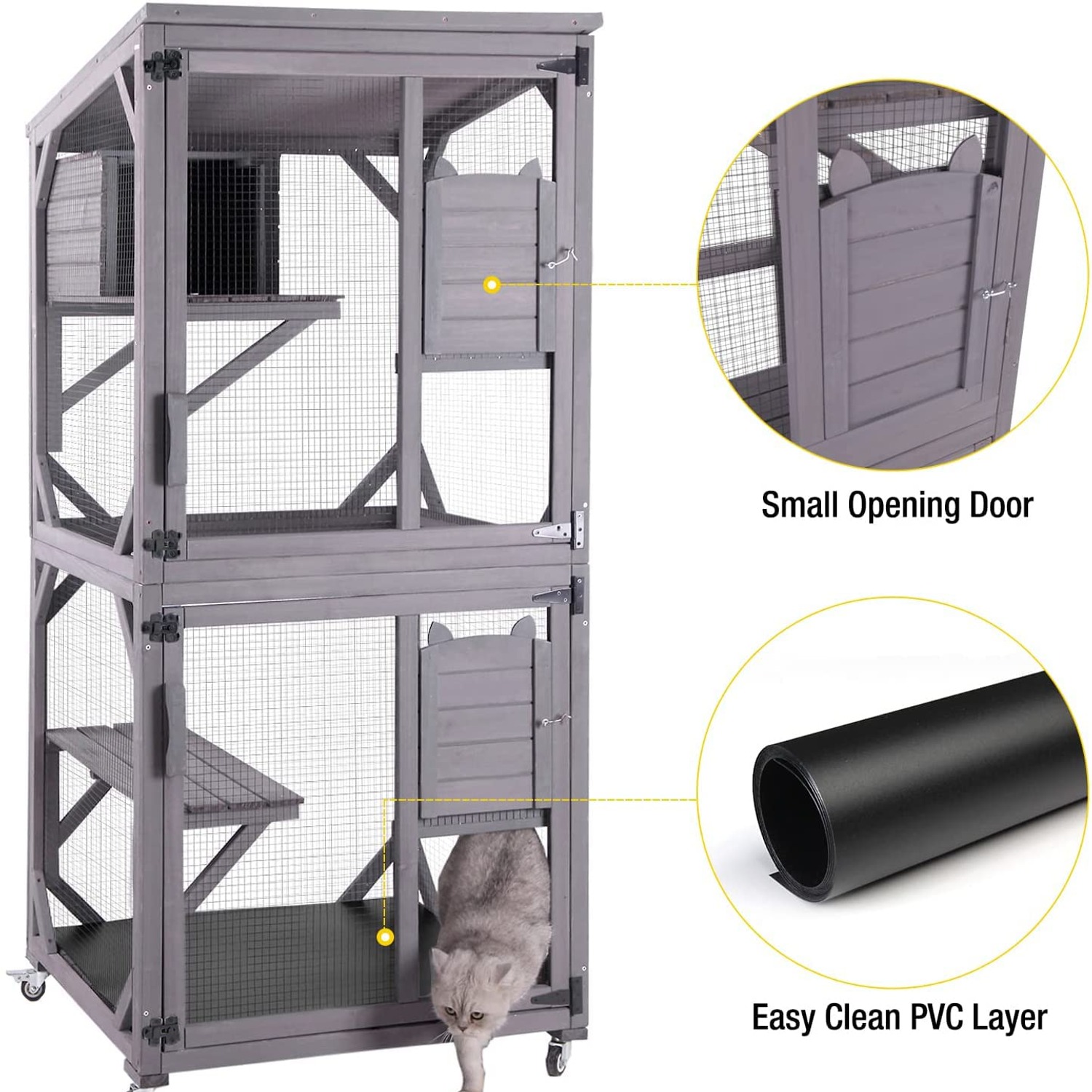
Underneath sits a removable PVC cleaning board. You slide it out, rinse it and slide it back. That one detail decides whether an outdoor cat enclosure stays clean or quietly becomes a job you avoid.
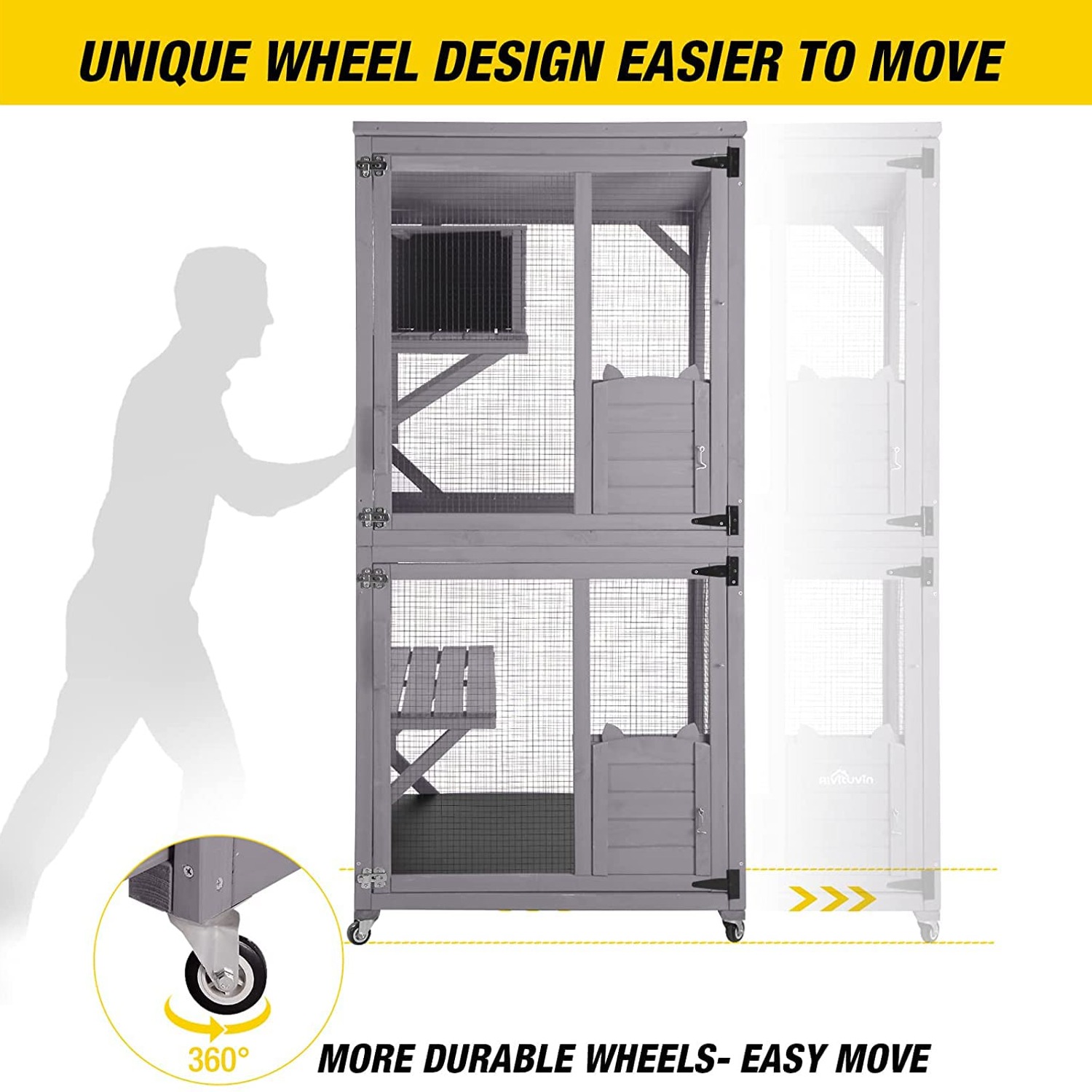
Then there are the wheels. Universal brake castors let you push the whole thing across a patio and lock it in place. In a small garden this means the cat follows the sun in the morning and the shade at two in the afternoon, instead of being stuck wherever you first assembled it. It also makes mowing, sweeping and winter storage far less annoying.
Two doors complete the picture. One is for the cat, functionally, and one is for you, though both work either way. Having a second opening means you are never trapped behind a cat who has decided the doorway is a good place to sit.
Who it suits
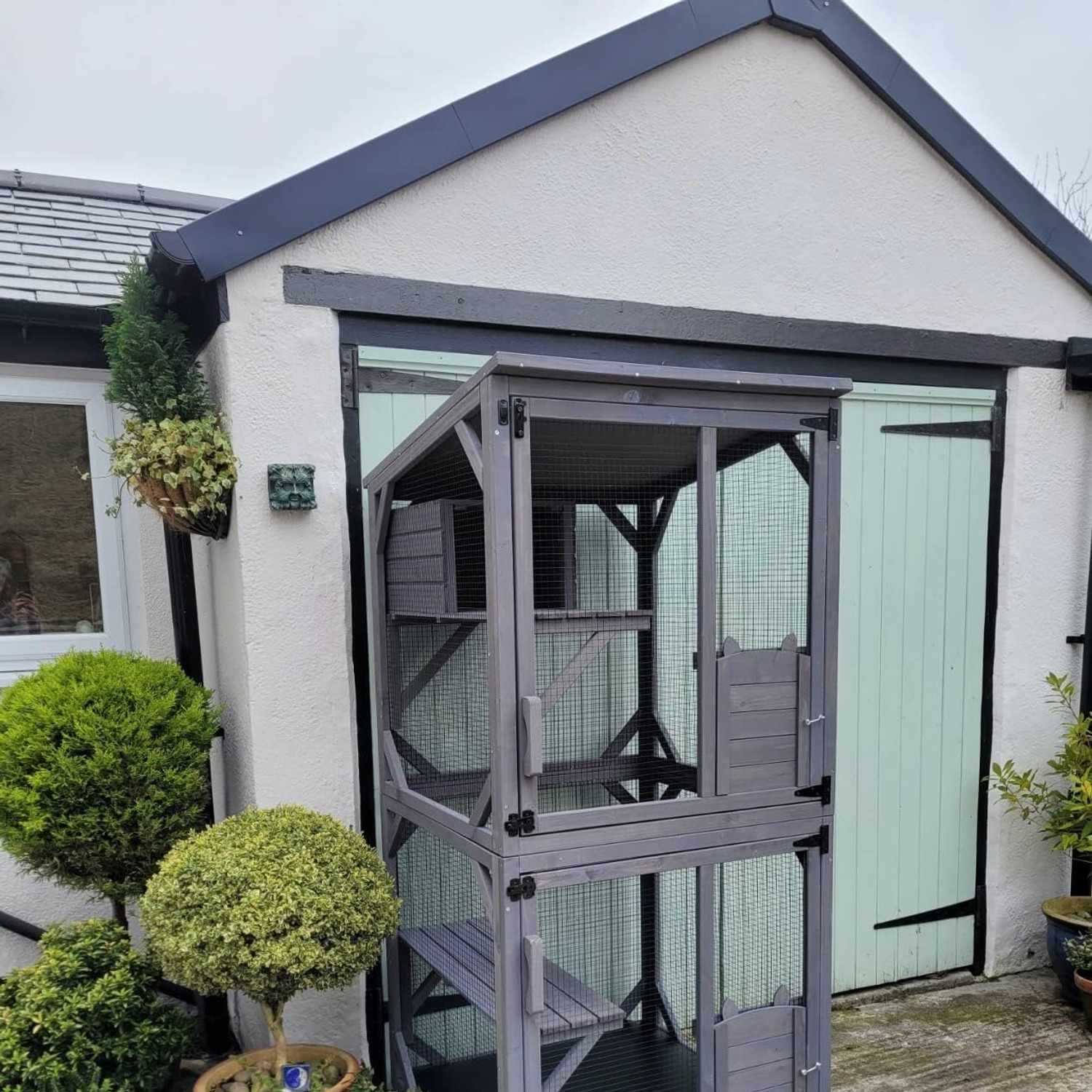
This design works best for a one or two cat household with a patio, courtyard, deck or balcony. The small footprint is the selling point. A sprawling backyard catio needs real estate that most people do not have, while this takes up less ground than a wheelie bin.
It suits renters well, because nothing is fixed to the building. Nothing is screwed into brickwork, no planning conversation is needed, and when you move it comes with you.
It suits nervous or recently rehomed cats, who often do better with a contained first taste of outside rather than a full garden. And it suits older cats who still want sunlight but no longer want to negotiate fences.
It is less suited to three or more cats at once, to very large athletic breeds who want to run rather than climb, and to anyone hoping to leave a cat outside overnight. This is a daytime space, not a shelter.
How to choose between catios
If you are comparing a few options, these are the things that actually change daily life.
Height beats width. Cats want vertical. A tall enclosure with two levels gives more genuine use than a long low run of the same volume, and it leaves you more of the garden.
Check whether you can get inside. A catio you clean by reaching through a flap will be cleaned less often. Anything described as a walk in catio should let an adult stand or at least crouch inside comfortably.
Look for a removable tray. Fixed floors with gaps in the boards are the main reason people give up on timber cat enclosures after a year.
Mobility is worth paying for in small spaces. If the enclosure has to live in one spot forever, you need to pick that spot perfectly on day one. With brake wheels you can be wrong and fix it in ten seconds.
Ask what the platforms are rated for. Twenty kilograms, as stated here, tells you the shelves are structural rather than decorative.
Setting it up well
Assembly is a flat-pack job. Give yourself a clear patch of floor, read the sequence before you start, and have a second person for the taller panels. Tighten everything twice: once as you build, and once when the frame is standing, because timber settles.
Position it with part sun and part shade if you can. Full western sun on a summer afternoon will turn any enclosed space uncomfortable, and cats are not good at deciding to leave. The shade of a wall, an eave or a tree solves it.
Face it at something worth watching. A bird feeder eight metres away, a vegetable bed, the gate where the neighbour's dog goes past. A view of a blank fence gets boring fast.
Introduce the cat slowly. Doors open, familiar blanket in the nesting box, a few treats on the lower platform, and no picking the cat up and posting them in. Most cats take between a day and a week to claim it. Once they have, they will usually ask to go out.
Keeping it in good shape
Weekly, sweep out the fur and leaves and pull the tray for a rinse. Fortnightly, wipe the platforms with a pet-safe cleaner and let them dry before the cat returns. Skip bleach and phenol cleaners entirely, since both are a problem for cats.
Every few months, go round the hardware. Check the hinges, the latches and the wheel brakes. Outdoor timber moves with the weather and fixings loosen, which is normal and takes two minutes to fix.
Once a year or so, depending on your climate, give the timber a light re-coat with a pet-safe exterior finish. Pay attention to the feet and any exposed end grain, because that is where water gets in first. Let it cure fully before use.
Bring bedding inside before rain. Wet fabric left in a box is how mould starts, and a damp nesting box is a box your cat stops using.
The short version
An 80 by 80cm base, 180cm of height, two levels, two doors, a nesting box, a wipe-out PVC tray and brake wheels. That combination gives an indoor cat genuine outdoor time in roughly the space of a small cupboard, and gives you something you can roll around the yard and clean without a fight.
It will not replace a secured garden, and it is not a night shelter. What it does is end the daily standoff at the back door, which for a lot of households is exactly the problem worth solving.